Labor Displacement Mitigation
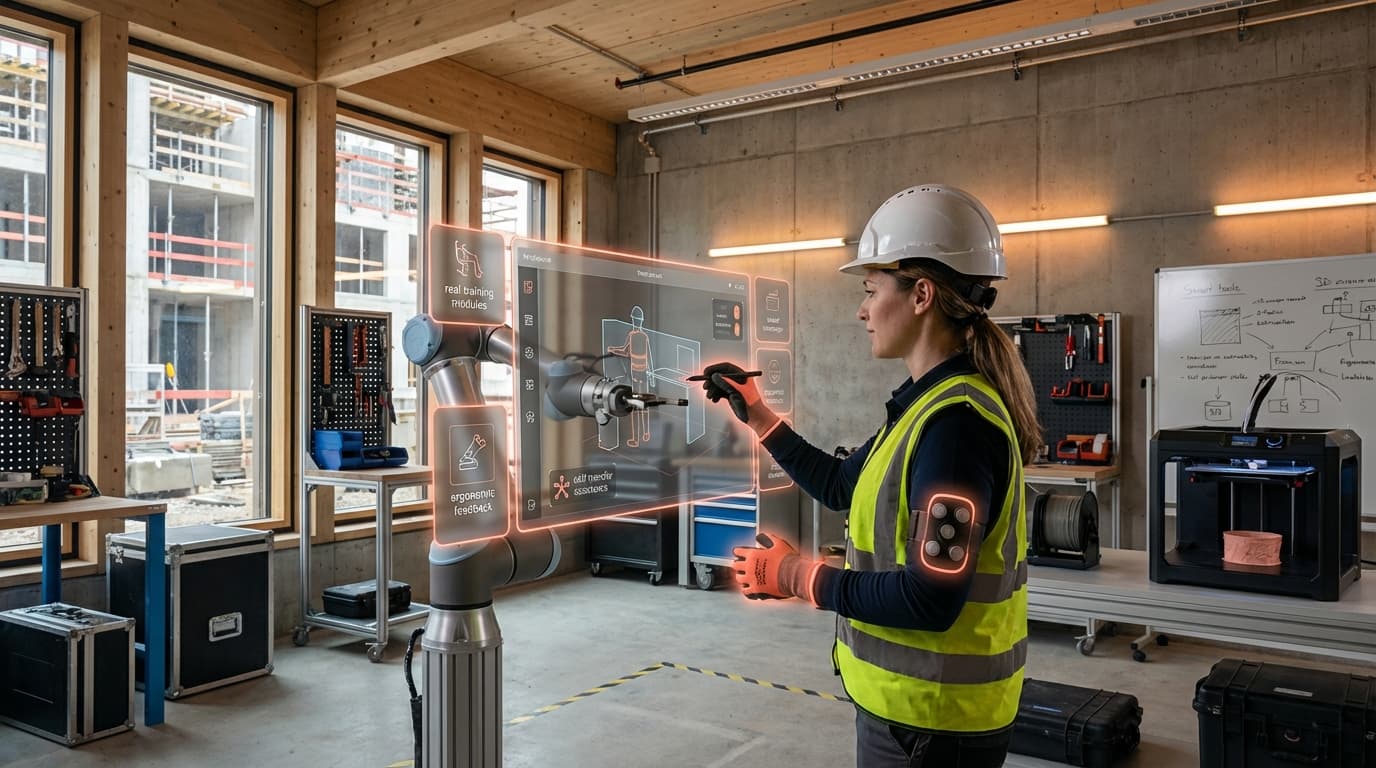
The construction industry stands at a critical juncture as automation technologies—from robotic bricklayers to autonomous heavy machinery—increasingly perform tasks traditionally executed by human workers. Labor displacement mitigation encompasses a comprehensive set of strategies designed to address the workforce disruptions caused by this technological transformation. At its core, this approach combines policy interventions, educational initiatives, and industry partnerships to ensure that construction workers are not left behind as their roles evolve or disappear. The technical mechanisms involve identifying which job functions are most vulnerable to automation, mapping the skills gap between current worker capabilities and emerging technological requirements, and developing targeted training pathways that bridge this divide. Rather than simply replacing workers with machines, effective mitigation strategies focus on repositioning human labor toward higher-value activities such as robot supervision, digital system management, predictive maintenance, and complex problem-solving tasks that remain beyond the capabilities of automated systems.
The construction sector faces a unique challenge in managing this transition, as it employs millions of workers globally, many of whom have spent decades developing specialized manual skills that may become obsolete within a generation. Research suggests that automation could affect up to 40% of construction tasks over the coming decades, creating urgent pressure to develop proactive rather than reactive workforce strategies. Labor displacement mitigation addresses several critical industry challenges: maintaining social stability during technological transitions, preserving institutional knowledge that experienced workers possess, ensuring that productivity gains from automation benefit workers rather than solely capital owners, and preventing the creation of a permanent underclass of unemployed former construction workers. These strategies also enable new business models, such as hybrid construction teams where human workers collaborate with robotic systems, and create pathways for workers to transition into adjacent industries like facilities management, building information modeling, or construction technology development.
Early implementations of displacement mitigation programs are emerging across various markets, with some construction firms establishing internal retraining academies and industry associations partnering with technical colleges to develop automation-focused curricula. Pilot programs have demonstrated that workers with hands-on construction experience can successfully transition to roles as robotics operators, digital twin managers, and automated system troubleshooters when provided with appropriate educational support. Government initiatives in several regions are exploring portable benefits systems, wage insurance programs, and apprenticeship models that combine traditional construction skills with digital competencies. As the construction industry continues its digital transformation, labor displacement mitigation will become increasingly central to ensuring that technological progress serves human welfare rather than undermining it. The success of these strategies will ultimately determine whether construction automation creates broadly shared prosperity or exacerbates economic inequality, making this not merely a technical challenge but a fundamental question of how we structure the future of work in the built environment.
Related Organizations

Trade union representing heavy equipment operators, running extensive training centers to upskill workers on modern, semi-autonomous machinery.

A major labor union representing construction workers, actively negotiating training and protection clauses regarding automation.

UK industry training board that levies funds from construction firms to invest in skills training and workforce planning.

Foundation that develops standardized construction curricula and assessments to address workforce development and skills gaps.

Partnership of students, teachers, and industry working together to ensure America has a skilled workforce.

Construction giant that acquired 'Concrete Sensors' to integrate IoT structural monitoring into their portfolio.

The philanthropic arm of Procore, providing free software and training to universities and trade schools to modernize the workforce.

Owner of the Arnold renderer, which integrates AI denoising to optimize high-end VFX workflows for film and TV.

Provides autonomous vehicle software for mining and construction equipment.

Think tank conducting in-depth research on the future of work, automation potential, and labor market shifts in construction.
Supporting Evidence
Research this in Signals
Signals turns a topic into a sourced research record you can inspect and rerun. Your first scan is free, and this one starts with Labor Displacement Mitigation already loaded, so edit it or scan as is.