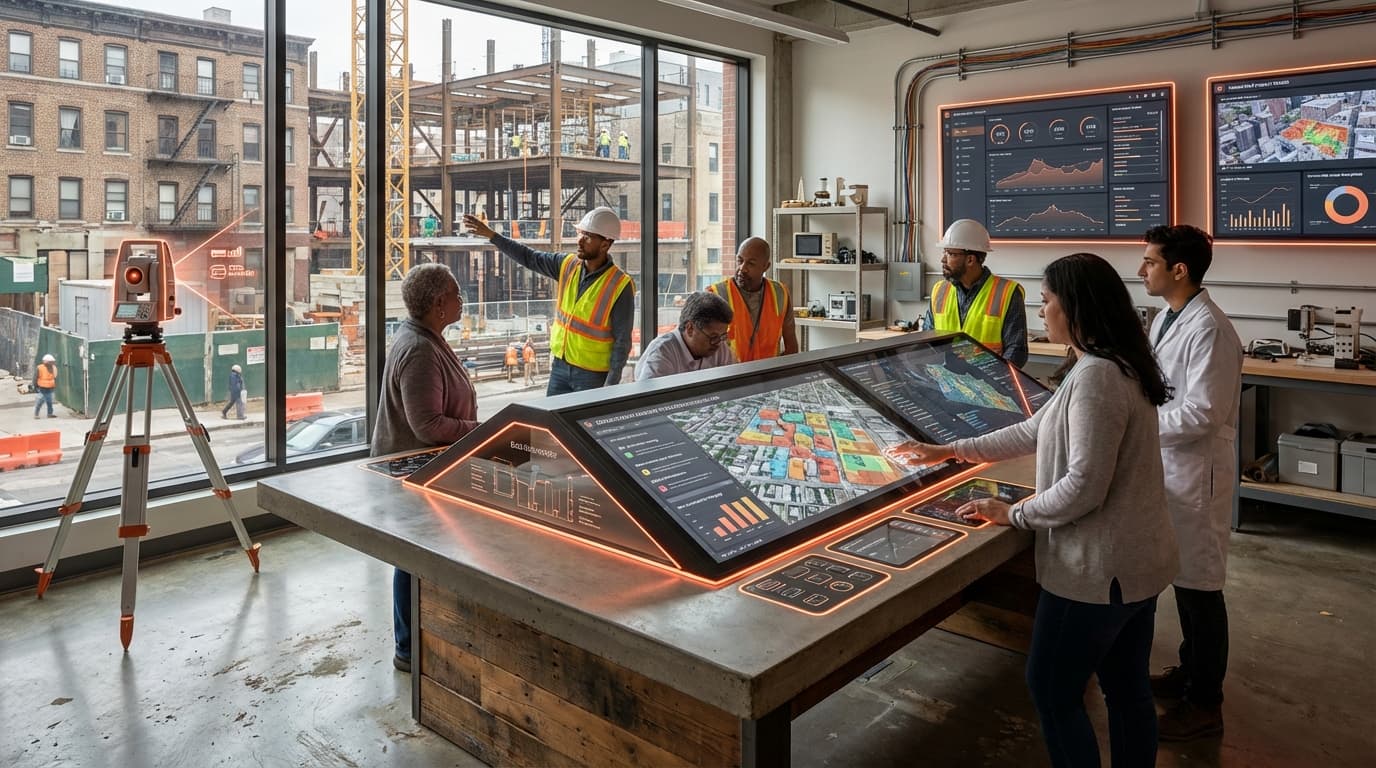
Gentrification & Displacement from Development
Urban development projects, while often intended to revitalize neighborhoods and improve infrastructure, frequently generate unintended consequences that threaten the stability of existing communities. The fundamental challenge lies in the economic dynamics that accompany new construction: as transit stations, mixed-use developments, and regeneration projects enhance an area's desirability, property values and rents typically rise, creating financial pressures that can force long-term residents and small businesses to relocate. This phenomenon, commonly termed gentrification-induced displacement, represents a critical tension in contemporary urban planning—the conflict between progress and preservation, between attracting investment and protecting vulnerable populations. Traditional development models have often prioritized economic growth metrics while inadequately accounting for the social costs borne by communities with limited financial resilience, particularly low-income households and communities of color who may lack the resources to withstand rapid market changes.
Addressing displacement requires a multifaceted approach that combines regulatory frameworks, alternative ownership models, and analytical tools to anticipate and mitigate harm. Inclusionary zoning policies mandate that developers include affordable housing units within new projects, ensuring that economic diversity persists even as neighborhoods transform. Community land trusts offer an alternative ownership structure where land is held collectively, decoupling property values from housing costs and providing long-term affordability protections. Anti-displacement impact assessments have emerged as essential planning instruments, requiring developers and municipalities to evaluate how proposed projects might affect existing residents before construction begins. Participatory planning processes give community members direct input into development decisions, shifting power dynamics and ensuring that local knowledge informs project design. These mechanisms work most effectively when implemented in combination, creating layered protections that address displacement from multiple angles.
Research institutions and municipal planning departments increasingly employ predictive displacement models that analyze demographic data, housing market trends, and development pipelines to identify neighborhoods at risk before displacement accelerates. These analytical tools leverage geographic information systems and machine learning algorithms to map vulnerability patterns, enabling proactive intervention rather than reactive response. However, technology alone cannot solve displacement—the effectiveness of these tools depends entirely on the political will to implement protective policies and the availability of public financing mechanisms such as affordable housing trust funds, tax increment financing districts dedicated to anti-displacement efforts, and acquisition programs that preserve naturally occurring affordable housing. Early interventions in cities facing rapid development pressures suggest that communities with strong tenant protections, robust community organizing networks, and dedicated funding streams can maintain greater socioeconomic diversity through development cycles. As urban populations continue to concentrate and infrastructure investment accelerates, the challenge of equitable development will intensify, making displacement mitigation not merely an ethical consideration but a fundamental requirement for socially sustainable cities.
Related Organizations

A national nonprofit dedicated to building strong communities with lasting affordability.

A leading think tank focused on land policy, taxation, and urban development.

PolicyLink
United States · Nonprofit
A national research and action institute advancing racial and economic equity.

A unified response to gentrification and a call to halt the displacement of low-income people, people of color, marginalized LGBTQ communities, and youths.
Urban Institute
United States · Nonprofit
Nonprofit research organization that provides data and evidence to help advance upward mobility and equity.

Enterprise Community Partners
United States · Nonprofit
A national nonprofit that develops frameworks (like Green Communities) which integrate health and social equity outcomes into housing standards.

A non-profit organization that helps local leaders create greater racial equity and economic mobility in neighborhoods.

A nonprofit public policy organization based in Washington, D.C.

A nonprofit organization that helps people in your community and around the world build or improve a place they can call home.
Supporting Evidence
Research this in Signals
Signals turns a topic into a sourced research record you can inspect and rerun. Your first scan is free, and this one starts with Gentrification & Displacement from Development already loaded, so edit it or scan as is.