Mass Customization Platforms
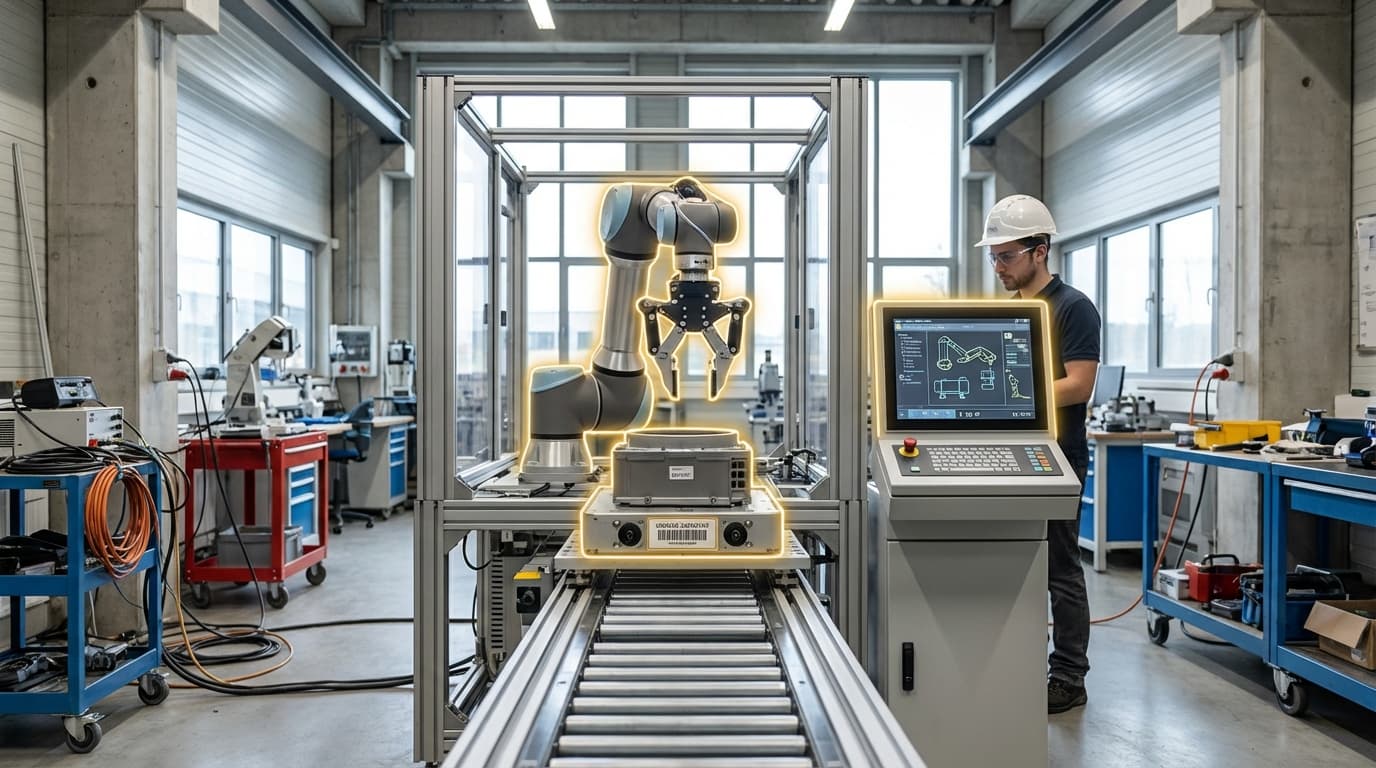
Mass customization platforms represent a fundamental shift in manufacturing philosophy, moving away from the traditional trade-off between economies of scale and product variety. These systems integrate advanced robotics, additive manufacturing technologies, and artificial intelligence-driven production planning to enable the economically viable production of unique, individualized products without the need for costly retooling or setup changes between units. At their core, these platforms employ modular robotic cells that can be rapidly reconfigured through software rather than physical modification, combined with digital fabrication methods like 3D printing that build products layer by layer from digital designs. AI planning algorithms orchestrate the entire production process, optimizing material flows, machine scheduling, and quality control in real-time to maintain efficiency even when every item rolling off the line differs from the last. This technological convergence allows manufacturers to treat each customer order as a unique specification while maintaining the cost structure traditionally associated only with mass production of identical goods.
The industrial challenge these platforms address is profound: consumers increasingly demand products tailored to their specific needs, preferences, and contexts, yet traditional manufacturing economics have made such customization prohibitively expensive for all but luxury goods. Conventional production lines achieve low unit costs through repetition and standardization, requiring expensive changeovers when switching between product variants. This creates a fundamental tension between market demand for variety and manufacturing efficiency. Mass customization platforms resolve this conflict by eliminating the distinction between custom and standard production. They enable manufacturers to respond to market fragmentation without fragmenting their operations, opening new business models in industries from footwear and apparel to automotive components and medical devices. Companies can now offer near-infinite product variations, personalized fit and function, and on-demand production without maintaining vast inventories of pre-made variants or accepting the margin erosion that custom work traditionally entails.
Early implementations of mass customization platforms have emerged across diverse sectors, with footwear manufacturers offering shoes tailored to individual foot scans, furniture companies producing pieces sized to specific room dimensions, and medical device makers creating patient-specific implants and prosthetics. The automotive industry has begun exploring these systems for producing customized interior components and specialized vehicle modifications without disrupting main assembly lines. As these platforms mature, they are converging with broader Industry 4.0 trends, including digital twins that simulate production before physical manufacturing begins and distributed manufacturing networks that can produce customized goods closer to end consumers. The trajectory suggests a future where the very concept of standard product models may become obsolete, replaced by continuous spectrums of variation where each customer receives exactly what they need. This evolution promises not only greater consumer satisfaction but also reduced waste from unsold inventory and more resilient supply chains less dependent on forecasting demand for predetermined product variants.
Related Organizations

AI-driven marketplace connecting enterprise buyers with a global network of manufacturing service providers.

Digital manufacturing source for rapid prototyping and on-demand production.

A software platform specifically designed to enable brands to offer customizable products manufactured on demand.


Digital manufacturing ecosystem that delivers custom parts on-demand via a vetted network of partners.

Robotics and apparel company developing 3D weaving technology (Vega) to produce custom jeans on-demand.

The parent company of Vistaprint, operating massive mass customization facilities for print, promotional products, and apparel.


HP
United States · Company
Partnering with Google to commercialize Project Starline hardware for enterprise meeting rooms.

A major manufacturer of industrial robots, including the LBR Med, a lightweight robot certified for integration into medical devices.
Supporting Evidence
Research this in Signals
Signals turns a topic into a sourced research record you can inspect and rerun. Your first scan is free, and this one starts with Mass Customization Platforms already loaded, so edit it or scan as is.