Swarm Robotics Platforms
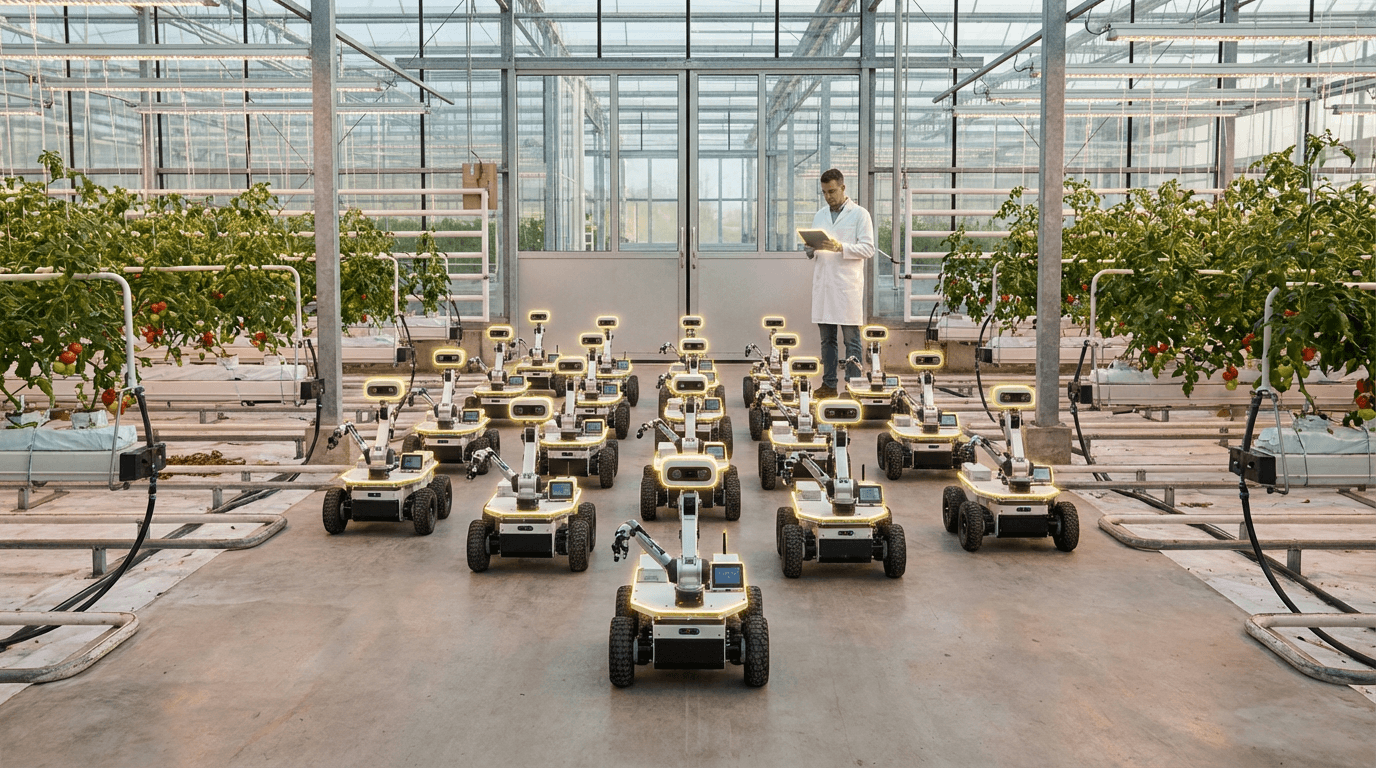
Swarm robotics platforms represent a paradigm shift in automation, drawing inspiration from the collective behaviors observed in nature—such as ant colonies, bee swarms, and flocking birds. Unlike traditional robotic systems that rely on centralized control and sophisticated individual units, swarm robotics employs large numbers of relatively simple, autonomous robots that coordinate through local interactions and distributed decision-making. Each robot in the swarm operates with limited individual capabilities and local sensing, yet the collective exhibits emergent behaviors that enable the completion of complex tasks beyond the capacity of any single unit. The technical foundation rests on algorithms that govern inter-robot communication, typically through wireless protocols or even direct physical interaction, allowing the swarm to self-organize, adapt to changing conditions, and maintain functionality even when individual units fail. This decentralized architecture eliminates single points of failure and enables the system to scale efficiently—adding more robots increases capability without requiring fundamental redesign of the control structure.
The industrial appeal of swarm robotics lies in its ability to address challenges that have long plagued traditional automation systems. In warehousing and logistics, where operational demands fluctuate dramatically and infrastructure layouts frequently change, swarm platforms offer unprecedented flexibility. Rather than investing in expensive, specialized machinery that becomes obsolete when operations evolve, facilities can deploy adaptable robot fleets that reconfigure themselves to handle varying workloads and spatial constraints. The fault-tolerant nature of swarm systems proves particularly valuable in hazardous or remote environments—such as infrastructure inspection, disaster response, or construction sites—where individual robot failures are inevitable but mission completion remains critical. Early industrial deployments have demonstrated that swarm approaches can reduce operational costs while improving resilience, as the loss of several units minimally impacts overall system performance. This technology also enables new operational models, such as continuous 24/7 operations with robots autonomously managing their own charging cycles and task allocation without human intervention.
Current implementations of swarm robotics are transitioning from research laboratories to real-world industrial settings, with pilot programs emerging across multiple sectors. Warehouse operators are testing small robot fleets for inventory management and order fulfillment, while construction companies are exploring swarm-based approaches for tasks like site surveying and material transport. In infrastructure maintenance, coordinated robot teams are being deployed for pipeline inspection and bridge monitoring, where their collective sensing capabilities provide more comprehensive coverage than single-robot solutions. The technology aligns with broader Industry 4.0 trends toward flexible, reconfigurable manufacturing systems and autonomous operations. As sensing technologies become cheaper and communication protocols more robust, the economic viability of swarm platforms continues to improve. Looking forward, the integration of machine learning algorithms promises to enhance swarm coordination and task optimization, while advances in miniaturization may enable deployment at scales previously impractical. The trajectory suggests that swarm robotics will become an increasingly common feature of industrial automation, particularly in applications where adaptability, scalability, and resilience outweigh the benefits of centralized control.
Related Organizations

Pioneer of cube storage automation, using a grid of robots on top of stacked bins to dig for and retrieve inventory.

Swiss Federal Institute of Technology, a global leader in privacy technologies and decentralized AI research.
Develops autonomous agricultural robots that work in swarms to apply crop protection products and manage farmland efficiently.

Creator of the Skypod system, a fleet of autonomous robots that can move in three dimensions (climbing racks) to retrieve bins.

Creates autonomous indoor drone swarms for inventory management in warehouses and live entertainment shows.

Builds swarm-based parcel sorting robotic systems for logistics and e-commerce supply chains.

Defense technology company building Hivemind, an AI pilot for autonomous drone swarms and aircraft operating without GPS or comms.

Develops silicon spin qubits using advanced 300mm wafer manufacturing processes.

Creators of Digit, a bipedal robot designed for logistics work.
Supporting Evidence
Research this in Signals
Signals turns a topic into a sourced research record you can inspect and rerun. Your first scan is free, and this one starts with Swarm Robotics Platforms already loaded, so edit it or scan as is.