Subsea Cable Resilience Systems
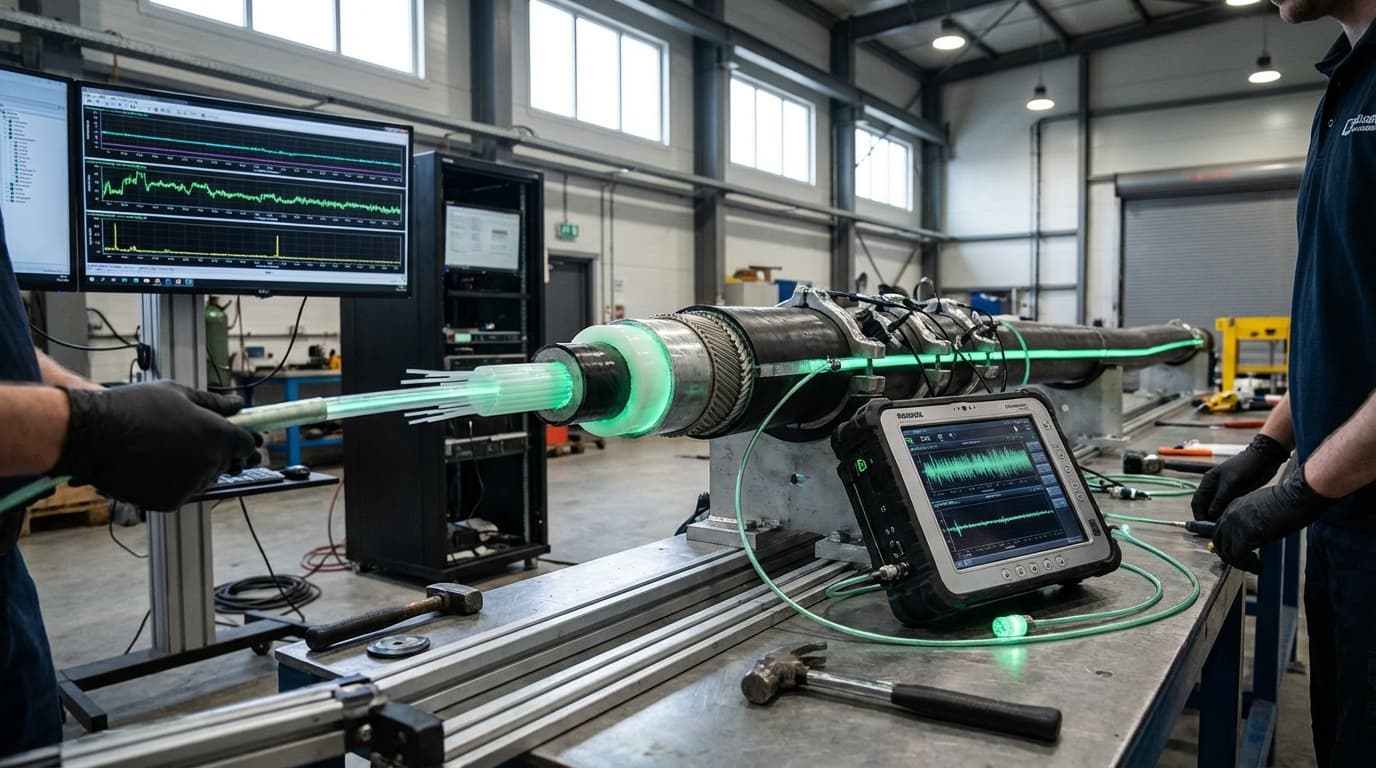
Subsea cables form the backbone of global internet connectivity, carrying over 95% of international data traffic across ocean floors. These fiber-optic arteries, stretching thousands of kilometers between continents, face mounting threats from both natural hazards—such as seismic activity, deep-sea currents, and fishing trawlers—and deliberate interference, including state-sponsored sabotage and espionage. Traditional cable systems rely on periodic manual inspections and reactive repair protocols that can leave critical infrastructure vulnerable for extended periods. Subsea Cable Resilience Systems address this vulnerability through integrated monitoring architectures that combine distributed fiber-optic sensing, autonomous fault detection algorithms, and pre-positioned repair assets. These systems employ technologies like coherent optical time-domain reflectometry to detect minute disturbances along cable routes, identifying potential tampering or damage within seconds of occurrence. Advanced signal processing distinguishes between benign environmental factors and suspicious activity patterns, while machine learning models predict failure points before catastrophic breaks occur.
The strategic importance of these systems extends beyond technical reliability to questions of national security and economic continuity. A single cable break can disrupt financial markets, interrupt emergency communications, and sever entire regions from global networks. For nations and telecommunications operators, resilience systems provide both defensive capabilities and operational advantages. Intelligent routing protocols can automatically redirect traffic through redundant pathways when threats are detected, maintaining service continuity even as physical repairs proceed. This capability proves particularly valuable during geopolitical tensions, when cable infrastructure becomes a potential target for hybrid warfare tactics. Industry analysts note that resilience investments also reduce the substantial costs associated with cable ship deployments, which can exceed hundreds of thousands of dollars per day. By enabling faster threat assessment and more targeted repair operations, these systems compress downtime from weeks to days, preserving revenue streams and maintaining service-level agreements.
Several major cable consortia and telecom operators have begun deploying pilot resilience frameworks on high-traffic routes, particularly in geopolitically sensitive regions like the Baltic Sea, South China Sea, and Arctic corridors where new cables are being laid. These deployments integrate real-time monitoring dashboards accessible to multiple stakeholders, creating shared situational awareness among cable owners, national authorities, and international regulatory bodies. Research suggests that future iterations will incorporate autonomous underwater vehicles capable of conducting preliminary damage assessments and even executing minor repairs without surface vessel support. As global data demands continue their exponential growth and submarine cable networks expand into previously unreachable regions, resilience systems represent a critical evolution in protecting the physical infrastructure that underpins digital civilization. The convergence of sensing technologies, artificial intelligence, and rapid-response logistics positions these systems as essential components of national critical infrastructure protection strategies, ensuring that the invisible cables binding our connected world remain secure against an expanding threat landscape.
Related Organizations

A leader in the manufacturing and installation of underwater optical networks, owned by Nokia.
The world's premier organization dedicated to the protection of submarine cables from natural and human hazards.
Develops Vector Annealing, a quantum-inspired simulated annealing service running on high-performance vector supercomputers.

One of the world's largest subsea cable manufacturers and installers, responsible for critical global infrastructure.
Provider of subsea cable installation and maintenance services.

Creators of CausalImpact, a package for causal inference using Bayesian structural time-series.
Subsidiary of Orange Group specializing in laying and repairing submarine cables.
Geo-data specialist providing asset integrity monitoring and remote sensing for infrastructure.

A leading engineering firm in OTEC heat exchanger design and pipeline deployment, operating the grid-connected OTEC demonstration plant in Hawaii.
The world's largest cable manufacturer, supplying submarine and land cables for major projects like the Viking Link and NeuConnect.

Operator of a high-capacity optical platform connecting Europe and Latin America directly.
Swedish technology group specializing in fiber communications, including submarine cable solutions.
Supporting Evidence
Research this in Signals
Signals turns a topic into a sourced research record you can inspect and rerun. Your first scan is free, and this one starts with Subsea Cable Resilience Systems already loaded, so edit it or scan as is.