Subsea Cable Systems & Underwater IoT
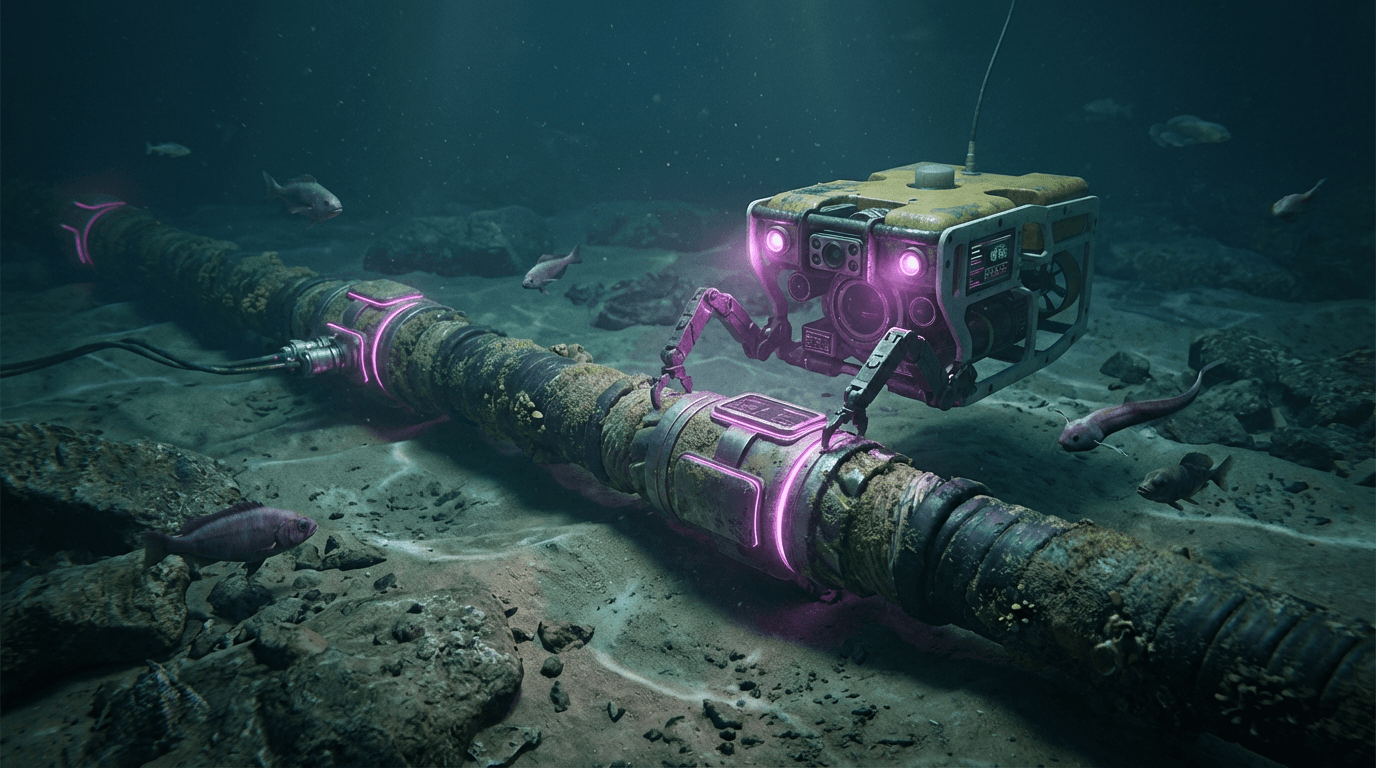
Subsea cable systems represent the critical backbone of global digital infrastructure, with more than 99% of intercontinental data traffic traversing these underwater fiber-optic networks. Traditional subsea cables function as passive conduits, simply transmitting data between landing stations across ocean basins. However, next-generation systems are evolving into sophisticated sensing platforms that leverage the physical properties of fiber-optic cables themselves. Distributed acoustic sensing (DAS) technology transforms the cable into a continuous array of sensors by detecting minute vibrations in the optical fiber caused by seismic activity, ocean currents, or passing vessels. This capability relies on analyzing backscattered light within the fiber, allowing a single cable to monitor conditions along its entire length—often spanning thousands of kilometers. When integrated with machine learning algorithms, these systems can distinguish between different types of disturbances, from earthquakes and underwater landslides to unauthorized fishing activity or potential cable threats.
The telecommunications industry faces mounting challenges in maintaining the reliability of subsea infrastructure, which is vulnerable to anchor strikes, natural disasters, and equipment degradation in harsh underwater environments. Traditional inspection and repair operations require expensive vessel deployments and can take weeks to mobilize, resulting in costly service disruptions. Next-generation subsea cable systems address these limitations by incorporating predictive maintenance capabilities and autonomous inspection technologies. AI-based fault prediction analyzes real-time performance data to identify potential failures before they occur, while autonomous underwater vehicles (AUVs) can conduct routine inspections without surface vessel support. These robotic systems navigate along cable routes, capturing high-resolution imagery and sensor data to assess cable condition and burial depth. This shift from reactive to proactive maintenance significantly reduces downtime and operational costs while extending cable lifespan.
Several recent cable deployments have begun incorporating these advanced capabilities, with operators exploring applications beyond pure telecommunications. The dual-use nature of sensing-enabled cables offers valuable data for oceanographic research, climate monitoring, and maritime security—creating new revenue streams and stakeholder partnerships. For instance, seismic monitoring data from subsea cables can enhance tsunami early warning systems in vulnerable coastal regions, while ship detection capabilities support efforts to combat illegal fishing and protect marine ecosystems. As global data demand continues its exponential growth and concerns about infrastructure resilience intensify, the evolution of subsea cables into multifunctional underwater IoT platforms represents a fundamental transformation in how we conceive of transoceanic connectivity. This convergence of telecommunications, sensing, and robotics positions subsea cable systems as critical elements of planetary-scale infrastructure, supporting not only digital communications but also environmental monitoring and ocean governance in an increasingly interconnected world.
Related Organizations
International initiative (ITU/WMO/UNESCO) to integrate environmental sensors into commercial subsea telecommunications cables.

A leader in the manufacturing and installation of underwater optical networks, owned by Nokia.
Develops Vector Annealing, a quantum-inspired simulated annealing service running on high-performance vector supercomputers.

One of the world's largest subsea cable manufacturers and installers, responsible for critical global infrastructure.

Creators of CausalImpact, a package for causal inference using Bayesian structural time-series.
Leading provider of advanced submarine network solutions (formerly Huawei Marine Networks).


Deep-tech company specializing in the 'Internet of Underwater Things' (IoUT) and wireless underwater communication networks.

Develops high-precision acoustic positioning systems, primarily for underwater applications but with industrial crossover.

Delivers 'Vessel Insight' and digital twin technologies that capture sensor data from ships to monitor fuel consumption and emissions.
Supporting Evidence
Research this in Signals
Signals turns a topic into a sourced research record you can inspect and rerun. Your first scan is free, and this one starts with Subsea Cable Systems & Underwater IoT already loaded, so edit it or scan as is.