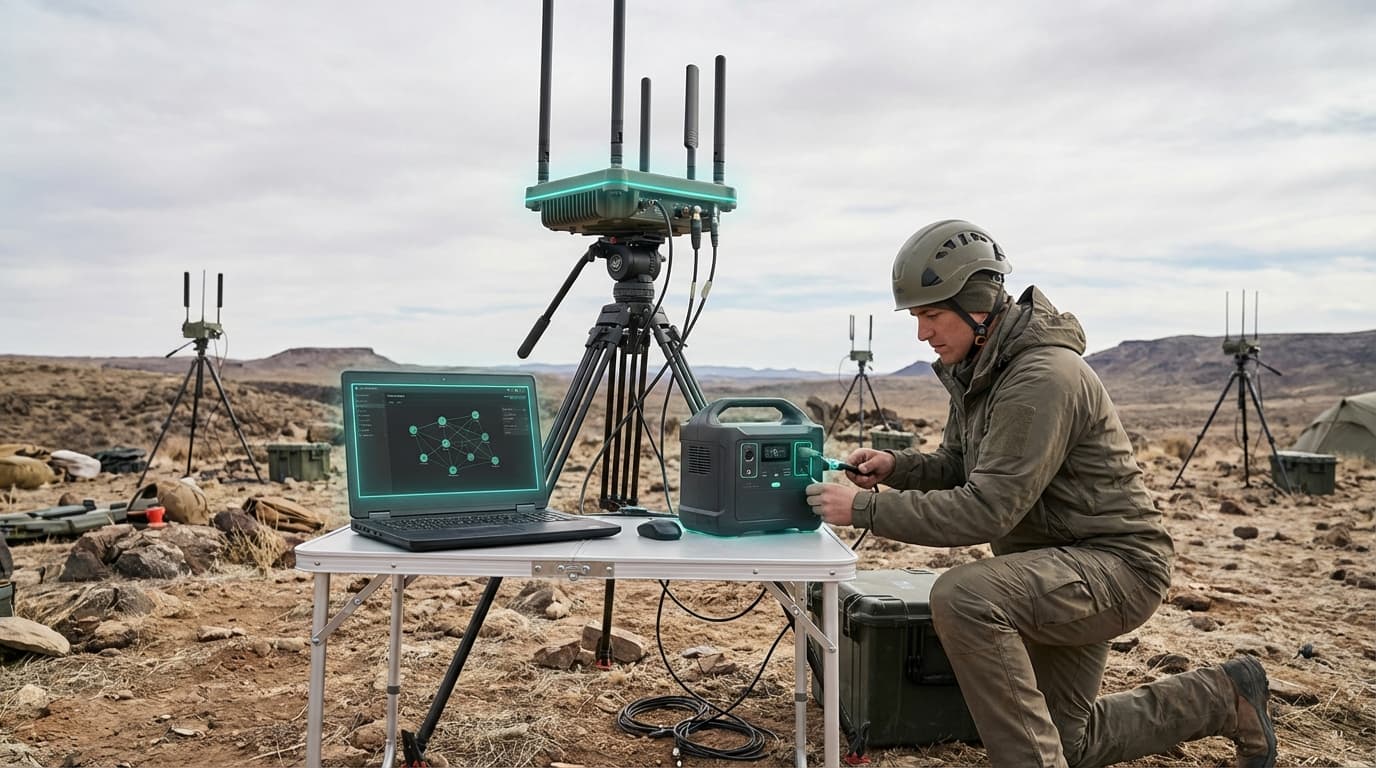
Resilient Mesh Networks
Resilient mesh networks represent a fundamental shift in communication architecture, moving away from traditional centralized infrastructure toward distributed, self-organizing systems. Unlike conventional networks that rely on fixed cell towers, satellites, or central routing hubs, mesh networks consist of numerous interconnected nodes—which can be smartphones, dedicated radio devices, or IoT sensors—that communicate directly with one another. Each node in the network acts simultaneously as both a receiver and a transmitter, automatically routing data through the most efficient available path. This peer-to-peer topology means that if one node fails or is destroyed, the network dynamically reconfigures itself, routing communications through alternative pathways. The underlying protocols typically employ frequency-hopping spread spectrum techniques and adaptive routing algorithms that continuously assess network topology and optimize data flow in real-time, ensuring robust connectivity even as the network structure changes.
The strategic value of resilient mesh networks becomes particularly evident in scenarios where traditional communication infrastructure proves vulnerable or inadequate. During natural disasters such as earthquakes or hurricanes, centralized telecommunications infrastructure often suffers catastrophic damage, leaving emergency responders and affected populations unable to coordinate relief efforts. Similarly, in conflict zones or during deliberate infrastructure attacks, adversaries may target communication hubs to disrupt military command and control or government operations. Mesh networks address these critical vulnerabilities by eliminating single points of failure and enabling communication to persist even when significant portions of the network are compromised. For military applications, this technology ensures that tactical units can maintain secure, low-latency communications without depending on vulnerable satellite links or ground-based infrastructure. For civilian emergency management, mesh networks enable first responders to establish instant communication networks in disaster zones, facilitating coordination between rescue teams, hospitals, and command centers when conventional systems are offline.
Early deployments of resilient mesh networks have already demonstrated their practical value across diverse scenarios. Military organizations have integrated mesh networking capabilities into tactical radios and unmanned systems, enabling distributed forces to maintain communications across challenging terrain without relying on vulnerable infrastructure. Emergency management agencies in disaster-prone regions have begun stockpiling portable mesh network kits that can be rapidly deployed to restore communications following catastrophic events. Research into integrating mesh networking capabilities directly into consumer smartphones suggests a future where civilian populations could maintain basic communication services even during widespread infrastructure failures. As geopolitical tensions increase and the frequency of extreme weather events rises, the demand for communication systems that can withstand both deliberate attacks and natural disruptions will likely accelerate adoption. The technology's evolution points toward increasingly sophisticated implementations that blend mesh networking with satellite connectivity, artificial intelligence-driven routing optimization, and quantum-resistant encryption, positioning resilient mesh networks as a cornerstone of future crisis communication infrastructure and national security architecture.
Related Organizations

Develops mobile mesh networking hardware and protocols that enable off-grid communication and transaction relaying.

An open-source project providing off-grid mesh communication using LoRa radios, increasingly used for decentralized data relay.

Creators of the Wave Relay MANET (Mobile Ad Hoc Networking) system used for battlefield connectivity.

Developer of MN-MIMO tactical radios that create self-healing, high-throughput mesh networks in contested environments.

Develops the TSM waveform, a leading MANET protocol for robust communications in RF-denied areas.

An open-source messaging app that syncs via Bluetooth, Wi-Fi, or Tor without central servers.

Bridgefy
Mexico · Startup
Provides software SDKs and an app for offline messaging via Bluetooth mesh.

Pioneer of Kinetic Mesh networks using InstaMesh technology for dynamic industrial and security environments.

Steward of the Helium Network, a decentralized wireless infrastructure.

Think tank hosting the Open Technology Institute, which researches mesh networks and internet freedom.

Multinational telecommunications, information technology, and consumer electronics company.
Supporting Evidence
Research this in Signals
Signals turns a topic into a sourced research record you can inspect and rerun. Your first scan is free, and this one starts with Resilient Mesh Networks already loaded, so edit it or scan as is.