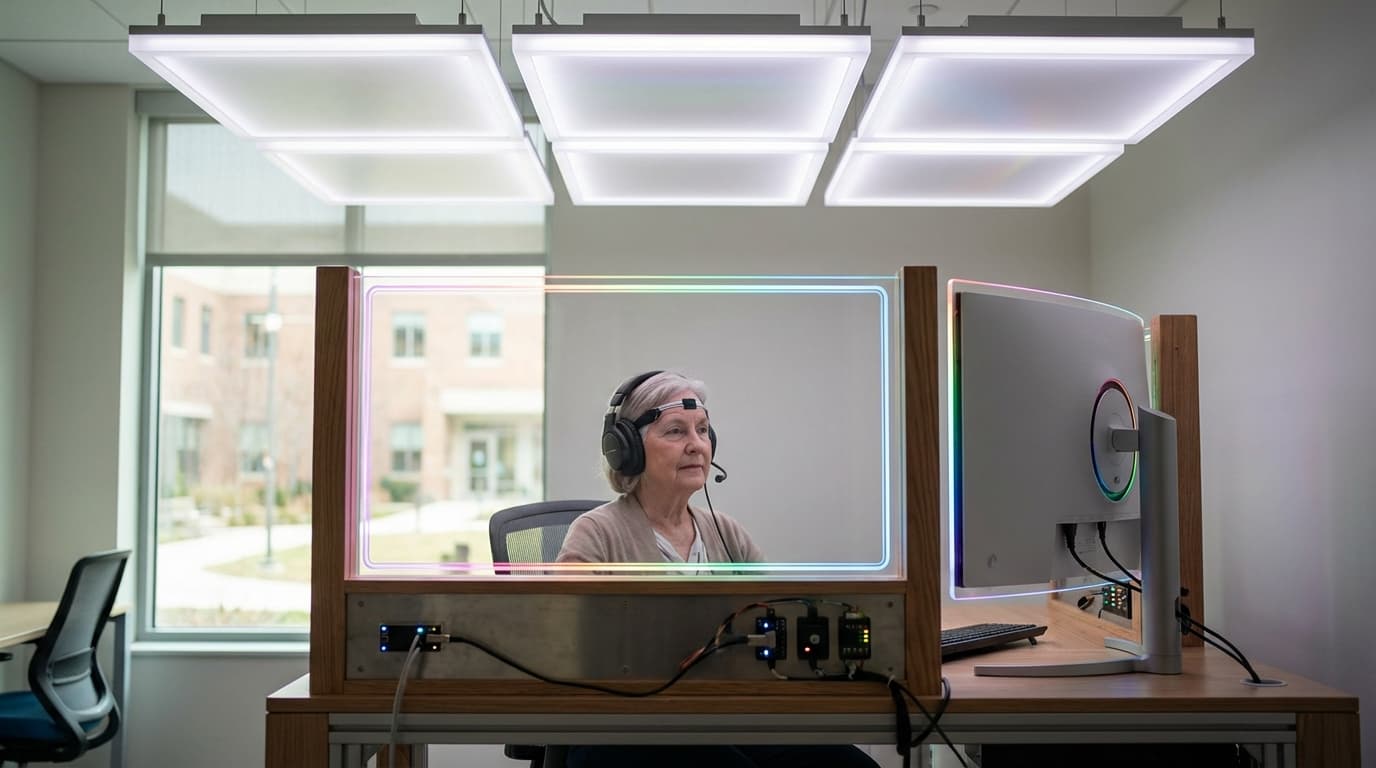
Gamma Frequency Neuro-entrainment
Gamma frequency neuro-entrainment represents a convergence of neuroscience and lighting technology, leveraging precisely controlled light modulation at 40 hertz to influence brain activity and potentially support cognitive health. The approach is grounded in the brain's natural gamma oscillations, which occur at frequencies between 30 and 100 Hz and are associated with attention, memory consolidation, and sensory processing. Research suggests that exposure to visual stimuli flickering at 40 Hz can entrain neural circuits to resonate at this frequency, potentially triggering beneficial cellular responses. The technology operates through software protocols that control LED lighting systems with microsecond precision, delivering flicker patterns that remain imperceptible to conscious awareness while still engaging the visual cortex and deeper brain structures. These protocols must account for individual variability in neural response, ambient lighting conditions, and duration of exposure, requiring sophisticated algorithms that balance therapeutic efficacy with user comfort and safety.
The primary challenge this technology addresses is the limited availability of non-invasive interventions for neurodegenerative conditions, particularly Alzheimer's disease and age-related cognitive decline. Traditional pharmaceutical approaches have shown limited success in reversing or significantly slowing these conditions, creating urgent demand for complementary therapeutic strategies. Early research indicates that gamma entrainment may activate microglial cells—the brain's immune defenders—prompting them to clear amyloid-beta plaques and tau tangles associated with neurodegeneration. Beyond clinical applications, the technology addresses broader concerns about cognitive performance in aging populations and individuals experiencing stress-related cognitive impairment. By embedding therapeutic protocols into everyday lighting infrastructure, this approach overcomes barriers of accessibility and compliance that plague many medical interventions. The software layer enables remote monitoring, dosage adjustment, and integration with other health data, transforming passive lighting systems into active health management tools. This capability is particularly valuable in residential care facilities, where consistent therapeutic delivery can be challenging to maintain through conventional means.
Current implementations remain largely experimental, with clinical trials exploring optimal exposure durations, frequencies, and delivery methods across various patient populations. Some research institutions have deployed prototype systems in controlled environments, while a small number of commercial products have emerged targeting wellness markets rather than medical claims. The technology's integration into smart home ecosystems and architectural lighting systems represents a natural evolution, potentially allowing buildings themselves to become therapeutic environments. Industry observers note growing interest from lighting manufacturers, healthcare technology companies, and neuroscience research centers in developing standardised protocols and safety guidelines. As evidence accumulates regarding efficacy and mechanisms of action, gamma frequency neuro-entrainment may transition from experimental intervention to mainstream preventive health strategy, particularly as global populations age and demand for cognitive health solutions intensifies. The convergence of this technology with advances in personalised medicine, wearable sensors, and artificial intelligence suggests a future where lighting environments adapt in real-time to individual neurological needs, fundamentally reimagining the relationship between built environments and human health.
Related Organizations

A clinical-stage company developing a medical device for Alzheimer's using gamma frequency stimulation.

A research institute at MIT focused on neuroscience.


A manufacturer of consumer lighting products designed for 40Hz stimulation.

Specializes in photobiomodulation devices, particularly wearable intranasal and transcranial units.


A leading academic research center (formerly at RPI) studying the impact of light on human health and defining metrics like Circadian Stimulus (CS).

Home to researchers like Edward Castronova, a pioneer in the academic study of synthetic worlds and virtual economies.