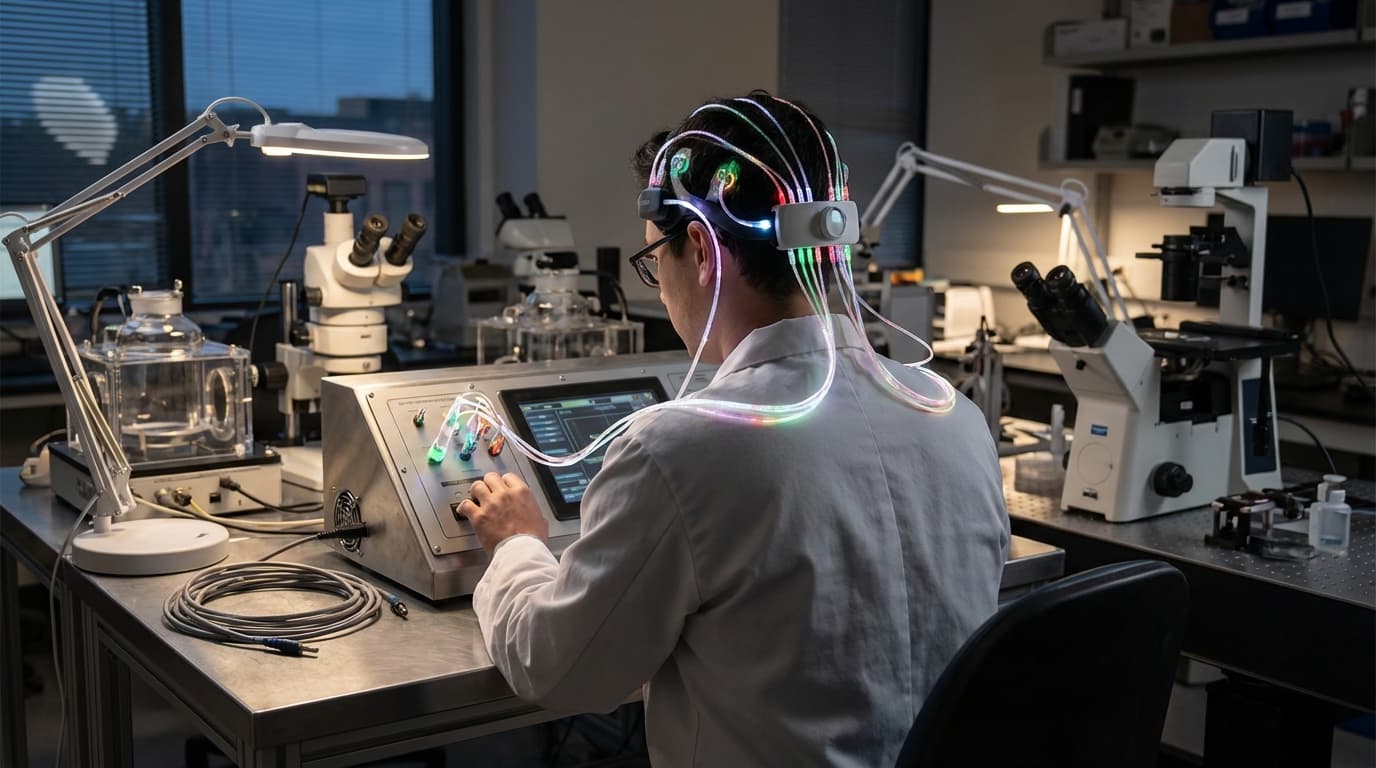
Cognitive Liberty in Optogenetics
Optogenetics represents a revolutionary convergence of light-based technology and neuroscience, employing genetically encoded light-sensitive proteins to control specific neurons with unprecedented precision. The technique works by introducing light-responsive ion channels—typically derived from algae and bacteria—into targeted neural populations, allowing researchers and clinicians to activate or silence these cells using carefully calibrated pulses of light delivered through fiber-optic implants or external devices. While initially developed for basic neuroscience research in animal models, optogenetic approaches are now advancing toward human therapeutic applications, including potential treatments for blindness through retinal photoreceptor replacement, management of treatment-resistant epilepsy, and interventions for movement disorders. This transition from laboratory tool to clinical intervention brings with it a fundamental shift in how we must consider the ethical boundaries of neural manipulation.
The emergence of optogenetic therapies introduces unprecedented challenges to the principle of cognitive liberty—the right to mental self-determination and freedom from unwanted interference with one's neural processes. Unlike traditional pharmaceuticals that diffuse broadly through the brain, optogenetics enables highly selective modulation of specific neural circuits, raising questions about the boundaries between therapeutic intervention and potential cognitive control. Industry stakeholders and bioethicists are grappling with scenarios where external light sources could theoretically be used to influence mood, memory formation, or decision-making processes without a patient's awareness or consent. This concern extends beyond individual autonomy to encompass broader security considerations: as neural interfaces become more sophisticated and potentially networked, the risk of unauthorized access or malicious manipulation of optogenetic systems becomes a tangible threat. The technology also challenges existing regulatory frameworks, which were not designed to address interventions that can be toggled on and off with such precision, potentially creating dependencies or enabling forms of neural surveillance previously confined to science fiction.
Early clinical trials and research protocols are beginning to incorporate safeguards such as encrypted control systems, patient override mechanisms, and strict limitations on the spatial and temporal parameters of light delivery. However, the field remains in its formative stages regarding comprehensive ethical governance. Regulatory bodies and professional societies are working to establish guidelines that balance therapeutic innovation with protection of neural autonomy, including requirements for informed consent processes that adequately convey the unique risks of optogenetic intervention. As these technologies mature and potentially become more accessible, the conversation around cognitive liberty in optogenetics will likely expand to encompass questions of equitable access, the potential for enhancement applications beyond therapy, and the long-term societal implications of technologies that blur the line between external stimulus and internal neural state. The development of robust ethical frameworks now will be essential to ensuring that optogenetics fulfills its therapeutic promise while preserving fundamental human rights to mental privacy and self-determination.
Related Organizations
A professional society promoting the development and responsible application of neuroscience.

The Brain Research Through Advancing Innovative Neurotechnologies Initiative, a massive US federal research program.

An engineering research center that integrates neuroethics into the design of neural devices.

An independent body that examines ethical issues in biology and medicine, actively publishing on the ethics of artificial wombs.

An IEEE initiative dedicated to advancing neurotechnology and establishing standards.
OECD
France · Government Agency
Adopted the 'Recommendation on Responsible Innovation in Neurotechnology' to guide governments and companies.

Philanthropic foundation dedicated to advancing science for the benefit of humanity, with a focus on neuroscience.

The UN agency responsible for the 'Recommendation on the Ethics of Artificial Intelligence'.

A nonpartisan, nonprofit bioethics research institute.

A global charitable foundation funding research into data trusts, health data stewardship, and bioethics.