Shared Spatial Synchronization
Shared Spatial Synchronization represents a critical infrastructure layer for collaborative mixed-reality experiences, addressing one of the most persistent technical challenges in multi-user spatial computing: ensuring that multiple participants perceive and interact with the same virtual content anchored to the same physical locations. At its foundation, this technology employs sophisticated networking engines that continuously reconcile the spatial maps generated by individual devices, using techniques such as cloud-based anchor sharing, distributed consensus algorithms, and predictive state synchronization. The system must account for the fact that each user's device independently scans and interprets the physical environment through its own sensors, creating slightly different spatial representations that must be aligned with sub-centimeter precision. This alignment process involves matching feature points, surfaces, and geometric primitives across multiple device maps, then establishing a shared coordinate system that all participants reference. Advanced implementations incorporate edge computing nodes to minimize latency, ensuring that when one user places or manipulates a virtual object, others see the change within milliseconds rather than seconds.
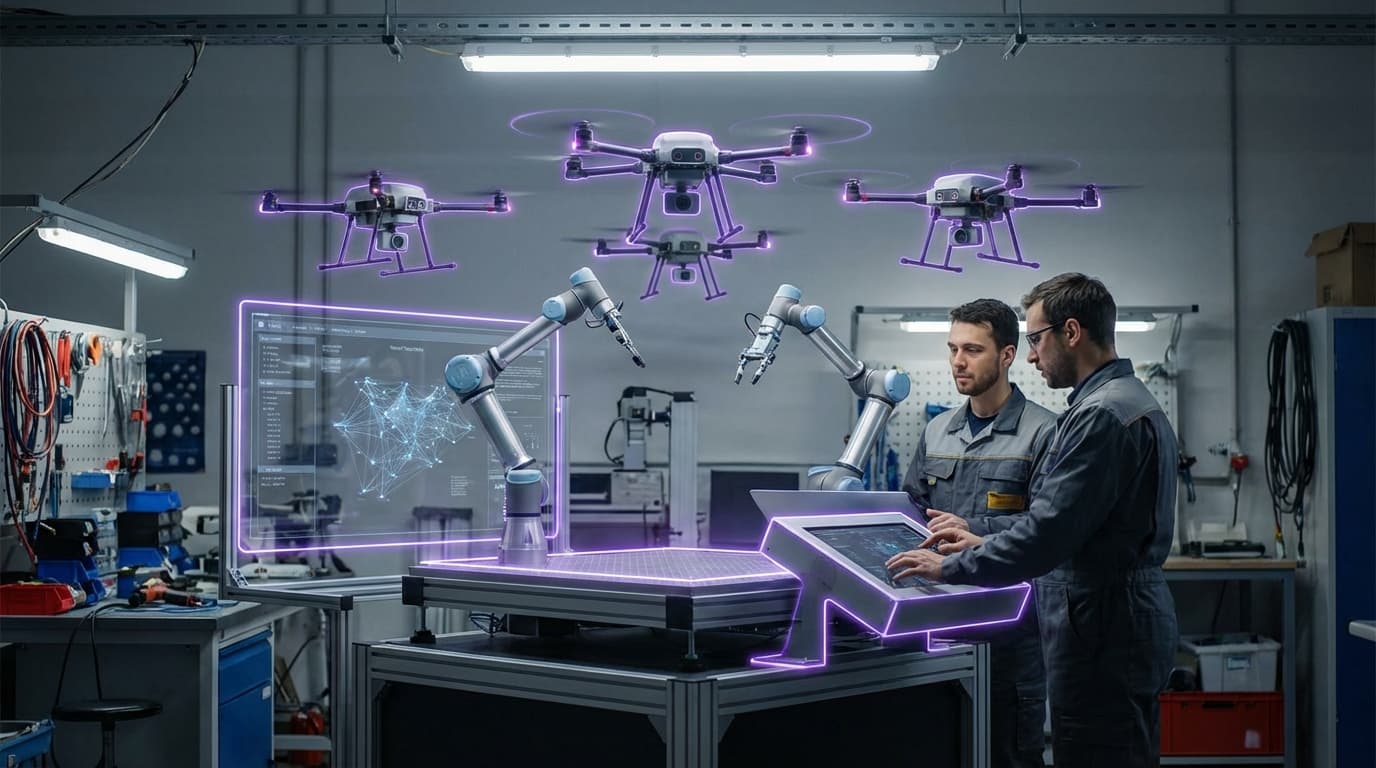
The enterprise applications of this technology are particularly compelling in sectors where distributed teams must collaborate on physical assets or spaces. Architecture and construction firms are exploring shared spatial synchronization to enable remote stakeholders to simultaneously review and annotate 3D building models overlaid on actual construction sites, with each participant's gestures and modifications visible to all others in real time. Manufacturing environments benefit from synchronized spatial workflows where technicians at different locations can jointly troubleshoot equipment, with one expert guiding another's hands through complex repair procedures via shared holographic instructions that remain precisely anchored to machinery components. The technology also addresses a fundamental limitation of traditional video conferencing: the inability to share spatial context. By synchronizing virtual presence across physical locations, teams can conduct design reviews, training sessions, and collaborative problem-solving with a sense of co-location that transcends geographic boundaries.
Early commercial deployments indicate strong adoption in industrial training scenarios, where multiple trainees can practice procedures together in mixed reality while instructors observe and intervene from remote locations. Research institutions are leveraging the technology for distributed scientific visualization, allowing researchers across continents to examine and manipulate the same three-dimensional datasets anchored in their respective laboratory spaces. As 5G networks expand and edge computing infrastructure matures, the performance envelope for shared spatial synchronization continues to improve, enabling larger groups and more complex interactions. The technology aligns with broader industry movement toward persistent spatial computing environments—digital layers that remain anchored to physical locations over time—where synchronization becomes essential not just for real-time collaboration but for maintaining consistent shared experiences across repeated sessions. This capability positions shared spatial synchronization as foundational infrastructure for the emerging spatial web, where digital content and interactions will be as locationally specific and collaboratively accessible as the physical world itself.
Related Organizations

AR platform company that develops the Lightship ARDK and owns Scaniverse, a 3D scanning app leveraging LiDAR.

Provides spatial mapping and visual positioning technology that allows for city-scale AR experiences; acquired by Hexagon.

A multiplayer networking plugin specifically built for Unity and VR/AR, handling voice, avatars, and physics sync.

Provides the Photon Fusion and Quantum networking engines, the standard for multiplayer VR/AR synchronization.

Experience technology company developing 'Connected Spaces' platform for bridging physical and digital worlds.

International consortium developing standards like GeoPose to ensure interoperability between different AR clouds and location services.

Japanese startup developing the '3D Scanner App' and AR cloud platform to enable multiplayer, persistent AR entertainment.

Provides enterprise AR solutions for multi-user visualization of 3D CAD/BIM models.

A collaborative design tool for spatial computing, allowing teams to prototype cross-reality interfaces.

Provides computer vision solutions that use satellite imagery to create 3D city meshes for AR alignment.
Supporting Evidence
Research this in Signals
Signals turns a topic into a sourced research record you can inspect and rerun. Your first scan is free, and this one starts with Shared Spatial Synchronization already loaded, so edit it or scan as is.