Spatial Access Equity
The rapid advancement of spatial computing technologies—encompassing augmented reality, virtual reality, and mixed reality systems—has created a new dimension of digital inequality. While these technologies promise to transform how we interact with information, navigate cities, and access services, their benefits risk being concentrated among affluent populations with access to expensive hardware and high-bandwidth internet connections. Spatial Access Equity addresses this emerging divide by developing infrastructure, programs, and alternative pathways that ensure spatial computing capabilities reach underserved communities. The technical approach involves creating offline-first spatial applications that can function without constant internet connectivity, developing lower-cost hardware alternatives, and establishing shared-access models similar to public libraries. These solutions often employ edge computing to reduce bandwidth requirements, utilize progressive enhancement techniques that work across device capabilities, and implement spatial anchoring systems that don't depend on proprietary platforms.
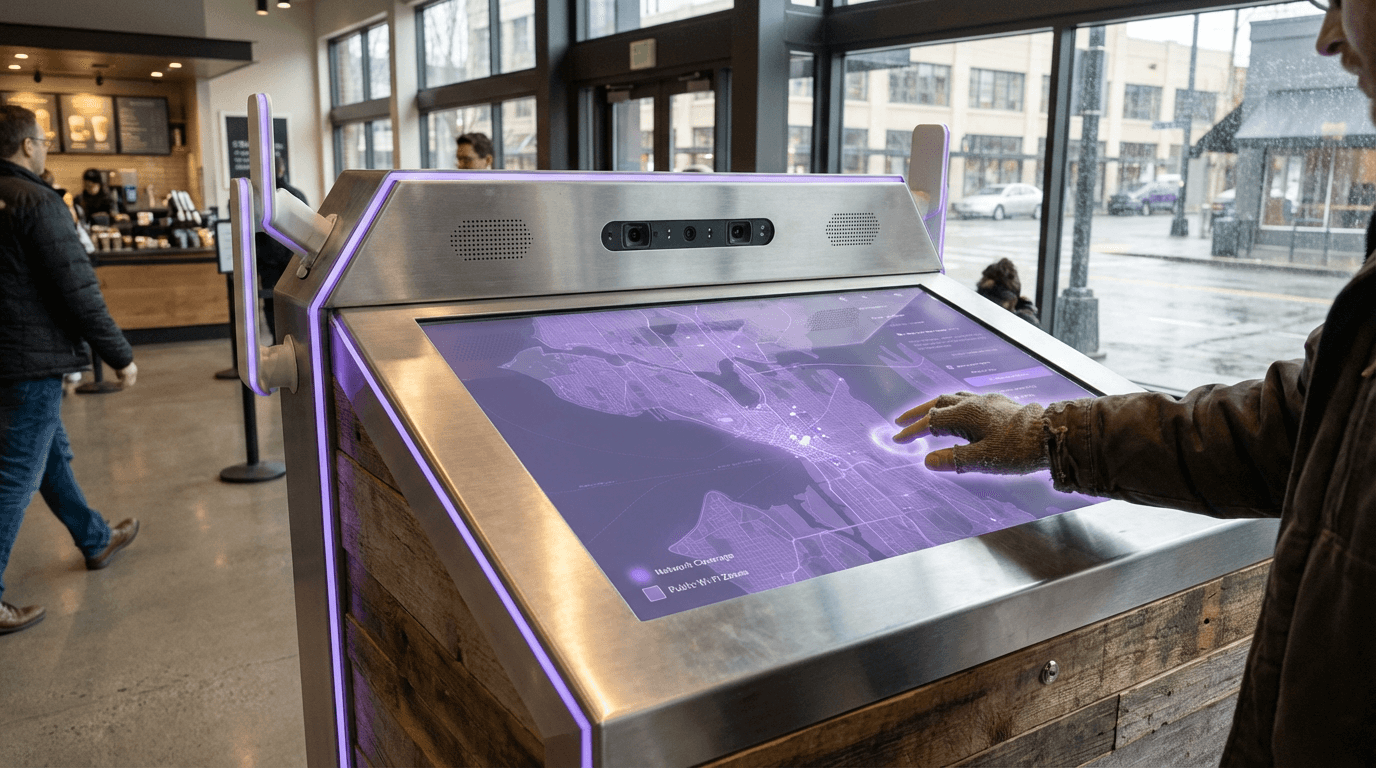
The implications for urban equity are profound, as spatial computing increasingly mediates access to essential services and information. Cities are beginning to deploy augmented reality wayfinding, spatial overlays for public transit information, and location-based civic engagement tools—all of which risk excluding populations without compatible devices or reliable connectivity. Spatial Access Equity initiatives address these challenges by establishing community spatial computing centers where residents can access shared equipment and training, implementing device-lending programs similar to library checkout systems, and ensuring that critical public information remains accessible through non-smartphone pathways such as public kiosks or basic mobile devices. This approach prevents the creation of a two-tiered society where spatial computing literacy and access become prerequisites for full civic participation.
Early implementations are emerging in both developed and developing urban contexts. Several cities have piloted community XR labs in public libraries and community centers, providing free access to headsets and spatial computing applications alongside digital literacy training. Research suggests that offline-first spatial applications—which cache spatial data locally and sync when connectivity is available—can extend spatial computing benefits to areas with limited infrastructure. Some municipalities are exploring partnerships with telecommunications providers to establish spatial computing as a utility-like service, while others are developing open-source spatial platforms that reduce dependence on proprietary ecosystems. As spatial computing becomes increasingly integrated into urban infrastructure, from navigation to emergency services to cultural experiences, ensuring equitable access will be critical to preventing these technologies from deepening existing social divides. The trajectory points toward spatial computing access becoming recognized as essential infrastructure, similar to how internet connectivity evolved from luxury to necessity over the past two decades.
Related Organizations

A community committed to making virtual, augmented, and mixed reality accessible to people with disabilities.

Graduate school with a strong focus on HCI and accessibility research for immersive technologies.

Consultancy focusing on digital accessibility, with specific expertise in auditing VR/AR applications.

The international standards organization for the Web, responsible for the Decentralized Identifiers (DID) and Verifiable Credentials (VC) recommendations.

A community meetup and resource hub dedicated specifically to virtual reality accessibility.

Through Copilot and the 'Recall' feature in Windows, Microsoft is integrating persistent memory and agentic capabilities directly into the operating system.

Develops Firefox, which implements 'Resist Fingerprinting' (RFP) to standardize and obfuscate user device characteristics.

The Partnership on Employment & Accessible Technology, funded by the US Dept of Labor, focusing on inclusive workplace tech.
The Global Initiative for Inclusive Information and Communication Technologies, an advocacy initiative launched by the UN.

AR headset manufacturer utilizing dynamic dimming and eye-tracking for optimized rendering.
Supporting Evidence
Research this in Signals
Signals turns a topic into a sourced research record you can inspect and rerun. Your first scan is free, and this one starts with Spatial Access Equity already loaded, so edit it or scan as is.