Light Field Displays
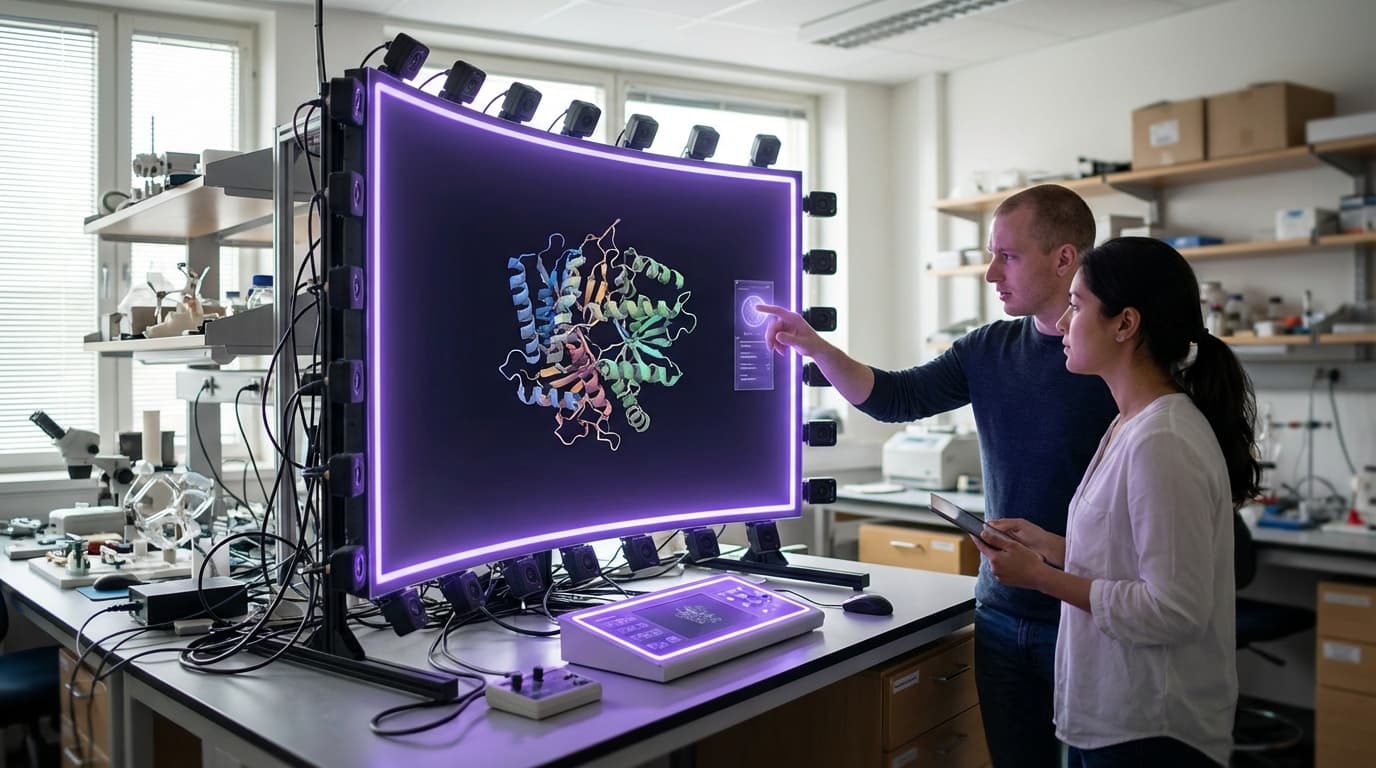
Light field displays represent a fundamental shift in how visual information is presented, moving beyond traditional flat screens and stereoscopic 3D systems to recreate the complete optical properties of real-world scenes. Unlike conventional displays that emit light uniformly toward viewers, light field technology generates and controls individual light rays traveling in specific directions, effectively reproducing the four-dimensional light field that would emanate from actual three-dimensional objects. This is achieved through various technical approaches, including arrays of microlenses positioned over high-resolution panels, directional backlight systems with precisely controlled LED arrays, or holographic optical elements that modulate light at the wavefront level. The core principle involves simultaneously presenting multiple perspectives of a scene, with each viewing angle receiving the appropriate image information. As viewers move their heads or shift position, they naturally experience parallax and can focus their eyes at different depths within the displayed content, just as they would when observing physical objects in space.
The implications for industries operating within spatial computing environments are profound, as light field displays address critical limitations that have hindered the adoption of glasses-free 3D visualization. In professional contexts such as medical imaging, architectural visualization, and industrial design, the technology eliminates the discomfort and visual fatigue associated with prolonged use of head-mounted displays or active shutter glasses. Design teams can collaborate around shared light field screens, examining complex 3D models with accurate depth perception and the ability to inspect details from multiple angles simultaneously. For retail and advertising applications, these displays enable compelling product presentations that allow customers to examine merchandise from various perspectives without physical interaction. The technology also supports more intuitive human-computer interaction paradigms, as users can reach toward and manipulate virtual objects that appear to float at specific distances in space, with their hands naturally occluding content at appropriate depth layers.
Current implementations of light field displays range from research prototypes to specialized commercial products serving niche professional markets. Several technology companies have demonstrated tabletop light field systems for collaborative design review, while medical imaging firms are exploring applications in surgical planning where surgeons can examine patient anatomy with true depth perception. The automotive industry has shown interest in light field instrument clusters that present navigation and vehicle information at optically correct distances, reducing the need for drivers to refocus between the road and dashboard displays. As manufacturing techniques advance and the cost of high-density microlens arrays and ultra-high-resolution panels decreases, light field technology is positioned to become increasingly viable for broader applications. This trajectory aligns with the larger movement toward ambient computing environments where digital information seamlessly integrates with physical space, offering a pathway to truly volumetric displays that require no special viewing apparatus and support natural, fatigue-free interaction with three-dimensional content.
Related Organizations

Develops desktop and large-format holographic displays that generate 45-100 views simultaneously for glasses-free 3D.

Developing light-field display technology primarily for AR glasses but applicable to direct-view panels.

Provides lightfield display hardware and software solutions for mobile devices, tablets, and automotive cockpits.

Academic lab led by Gordon Wetzstein researching computational light field displays and near-eye optics.

Developing professional holographic displays for medical, defense, and industrial visualization using massive light-field arrays.
Develops light-field display technology for collaborative 3D visualization, focusing on multi-view capabilities.

German research institute developing advanced algorithms for 3D Human Body Reconstruction and volumetric video coding.

Creators of CausalImpact, a package for causal inference using Bayesian structural time-series.

Supporting Evidence
Research this in Signals
Signals turns a topic into a sourced research record you can inspect and rerun. Your first scan is free, and this one starts with Light Field Displays already loaded, so edit it or scan as is.