Quantum Compass
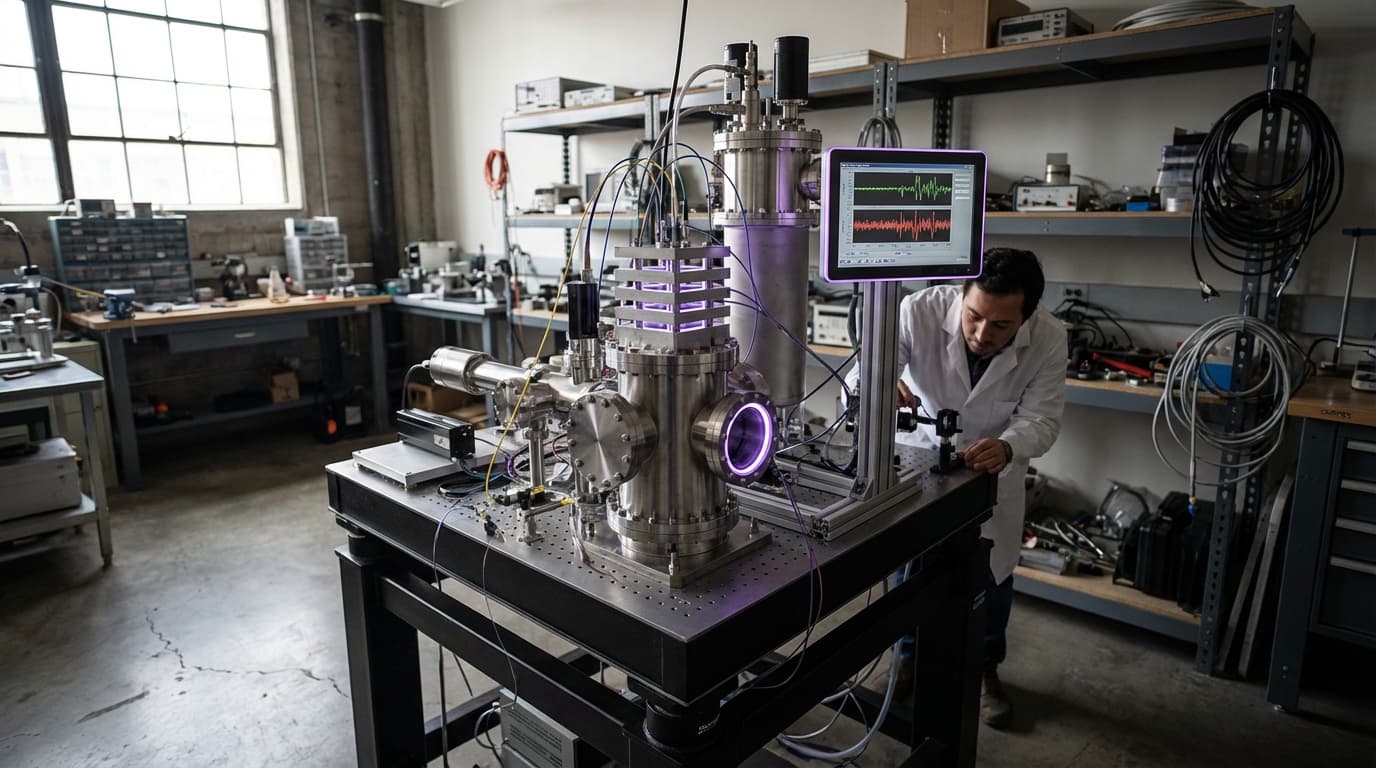
Quantum compasses use quantum sensors—typically based on ultra-cold atoms or atomic interferometry—to measure position, orientation, and motion with extreme precision without relying on external signals like GPS. These systems exploit quantum properties of atoms to detect changes in magnetic fields, gravitational fields, or rotation, providing navigation information that is independent of satellite systems. Quantum sensors can measure these physical quantities with precision far exceeding classical sensors, enabling navigation in environments where GPS is unavailable or unreliable.
The technology addresses critical limitations of GPS including vulnerability to jamming, unavailability in indoor or underground environments, and dependence on satellite infrastructure. Quantum compasses could enable navigation for autonomous vehicles, submarines, aircraft, and other systems that need precise positioning without external signals. Applications include navigation in GPS-denied environments, precision surveying, and inertial navigation systems with unprecedented accuracy. Research institutions and companies are developing quantum sensors for navigation, with some systems being tested in field applications.
At TRL 6, quantum compasses are being demonstrated in laboratory and limited field tests, though size, cost, and environmental sensitivity remain challenges. The technology faces obstacles including the need for ultra-cold temperatures or vacuum conditions, sensitivity to environmental disturbances, size and power requirements, and integration complexity. However, as quantum sensor technology matures and becomes more compact, quantum compasses could become practical alternatives or supplements to GPS. The technology could enable reliable navigation in any environment, providing critical capabilities for autonomous systems, military applications, and scenarios where GPS cannot be relied upon, potentially transforming navigation and positioning systems.
Related Organizations

The Centre for Cold Matter develops portable quantum accelerometers for navigation without satellite support.

Formerly ColdQuanta; develops quantum atomics for computing and sensing, including RF and inertial sensors.

Formed by the merger of iXblue and ECA Group; includes Muquans, a pioneer in quantum gravimetry.

Spun out of Alphabet, they provide a Security Suite that discovers cryptographic vulnerabilities and manages the migration to PQC.
United Kingdom · Company
Develops advanced laser systems and quantum sensors, including quantum accelerometers.

Specializes in atom optic sensors, including high-precision quantum gravimeters and gradiometers.

Develops ruggedized atomic inertial sensors and clocks specifically for GPS-denied navigation in defense applications.
Provides infrastructure software for quantum control to suppress errors and improve hardware performance.

Develops subsystems and vacuum packages for cold atom quantum sensors, including gravity sensors (CASPA project).
Supporting Evidence
Research this in Signals
Signals turns a topic into a sourced research record you can inspect and rerun. Your first scan is free, and this one starts with Quantum Compass already loaded, so edit it or scan as is.