Quantum-Enhanced GPS
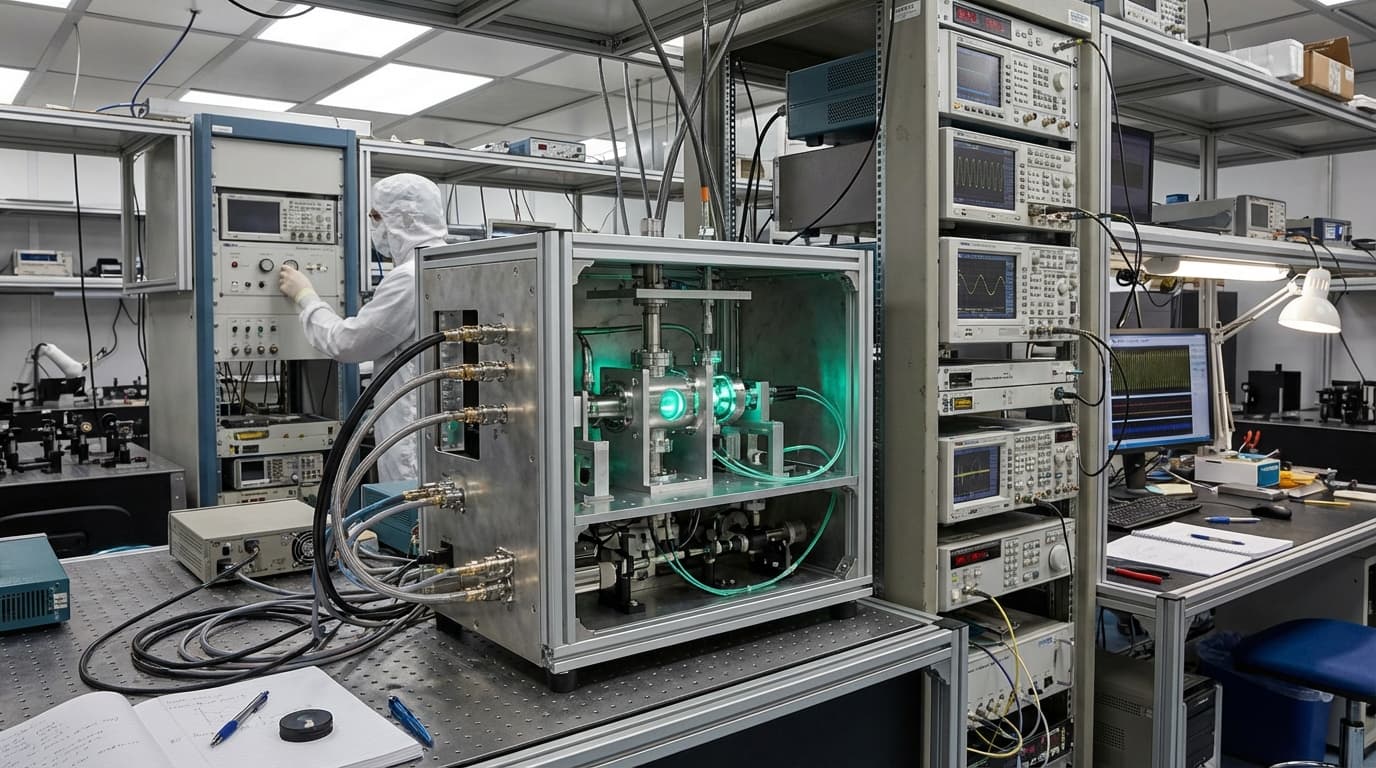
Quantum-enhanced GPS systems use chip-scale atom interferometers (miniaturized devices that use quantum interference of atoms to measure motion) to measure acceleration and rotation with quantum precision (extreme accuracy enabled by quantum effects), enabling navigation systems that do not rely on satellite signals (GPS signals that can be jammed or unavailable). Defense, aerospace, and subsea operators are prototyping these units for resilient positioning (navigation that works even when GPS fails) under jamming (when GPS signals are blocked) or underground conditions (where GPS doesn't work), creating navigation systems that can operate independently of satellite infrastructure, providing critical navigation capabilities in challenging environments where traditional GPS fails.
This innovation addresses the vulnerability of GPS-dependent navigation, where GPS can be jammed or unavailable. By using quantum sensors, these systems can navigate independently. Defense contractors, aerospace companies, and research institutions are developing these systems.
The technology is particularly significant for defense and critical infrastructure, where reliable navigation is essential. As GPS vulnerabilities become more concerning, quantum navigation becomes increasingly important. However, ensuring accuracy, managing complexity, and achieving practical deployment remain challenges. The technology represents an important direction for resilient navigation, but requires continued development to achieve practical use. Success could provide critical navigation capabilities, but the technology must prove its reliability and value. Quantum navigation is an active area of research with defense applications being a major driver.
Related Organizations
United States · Company
Develops cold atom hardware and sensors, including inertial sensors based on atom interferometry.
France · Company
Produces the Absolute Quantum Gravimeter (AQG), the first commercially available atom interferometry gravimeter.

Specializes in atom optic sensors, including high-precision quantum gravimeters and gradiometers.

A US Department of Energy lab actively researching adiabatic logic circuits and reversible computing to overcome thermodynamic limits in microelectronics.

Develops ruggedized atomic inertial sensors and clocks specifically for GPS-denied navigation in defense applications.

Building 'Gravio', a cold atom interferometry sensor for resource exploration and underground mapping.

The Centre for Cold Matter develops portable quantum accelerometers for navigation without satellite support.

Develops advanced laser systems and quantum gravimeters/accelerometers for navigation and sensing.

A Bosch subsidiary developing photonic quantum sensors, including magnetometers and gyroscopes for industrial application.

Develops subsystems and vacuum packages for cold atom quantum sensors, including gravity sensors (CASPA project).
Supporting Evidence
Research this in Signals
Signals turns a topic into a sourced research record you can inspect and rerun. Your first scan is free, and this one starts with Quantum-Enhanced GPS already loaded, so edit it or scan as is.