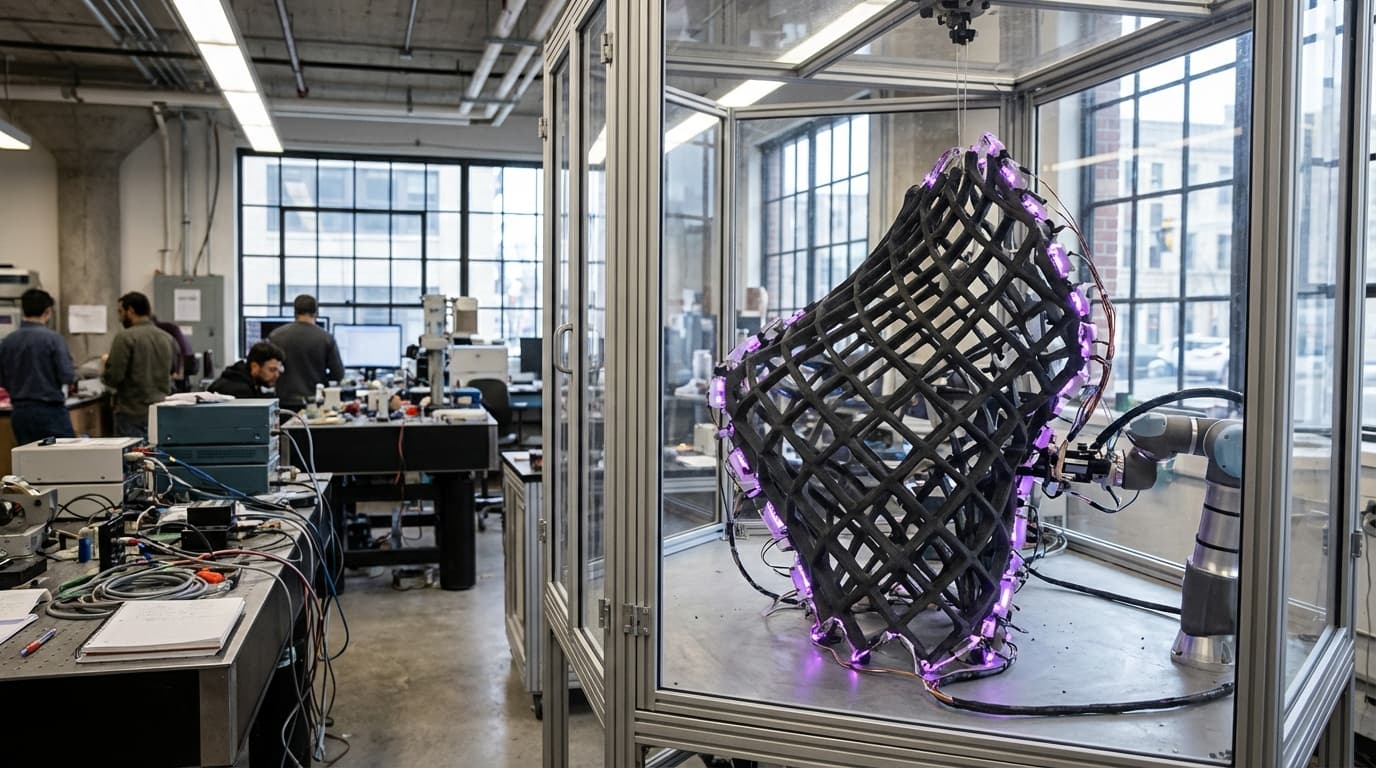
4D Printing
4D printing extends 3D printing by creating objects that can transform their shape, properties, or functionality over time in response to environmental stimuli. The technology uses programmable materials—such as shape-memory polymers, hydrogels, or composite materials—that are printed with specific internal structures and material distributions. When exposed to triggers like temperature changes, moisture, light, or magnetic fields, these materials undergo programmed transformations, enabling objects to self-assemble, adapt, or change function autonomously.
The technology enables new design possibilities where objects can be manufactured in compact forms and then expand or transform when deployed, or where structures can adapt to changing conditions. Applications include self-assembling furniture, adaptive medical implants that respond to body conditions, smart textiles that change permeability, and deployable structures for space or disaster relief. Research institutions and companies are developing various 4D printing approaches, with some commercial applications emerging in specific niches.
At TRL 5, 4D printing is primarily in research and development, with laboratory demonstrations showing various transformation capabilities. The technology faces challenges including limited material options, precise control over transformation timing and extent, durability of shape-changing materials, and the complexity of designing for transformation. However, as additive manufacturing matures and programmable materials become more sophisticated, 4D printing could enable entirely new categories of adaptive products. The technology is particularly valuable for applications where objects need to adapt to changing conditions or where compact storage and deployment are important, potentially transforming how we design and manufacture products that interact dynamically with their environment.
Research this in Signals
Signals turns a topic into a sourced research record you can inspect and rerun. Your first scan is free, and this one starts with 4D Printing already loaded, so edit it or scan as is.