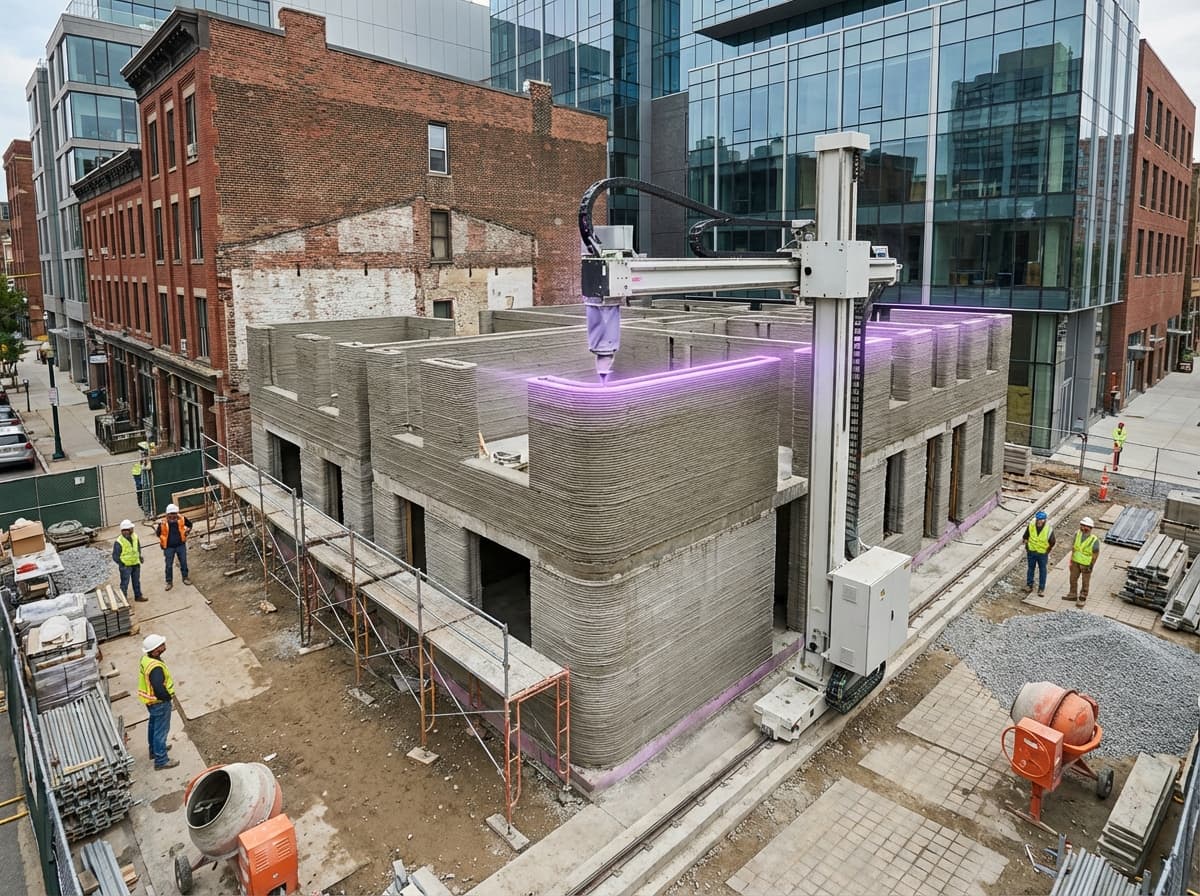
3D Printed Architecture
3D printed architecture uses large-scale additive manufacturing systems to construct buildings and structures by depositing construction materials—typically concrete, but also polymers, composites, or even soil—layer by layer according to digital designs. These systems use robotic arms or gantry systems that move along tracks, extruding material to build walls, foundations, and structural elements directly on-site or in controlled factory environments. The technology enables construction of complex geometries that would be difficult or expensive with traditional methods, while reducing material waste, labor requirements, and construction time.
The technology addresses fundamental challenges in construction: high costs, lengthy timelines, skilled labor shortages, material waste, and the difficulty of building in remote or disaster-affected areas. 3D printing can construct buildings in days rather than months, use materials more efficiently, create custom designs at no additional cost, and operate with minimal human labor. Applications include affordable housing projects, disaster relief shelters, custom architectural designs, and construction in remote locations. Companies like ICON, COBOD, and various construction firms are deploying 3D printing for building construction.
At TRL 7, 3D printed architecture is commercially deployed for various building types, though regulatory approval, material standards, and scalability remain areas of development. The technology faces challenges including building codes and regulatory approval, ensuring structural integrity and durability, integrating with traditional building systems (plumbing, electrical), and scaling to larger or multi-story structures. However, as the technology matures and gains regulatory acceptance, 3D printing becomes increasingly viable. The technology could transform construction by making it faster, cheaper, and more sustainable, potentially addressing global housing shortages, enabling rapid disaster response, and allowing for more creative and efficient building designs while reducing the environmental impact of construction.
Related Organizations

World leader in 3D construction printing solutions, manufacturing gantry-based printers.

Construction technology company using 3D printing robotics, software, and advanced materials.

Conducts advanced research in bioelectronics and the interface between biological systems and electronic circuits.

Robotics technology company developing specialized equipment for 3D printing concrete buildings.

A joint venture between Holcim and British International Investment focused on affordable housing in Africa.

Technology company offering 3D concrete printers, material, and software.

Italian company designing 3D printers for sustainable construction using natural materials like clay and earth.

One of the world's largest manufacturers of formwork and scaffolding.

Supporting Evidence
Research this in Signals
Signals turns a topic into a sourced research record you can inspect and rerun. Your first scan is free, and this one starts with 3D Printed Architecture already loaded, so edit it or scan as is.