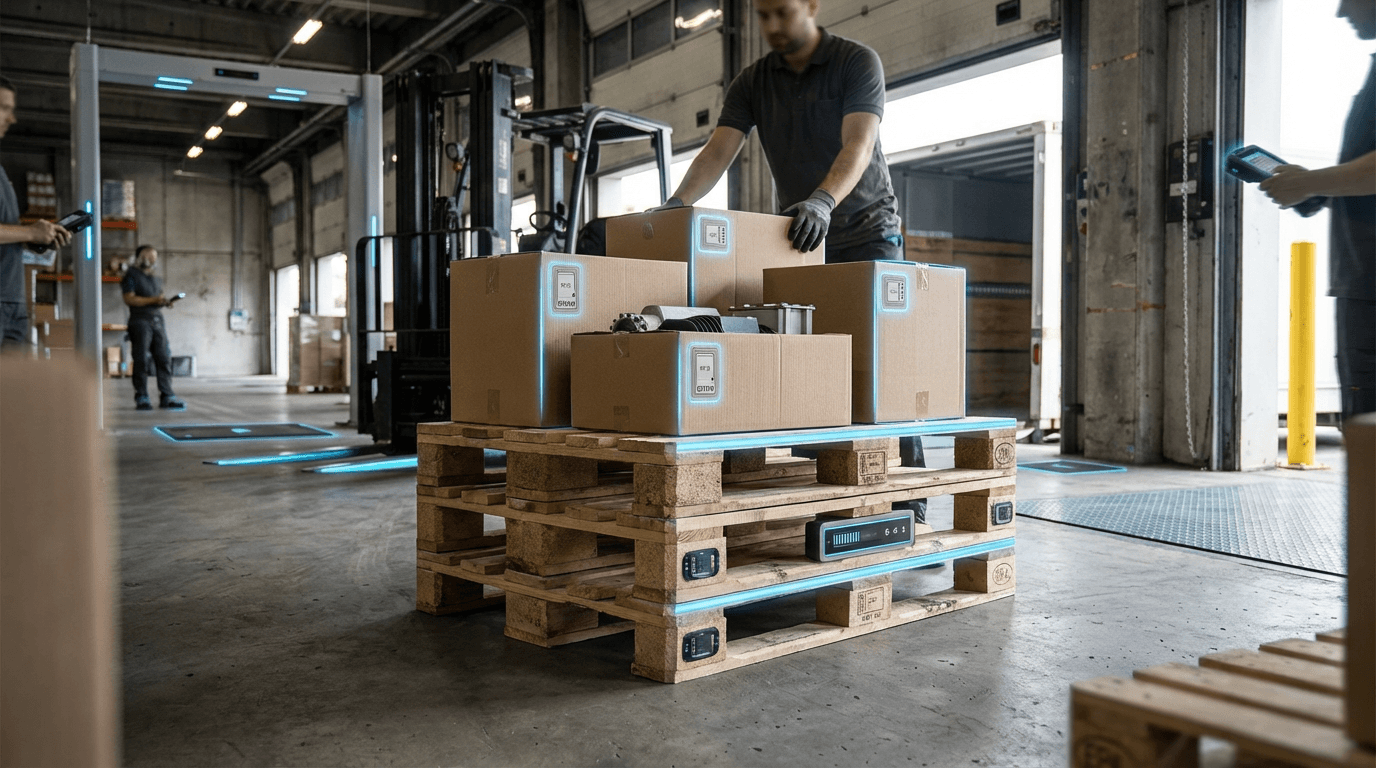
Smart Pallets and Connected Packaging
Smart pallets and connected packaging represent a fundamental shift in how goods are tracked and monitored throughout the supply chain. Traditional pallets and containers have long been passive carriers, offering no insight into their location, condition, or the status of their contents once they leave a facility. By embedding technologies such as RFID tags, Bluetooth Low Energy (BLE) beacons, GPS trackers, and environmental sensors directly into these load carriers, each pallet and package becomes an intelligent node in a vast logistics network. These embedded devices can monitor temperature, humidity, shock, tilt, and light exposure in real time, while simultaneously broadcasting unique identifiers that enable precise tracking. The integration of low-power wireless communication protocols ensures that these devices can operate for extended periods without battery replacement, making them economically viable even for single-use packaging in certain applications.
The logistics industry has long struggled with the challenge of supply chain visibility, particularly at the individual shipment level. Traditional tracking methods rely on manual scanning at checkpoints, creating gaps in data and opportunities for loss, theft, or damage to go undetected until goods reach their final destination. Smart pallets and connected packaging address these limitations by providing continuous, automated monitoring throughout the entire journey. This granular visibility enables warehouse operators to conduct inventory counts without manual labour, simply by scanning entire storage areas in seconds. For perishable goods and pharmaceuticals, condition monitoring ensures that temperature-sensitive products remain within safe parameters, automatically alerting logistics managers to potential spoilage before it occurs. The technology also reduces shrinkage and improves asset utilisation by ensuring that returnable pallets and containers are tracked and recovered efficiently, rather than disappearing into the supply chain.
Major retailers and logistics providers have begun deploying smart pallet systems in their distribution networks, with early adopters reporting significant improvements in inventory accuracy and reductions in lost assets. The technology is particularly valuable in cold chain logistics, where maintaining proper temperature throughout transport is critical for food safety and pharmaceutical efficacy. As sensor costs continue to decline and battery technology improves, industry analysts note a growing trend toward disposable smart packaging that can be applied even to individual consumer products. This evolution aligns with broader supply chain digitalisation efforts, where data from connected packaging feeds into artificial intelligence platforms that optimise routing, predict maintenance needs, and identify bottlenecks before they impact delivery schedules. The convergence of Internet of Things technology with traditional logistics infrastructure promises to transform supply chains into responsive, self-monitoring networks capable of adapting to disruptions in real time.
Related Organizations

The world's largest pallet pooling company, actively digitizing its fleet with trackers to monitor location and condition.

Developer of 'The Box', a smart, reusable, and trackable shipping container that aligns with the modular containerization goals of the Physical Internet.

Specializes in composite smart pallets with embedded IoT sensors (RM2 ELIoT) for real-time tracking.

Produces pallets coated with PU and embedded with transponders measuring location, temperature, and shock.

Provides real-time supply chain visibility insights through multi-sensor trackers (cellular/GPS/WiFi).

A major pallet pooling operator in Asia-Pacific, deploying track-and-trace solutions on their returnable packaging.

Offers verifiably better supply chain visibility on demand for on-time, in-full, in-condition delivery.

Manufacturer of returnable plastic packaging containers (RPCs) increasingly integrating tracking technology.
Supporting Evidence
Research this in Signals
Signals turns a topic into a sourced research record you can inspect and rerun. Your first scan is free, and this one starts with Smart Pallets and Connected Packaging already loaded, so edit it or scan as is.