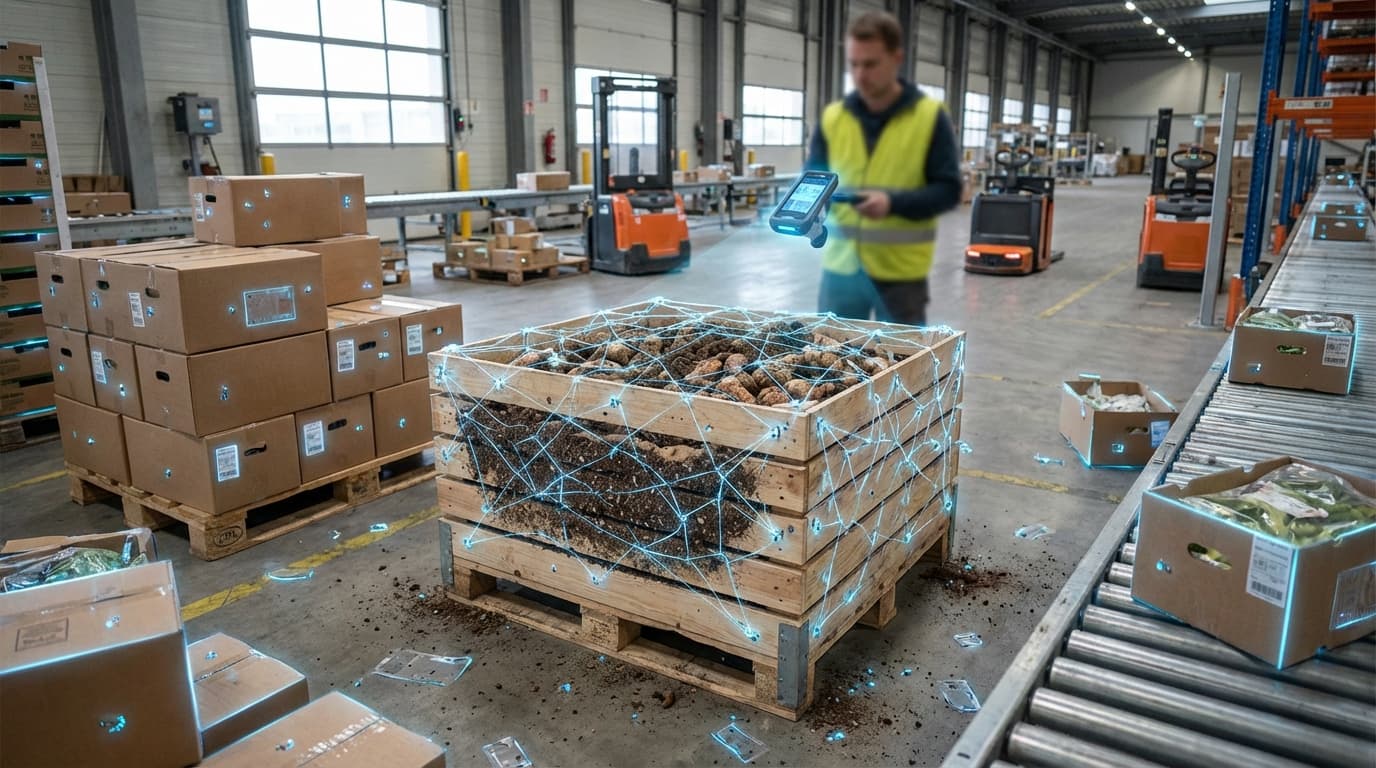
Ambient IoT and Smart Dust Sensors
Ambient IoT and smart dust sensors represent a fundamental shift in supply chain monitoring, moving beyond traditional RFID and GPS tracking to enable truly pervasive visibility at unprecedented scale. These micro-sensors, often no larger than a grain of rice, operate without batteries by harvesting energy from ambient sources such as radio waves, light, or vibration. The core technical innovation lies in backscatter communication, where sensors reflect and modulate existing radio signals rather than generating their own transmissions. This approach dramatically reduces power requirements and manufacturing costs, with industry research suggesting unit costs approaching $0.10 or less at scale. The sensors typically incorporate basic environmental monitoring capabilities—temperature, humidity, shock detection, or location tracking—packaged in form factors small enough to be embedded directly into packaging materials, labels, or even individual products.
The logistics industry has long struggled with the trade-off between granular visibility and economic feasibility. Traditional tracking solutions work well for high-value shipments or large containers, but become prohibitively expensive when applied to individual parcels, perishable goods, or low-margin products. Ambient IoT addresses this fundamental constraint by making it economically viable to track virtually anything, anywhere. For cold chain logistics, this means continuous temperature monitoring of individual pharmaceutical vials or food items rather than just the transport container. For high-value electronics or luxury goods, it enables authentication and anti-counterfeiting measures embedded at the item level. The battery-free design eliminates maintenance requirements and disposal concerns, while the minimal form factor allows integration into existing packaging workflows without significant process changes.
Early deployments in pharmaceutical distribution and fresh produce supply chains indicate the technology's practical viability, with several major logistics providers conducting pilot programs. Retailers are exploring applications ranging from inventory accuracy to automated checkout systems, where smart dust sensors could eventually replace traditional barcodes. The technology aligns with broader industry movements toward circular economy models, as the sensors can remain with products through their entire lifecycle, enabling better recycling and return logistics. As manufacturing processes mature and reader infrastructure becomes more widespread, ambient IoT sensors are positioned to become the foundational layer for end-to-end supply chain transparency, potentially tracking billions of items simultaneously across global networks while maintaining economic sustainability.
Related Organizations

Develops battery-free IoT Pixels that harvest energy from radio waves to sense and communicate.

Produces self-powered industrial sensors that run continuously without batteries.

The 3rd Generation Partnership Project unites telecommunications standard development organizations.

Manufactures ultra-low-cost, flexible integrated circuits (FlexICs) that are thinner than a human hair.

Manufactures printed smart labels with integrated batteries thin enough to be treated like standard stickers.

Develops ultra-low power wireless connectivity solutions (Bluetooth) with integrated energy harvesting capabilities.

Develops organic photovoltaic (OPV) modules using inkjet printing to harvest indoor light for low-power devices.

Impinj
United States · Company
Manufactures RAIN RFID solutions (chips, readers) essential for physical asset tracking in logistics.

Developed 'atma.io', a connected product cloud that assigns unique digital IDs to billions of items, bridging physical tags (RFID/QR) with digital data.
Supporting Evidence
Research this in Signals
Signals turns a topic into a sourced research record you can inspect and rerun. Your first scan is free, and this one starts with Ambient IoT and Smart Dust Sensors already loaded, so edit it or scan as is.