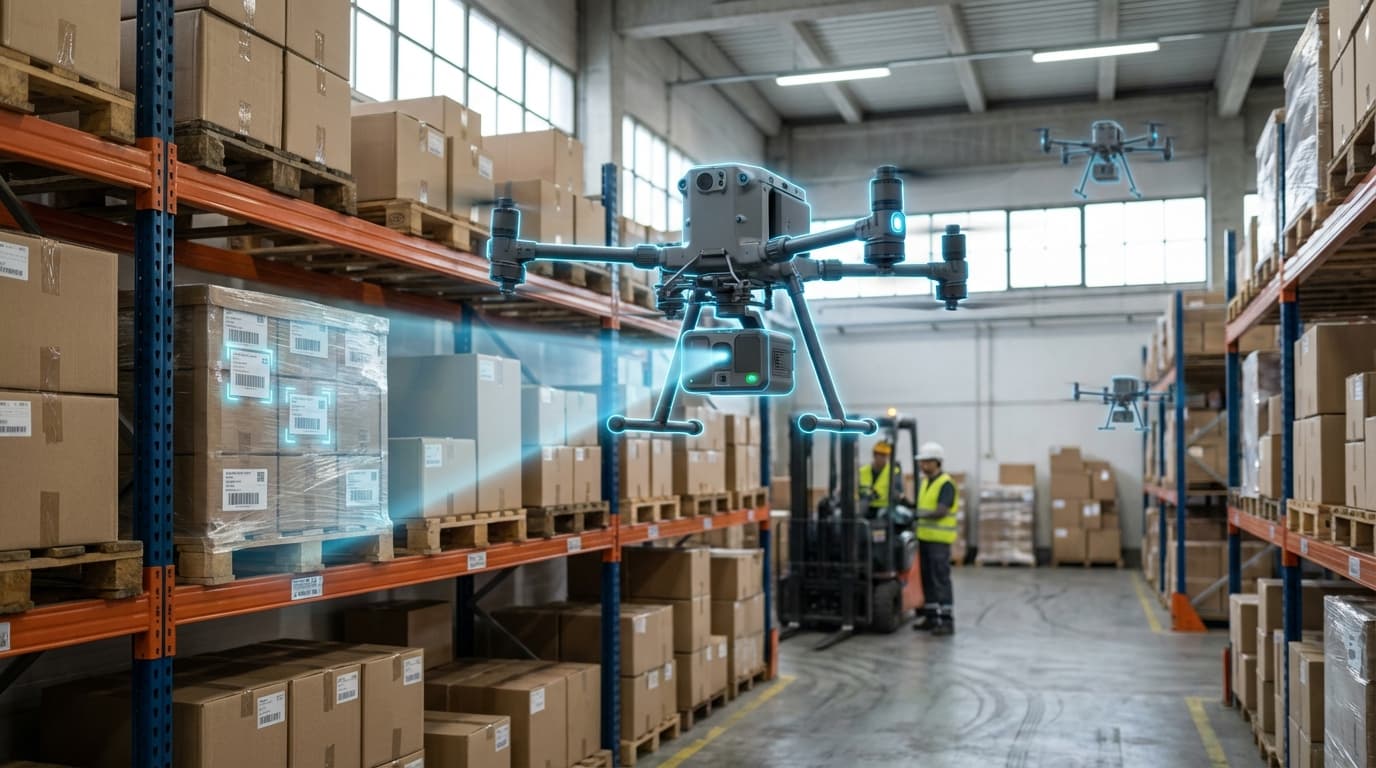
Autonomous Inventory Scanning Drones
The persistent challenge of maintaining accurate inventory records in large-scale warehousing operations has long plagued logistics managers, with traditional manual cycle counting methods proving both labor-intensive and prone to human error. Autonomous inventory scanning drones represent a technological leap forward in warehouse management, deploying aerial robotics equipped with sophisticated sensor arrays to automate the inventory verification process. These systems integrate multiple sensing technologies—including high-resolution cameras for barcode recognition, RFID readers for tag detection, and LiDAR or depth sensors for spatial navigation—into compact flying platforms that can traverse warehouse environments without ground-based infrastructure. The drones operate using simultaneous localization and mapping (SLAM) algorithms that enable them to build real-time three-dimensional maps of warehouse layouts while tracking their own position within that space. This combination of computer vision, radio frequency identification technology, and autonomous navigation allows the drones to systematically scan inventory across multiple vertical storage levels, accessing high shelving that would otherwise require scissor lifts or other specialized equipment for human workers to reach.
The fundamental problem these systems address is the inherent inefficiency and inaccuracy of traditional inventory management approaches in modern high-throughput distribution centers. Manual cycle counting requires significant labor hours, typically performed during operational downtime, and even with diligent workers, discrepancies between physical inventory and warehouse management system records can reach several percentage points—a margin that translates into substantial financial losses and operational disruptions. Autonomous scanning drones eliminate these pain points by conducting continuous or scheduled inventory audits during off-peak hours, often overnight when warehouse operations are minimal. The technology enables a shift from periodic batch counting to near-continuous inventory verification, dramatically reducing the time between physical counts and improving overall inventory accuracy. This capability proves particularly valuable in facilities handling high-value goods, perishable items with strict rotation requirements, or operations subject to regulatory compliance demands. Furthermore, the drones can identify anomalies such as misplaced items, incorrect storage locations, or potential safety hazards, feeding this intelligence directly into warehouse management systems for immediate corrective action.
Early commercial deployments in large distribution centers have demonstrated measurable improvements in inventory accuracy rates and significant reductions in labor costs associated with cycle counting operations. Major logistics providers and retailers with extensive warehouse networks have begun pilot programs, with some facilities reporting inventory accuracy improvements from the typical 95-97% range to above 99% while simultaneously reducing the personnel hours dedicated to counting tasks. The technology shows particular promise in facilities with high SKU counts and rapid inventory turnover, where traditional counting methods struggle to keep pace with operational demands. As the technology matures, integration with artificial intelligence systems for predictive analytics and automated reordering is emerging as a natural evolution, positioning these drones as key components in the broader movement toward fully autonomous warehouse operations. The convergence of improving battery technology, more sophisticated computer vision algorithms, and declining sensor costs suggests that autonomous inventory scanning will transition from an experimental innovation to a standard feature in next-generation smart warehouses, fundamentally reshaping how organizations maintain visibility and control over their physical assets.
Related Organizations

Develops software that turns off-the-shelf drones into autonomous inventory monitoring tools.

Creates autonomous indoor drone swarms for inventory management in warehouses and live entertainment shows.

Creates fully autonomous drones that can fly for weeks without human intervention for inventory scanning.

Global furniture retailer developing solutions for small spaces, including room dividers and sound-absorbing textiles.
Ware
United States · Startup
Provides an enterprise-grade inventory automation platform using Skydio drones.

Software platform for drone automation, including indoor warehouse applications.

French consulting and IT firm that developed 'Eyesee', an autonomous drone inventory solution.

AI-powered drone solutions for warehouse inventory and last-mile delivery.

Major supply chain technology provider that acquired Enspire Commerce and partners with robotics firms.
Supporting Evidence
Research this in Signals
Signals turns a topic into a sourced research record you can inspect and rerun. Your first scan is free, and this one starts with Autonomous Inventory Scanning Drones already loaded, so edit it or scan as is.