








Foundation models and generative AI
This page is a narrower case of it.
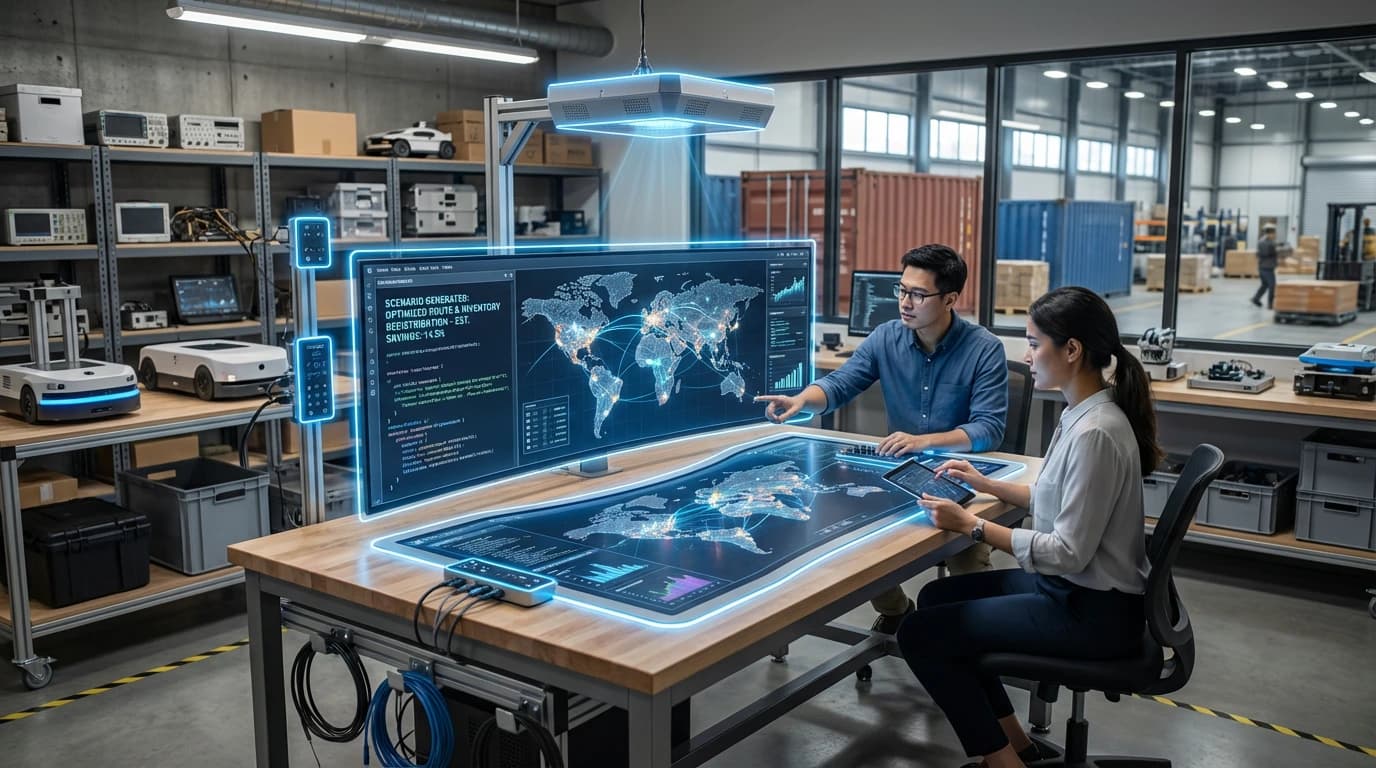
Generative AI for supply chain planning represents a fundamental shift in how organizations process and interpret the vast streams of data flowing through modern logistics networks. Unlike traditional analytical tools that require specialized training and rigid query structures, generative AI systems—particularly those built on large language models—can synthesize information from disparate sources including historical shipment data, supplier communications, market trends, and real-time sensor feeds. These systems employ transformer architectures and natural language processing to identify patterns, correlations, and anomalies across complex datasets, then translate these findings into accessible narratives that non-technical stakeholders can readily understand. The technology works by training on extensive corpora of supply chain documentation, industry reports, and operational data, enabling it to generate contextually relevant outputs ranging from demand forecasts to risk assessments. When integrated with existing enterprise resource planning systems and warehouse management platforms, generative AI can process queries in conversational language, eliminating the need for users to master specialized software interfaces or query languages.
The supply chain industry has long struggled with a critical gap between data abundance and actionable insight. Organizations collect terabytes of information daily, yet translating this data into timely decisions often requires scarce expertise in data science, logistics optimization, and industry-specific knowledge. Generative AI addresses this challenge by automating the creation of scenario analyses that would traditionally require weeks of manual modeling. For procurement teams, the technology can draft comprehensive request for proposal documents that incorporate historical supplier performance, current market conditions, and specific organizational requirements. In network design, it generates multiple configuration alternatives complete with cost-benefit analyses, allowing planners to explore options that might not emerge through conventional optimization approaches. Perhaps most significantly, generative AI democratizes access to sophisticated supply chain intelligence, enabling frontline managers and smaller organizations to leverage analytical capabilities previously available only to enterprises with substantial technical resources.
Early deployments across the logistics sector indicate substantial improvements in planning cycle times and decision quality. Distribution centers are using conversational AI interfaces to query inventory positions, predict stockout risks, and generate replenishment recommendations without navigating complex dashboard systems. Freight forwarders employ these tools to synthesize shipping documentation, customs declarations, and compliance reports with minimal manual intervention. The technology also shows promise in crisis response scenarios, where it can rapidly assess disruption impacts across multi-tier supplier networks and propose mitigation strategies by drawing on historical precedents and current conditions. As generative AI capabilities mature, the technology is evolving beyond simple text generation toward multimodal outputs that combine natural language explanations with visualizations, simulation results, and automated workflow triggers. This convergence aligns with broader industry movements toward autonomous supply chains and cognitive logistics systems, positioning generative AI as a foundational element in the next generation of supply chain management platforms that can anticipate needs, explain their reasoning, and adapt to changing conditions with minimal human oversight.
Owned by Panasonic, their Luminate platform offers a digital twin of the supply chain for real-time visibility and prediction.
Enterprise software giant providing data analytics solutions to esports teams like Team Liquid.
Supply chain planning software (RapidResponse) that provides concurrent planning via the cloud.
Through Copilot and the 'Recall' feature in Windows, Microsoft is integrating persistent memory and agentic capabilities directly into the operating system.
Provides an AI-powered 'Digital Brain' platform that creates digital twins of enterprise supply chains, heavily utilized by major fashion and apparel retailers.
Provides an advanced visibility platform for shippers and logistics service providers, connecting data across the supply chain.
Enterprise AI software provider with a dedicated suite for predictive maintenance across energy, defense, and manufacturing.
Real-time supply chain visibility platform that uses predictive analytics to track shipments across modes.
Provides a digital supply chain platform that leverages AI and digital twins for planning and traceability.
Published forecasts about this technology, graded against what happened in Hindsight.
Foundation models and generative AI
This page is a narrower case of it.
Generative AI in enterprise systems and AI agents
This page is a narrower case of it.
Signals turns a topic into a sourced research record you can inspect and rerun. Your first scan is free, and this one starts with Generative AI for Supply Chain Planning already loaded, so edit it or scan as is.