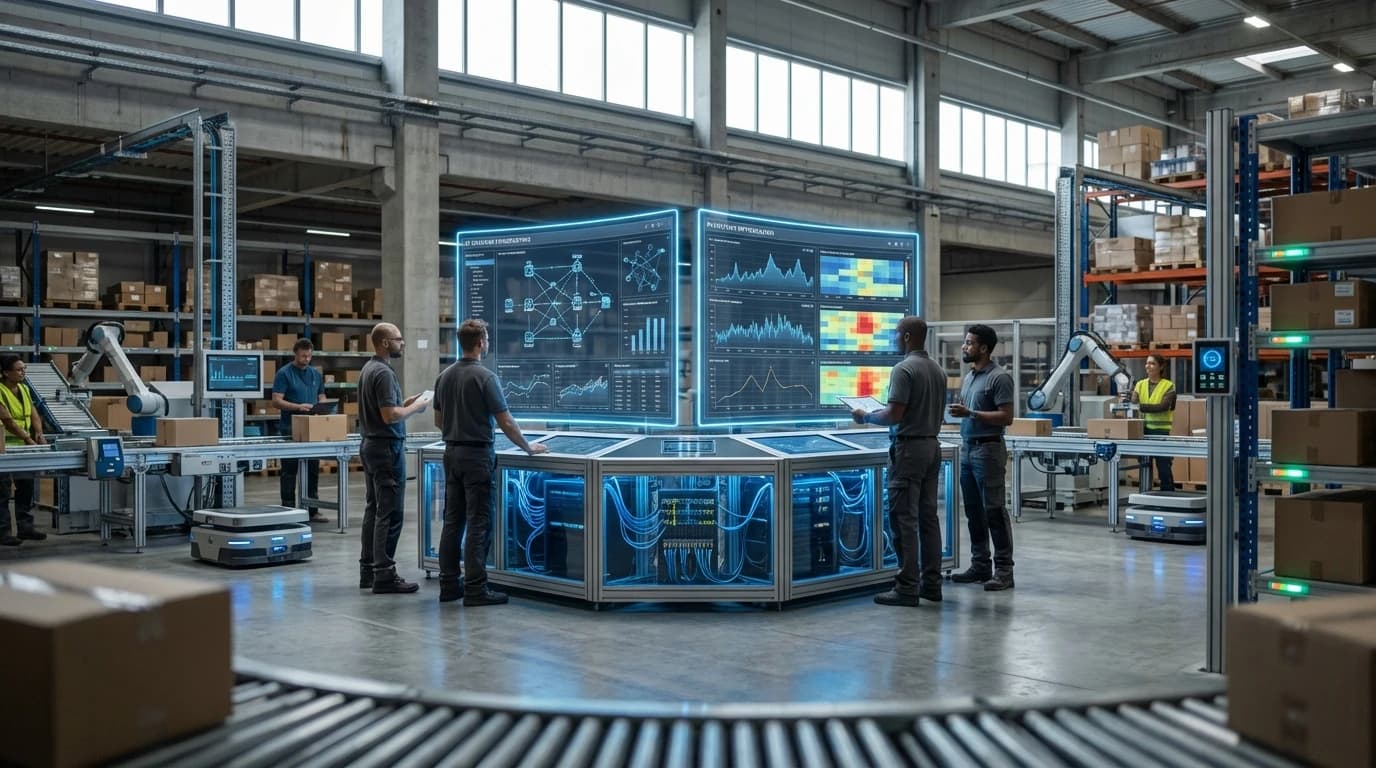
AI Demand Forecasting and Inventory Optimization
The challenge of matching supply with demand has long plagued retailers, manufacturers, and distributors, resulting in billions of dollars lost annually to excess inventory, stockouts, and inefficient capital allocation. Traditional forecasting methods, often relying on simple moving averages or seasonal patterns, struggle to account for the complex interplay of factors that drive modern consumer behavior—from weather fluctuations and social media trends to competitor pricing and macroeconomic shifts. AI demand forecasting and inventory optimization represents a fundamental shift in how organizations predict future demand and position inventory across their networks. These systems employ advanced machine learning algorithms, including deep neural networks, gradient boosting models, and ensemble methods, to analyze vast datasets encompassing historical sales patterns, promotional calendars, pricing strategies, weather forecasts, economic indicators, and even unstructured data from social media sentiment. By processing these diverse signals simultaneously, the models can detect subtle correlations and non-linear relationships that human analysts or traditional statistical methods would miss. The technology operates across multiple time horizons, generating forecasts at various granularities—from individual SKU-location combinations to aggregate category-level predictions—and continuously refines its accuracy through feedback loops that incorporate actual sales outcomes.
For supply chain organizations, these AI-driven systems address several critical pain points that have historically eroded profitability and customer satisfaction. Stockouts not only result in immediate lost sales but also damage brand loyalty and drive customers to competitors, while excess inventory ties up working capital, increases warehousing costs, and often leads to markdowns or waste, particularly for perishable or fashion goods. The technology enables more precise safety stock calculations that account for demand variability, lead time uncertainty, and desired service levels across multi-echelon networks, where inventory decisions at distribution centers cascade through regional warehouses to individual retail locations. By optimizing replenishment timing and quantities, organizations can maintain high product availability while dramatically reducing overall inventory investment. The systems also support dynamic reallocation strategies, identifying opportunities to transfer stock between locations based on predicted local demand patterns, thereby preventing simultaneous stockouts and overstock situations across the network.
Early adopters in retail, consumer packaged goods, and manufacturing sectors report significant improvements in forecast accuracy—often achieving error reductions of twenty to forty percent compared to legacy methods—translating directly into lower inventory carrying costs and higher in-stock rates. The technology has proven particularly valuable during periods of demand volatility, such as seasonal peaks, promotional events, or unexpected disruptions, where traditional forecasting approaches tend to fail. Beyond immediate operational benefits, AI demand forecasting enables strategic advantages including more confident new product introductions, better negotiation positions with suppliers through improved visibility into future requirements, and enhanced sustainability outcomes by reducing waste from unsold goods. As supply chains grow increasingly complex and consumer expectations for product availability continue to rise, these intelligent systems are becoming essential infrastructure for competitive operations. The trajectory points toward even greater sophistication, with emerging capabilities including automated scenario planning, real-time demand sensing that adjusts forecasts within hours of detecting market shifts, and integrated optimization that simultaneously balances inventory, transportation, and production decisions across the entire supply network.
Related Organizations

Owned by Panasonic, their Luminate platform offers a digital twin of the supply chain for real-time visibility and prediction.

Provides an AI-powered 'Digital Brain' platform that creates digital twins of enterprise supply chains, heavily utilized by major fashion and apparel retailers.

Supply chain planning software (RapidResponse) that provides concurrent planning via the cloud.

Provides unified retail planning solutions that optimize demand forecasting and replenishment using AI.
A quantitative supply chain software company that pioneered probabilistic forecasting methods.

Provides a digital supply chain platform that leverages AI and digital twins for planning and traceability.

Supply chain planning software focused on service-driven planning and probabilistic forecasting.

Provides the Slim4 platform for inventory optimization, focused on helping businesses increase stock turnover and service levels.

A data science solutions provider with a strong focus on retail and CPG supply chain analytics and inventory management.
Supporting Evidence
Research this in Signals
Signals turns a topic into a sourced research record you can inspect and rerun. Your first scan is free, and this one starts with AI Demand Forecasting and Inventory Optimization already loaded, so edit it or scan as is.