Connected Worker Ecosystems
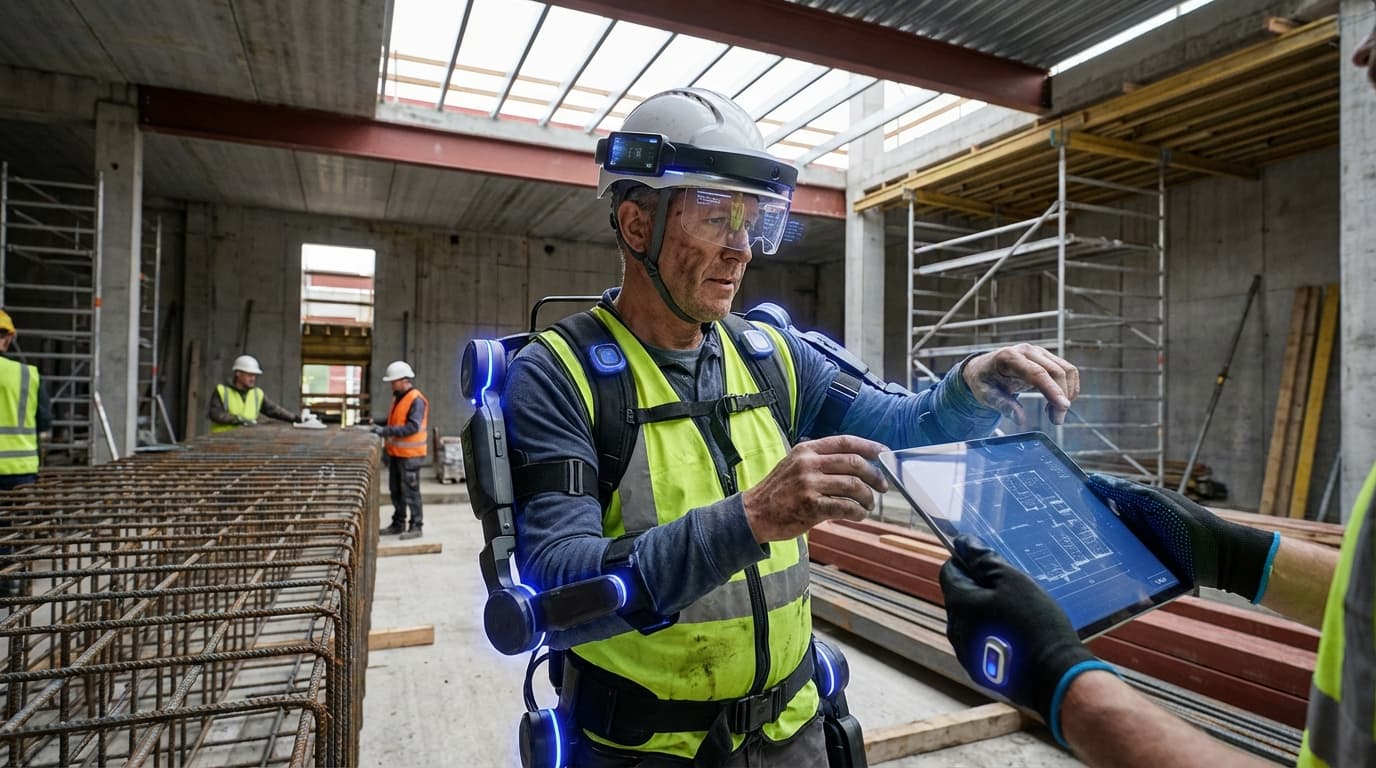
The construction industry has long grappled with some of the highest rates of workplace injuries and fatalities among all sectors, alongside persistent challenges in productivity and workforce aging. Connected Worker Ecosystems represent a comprehensive technological approach that addresses these critical issues by integrating multiple layers of smart technology directly into the construction workforce. At the foundation of these systems are IoT-enabled wearables that continuously monitor worker biometrics—heart rate, body temperature, hydration levels, and movement patterns—to detect early signs of fatigue, heat stress, or dangerous physical strain before they lead to accidents. These sensors work in concert with environmental monitors that track jobsite conditions such as air quality, noise levels, and temperature extremes. Augmented reality visors overlay digital information directly onto the worker's field of view, displaying building information models, safety warnings, and step-by-step assembly instructions without requiring workers to consult separate devices or paper plans. Perhaps most transformative are powered exoskeletons that redistribute physical loads across the body's skeletal structure, reducing strain on vulnerable joints and muscles while enabling workers to lift heavier materials or maintain awkward positions for extended periods without injury.
The integration of these technologies into cohesive ecosystems solves multiple interconnected problems that have plagued construction for decades. Worker safety improves dramatically as real-time monitoring systems can trigger immediate alerts when dangerous conditions are detected—whether a worker has entered a restricted zone, is showing signs of heat exhaustion, or is at risk of falling from elevation. This proactive approach shifts safety management from reactive incident response to predictive prevention. Productivity gains emerge from reduced downtime due to injuries, faster task completion enabled by physical augmentation, and elimination of errors through AR-guided precision work. The data generated by these connected systems also provides construction managers with unprecedented visibility into workforce deployment, allowing for more efficient scheduling, better resource allocation, and identification of process bottlenecks. For aging workers or those recovering from previous injuries, exoskeletons extend career longevity by compensating for diminished physical capacity, addressing the industry's growing skilled labor shortage.
Several major construction firms and equipment manufacturers have begun piloting these integrated systems on large-scale projects, with early deployments indicating significant reductions in recordable safety incidents and measurable improvements in task completion times. Current applications range from basic smart hard hats with integrated sensors to full-body exoskeleton suits capable of reducing the effective weight of overhead tools by up to 90 percent. The technology is evolving rapidly from standalone devices toward truly interconnected ecosystems where data flows seamlessly between wearables, jobsite management platforms, and building information systems. As construction projects grow more complex and labor markets tighten, industry analysts note that Connected Worker Ecosystems are transitioning from experimental innovations to essential infrastructure for competitive contractors. The trajectory points toward increasingly sophisticated integration, where artificial intelligence will analyse patterns across thousands of workers to optimise not just individual safety and performance, but entire project workflows and construction methodologies.
Related Organizations
A pioneer in the field of robotic exoskeletons for medical and industrial use.

Developers of wearable sensors for head impact monitoring (SIM-G).

Produces the Cray X, a connected power suit that supports lifting movements and provides data analytics.


wearable device platform that predicts and prevents heat stress, overexertion, and injury.

Develops highly mobile, dexterous industrial robots and exoskeletons like the Guardian XO.

IoT-enabled smart helmet solution specifically designed for construction site safety and productivity tracking in the Gulf region.
Connected safety wearables providing gas detection, fall detection, and lone worker monitoring.

Develops ruggedized head-mounted tablet devices for industrial frontline workers to access data hands-free.
Supporting Evidence
Research this in Signals
Signals turns a topic into a sourced research record you can inspect and rerun. Your first scan is free, and this one starts with Connected Worker Ecosystems already loaded, so edit it or scan as is.