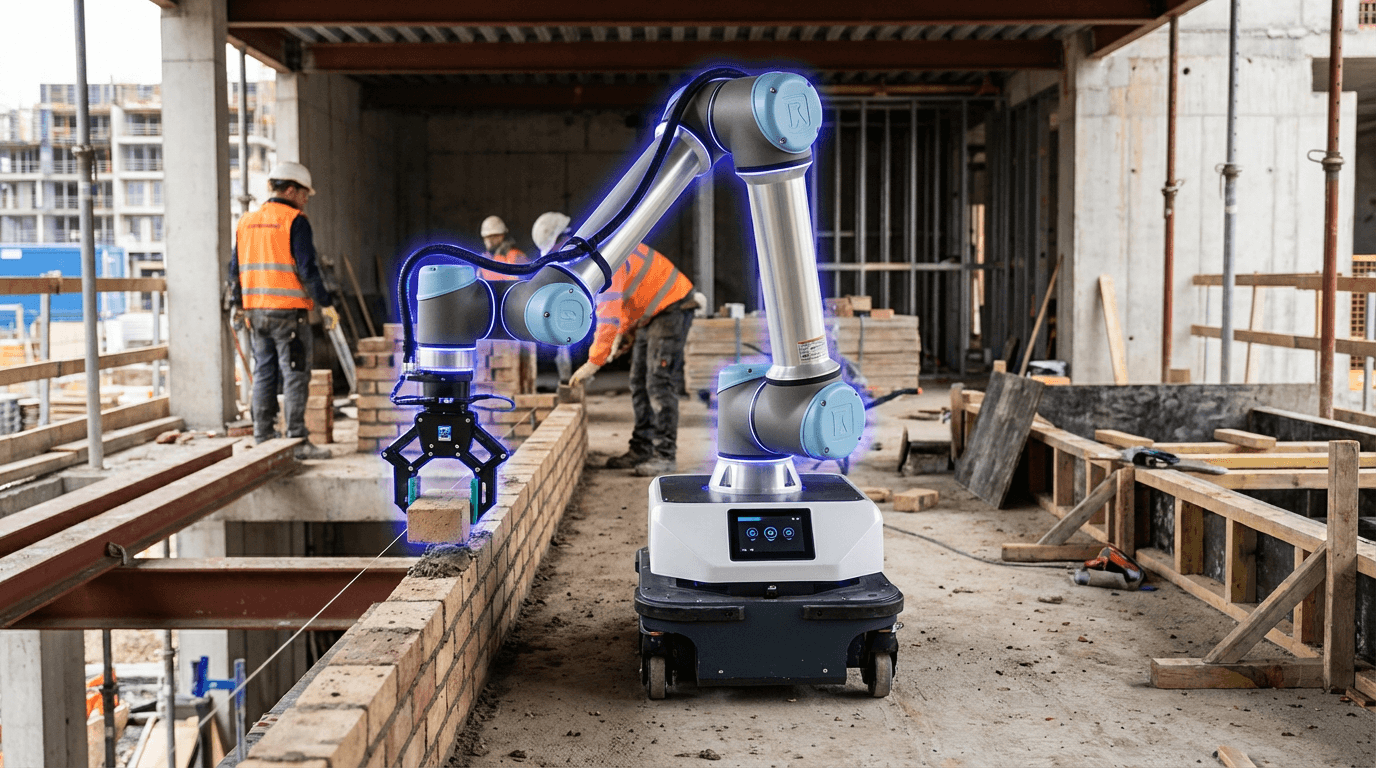
Autonomous Construction Robotics
The construction industry has long grappled with persistent challenges including skilled labor shortages, workplace safety hazards, and the need for greater productivity in an increasingly competitive market. Traditional construction methods rely heavily on manual labor for repetitive tasks such as bricklaying, welding, and material transport—work that is not only physically demanding but also exposes workers to significant risks including falls, repetitive strain injuries, and exposure to hazardous conditions. Autonomous construction robotics represents a fundamental shift in how building projects are executed, introducing specialized machines capable of performing these tasks with precision and consistency. These systems integrate advanced sensors, computer vision, and robotic manipulation technologies to navigate construction sites, identify work locations, and execute specific tasks with minimal human intervention. The underlying architecture typically combines real-time environmental mapping, path planning algorithms, and task-specific end effectors designed for operations ranging from placing bricks with millimeter accuracy to executing complex welding patterns on structural steel.
The deployment of autonomous construction robotics addresses multiple industry pain points simultaneously. Labor shortages, particularly in skilled trades, have created bottlenecks in project delivery across many markets, driving up costs and extending timelines. These robotic systems offer a solution by maintaining consistent productivity regardless of workforce availability, operating continuously without fatigue-related performance degradation. Safety improvements represent another critical benefit, as robots can undertake hazardous tasks in environments with extreme temperatures, heights, or exposure to harmful materials, significantly reducing workplace injuries and associated costs. Furthermore, the precision capabilities of these systems minimize material waste and rework, as automated processes can achieve tolerances difficult to maintain through manual methods. This precision translates directly into cost savings and quality improvements, particularly in large-scale projects where even small variations can compound into significant issues.
Current implementations of autonomous construction robotics span various specializations and deployment scales. Automated bricklaying systems have progressed from research prototypes to commercial deployment, with some units capable of placing thousands of bricks per day while maintaining precise alignment and mortar application. Welding robots adapted for construction environments now operate on infrastructure projects, executing repetitive joins with consistent quality that meets stringent structural requirements. Material handling has seen particularly rapid adoption, with autonomous vehicles and drones transporting supplies across job sites, reducing the need for manual lifting and improving logistics efficiency. Early deployments indicate that these systems work most effectively in structured environments where tasks are well-defined and repetitive, though ongoing developments in artificial intelligence and adaptive control systems are expanding their capabilities into more complex scenarios. As the technology matures and integration with digital construction planning tools deepens, autonomous robotics is positioned to become a standard component of construction operations, particularly for large-scale residential, commercial, and infrastructure projects where the economics of automation are most favorable and the benefits of continuous operation can be fully realized.
Related Organizations

Robotics company creating machines that automate drywall finishing.

Developer of the FieldPrinter, a robot that autonomously prints floor plans and layout lines directly onto concrete slabs.

Developer of the Hadrian X, a truck-mounted robot capable of laying bricks autonomously.

Develops TyBOT and IronBOT, autonomous robots for rebar tying and placement in bridge construction and maintenance.

Famous for Spot and Atlas, now integrating reinforcement learning for dynamic movement.

Construction giant that acquired 'Concrete Sensors' to integrate IoT structural monitoring into their portfolio.

Robotic material hoist system specifically designed for scaffolding assembly.

Provides autonomous vehicle software for mining and construction equipment.

Robotics and automation for rebar fabrication and assembly in pre-cast environments.

Develops Tekla Structures, a leading BIM software for structural engineering and steel detailing, along with hardware for connecting BIM to the field.
Supporting Evidence
Research this in Signals
Signals turns a topic into a sourced research record you can inspect and rerun. Your first scan is free, and this one starts with Autonomous Construction Robotics already loaded, so edit it or scan as is.