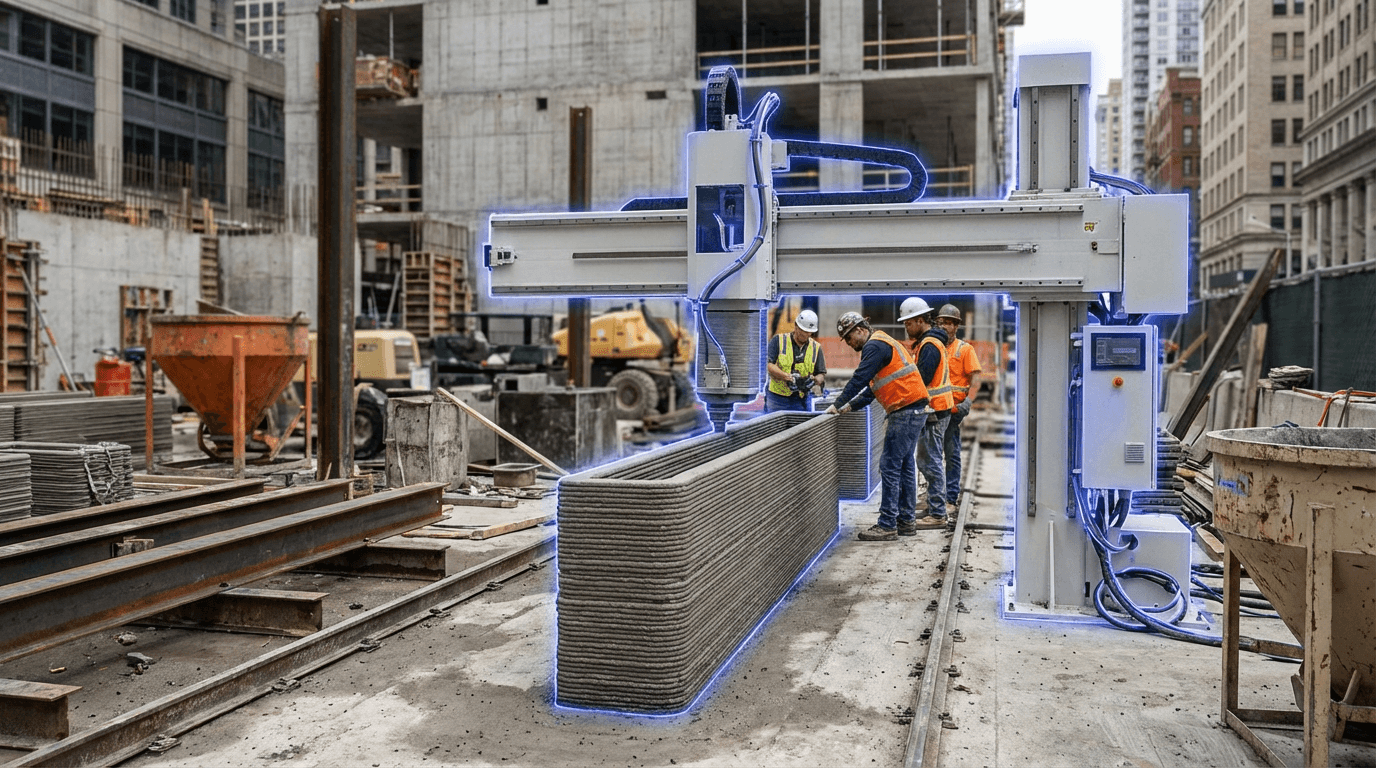
Modular 3D Printing
Modular 3D printing represents a paradigm shift in construction methodology, employing large-scale additive manufacturing systems that extrude concrete, polymers, and composite materials layer by layer to create structural components or complete buildings directly at construction sites. Unlike traditional formwork-based concrete construction, these robotic systems use computer-controlled gantries or articulated arms to deposit material precisely according to digital architectural models. The technology relies on specially formulated construction materials with carefully calibrated viscosity and curing properties—mixtures must remain fluid enough to extrude through nozzles yet solidify quickly enough to support subsequent layers without deformation. Advanced systems can integrate reinforcement elements, embed utilities, and vary material composition within a single print, enabling structural optimization that would be prohibitively complex using conventional techniques.
The construction industry faces mounting pressure from labour shortages, rising material costs, and demands for faster project delivery, challenges that modular 3D printing directly addresses. By automating the fabrication process, this approach reduces dependency on skilled labour for repetitive tasks while simultaneously minimising material waste—traditional construction can generate up to 30% waste, whereas additive methods use only the material required by the design. The technology enables architectural complexity without cost penalties, as producing intricate geometries requires no additional formwork or labour compared to simple shapes. This capability opens new possibilities for customised housing, disaster relief shelters requiring rapid deployment, and structures optimised for specific environmental conditions. Furthermore, the digital nature of the process facilitates quality control and documentation, with each layer's placement verified against design specifications in real-time.
Early deployments indicate significant potential across multiple construction sectors. Housing developments in several regions have demonstrated the viability of 3D-printed homes, with projects completing foundation-to-roof construction in days rather than weeks. The technology shows particular promise for affordable housing initiatives, where standardised yet customisable designs can be produced at lower costs than traditional methods. Military and humanitarian organisations are exploring mobile 3D printing systems for rapid infrastructure deployment in remote or disaster-affected areas. As material science advances and printer capabilities expand, the technology is evolving toward multi-material printing that can integrate insulation, waterproofing, and finishing surfaces in single operations. This convergence of digital fabrication, sustainable construction practices, and automated building processes positions modular 3D printing as a cornerstone technology for addressing global housing shortages while reducing the environmental footprint of the built environment.
Related Organizations

World leader in 3D construction printing solutions, manufacturing gantry-based printers.

Construction technology company using 3D printing robotics, software, and advanced materials.

A joint venture between Holcim and British International Investment focused on affordable housing in Africa.

Robotics technology company developing specialized equipment for 3D printing concrete buildings.

Uses 'Cellular Fabrication' (C-Fab) to 3D print freeform polymer matrices that are filled with insulation and concrete.

Provider of large-scale 3D construction printers and materials.

Technology company offering 3D concrete printers, material, and software.

One of the world's largest manufacturers of formwork and scaffolding.

Italian company designing 3D printers for sustainable construction using natural materials like clay and earth.


Global leader in innovative and sustainable building solutions.
Supporting Evidence
Research this in Signals
Signals turns a topic into a sourced research record you can inspect and rerun. Your first scan is free, and this one starts with Modular 3D Printing already loaded, so edit it or scan as is.