











Virtual Power Plants
Virtual Power Plants (VPP)
Coordinated networks of distributed energy assets managed as a single power source
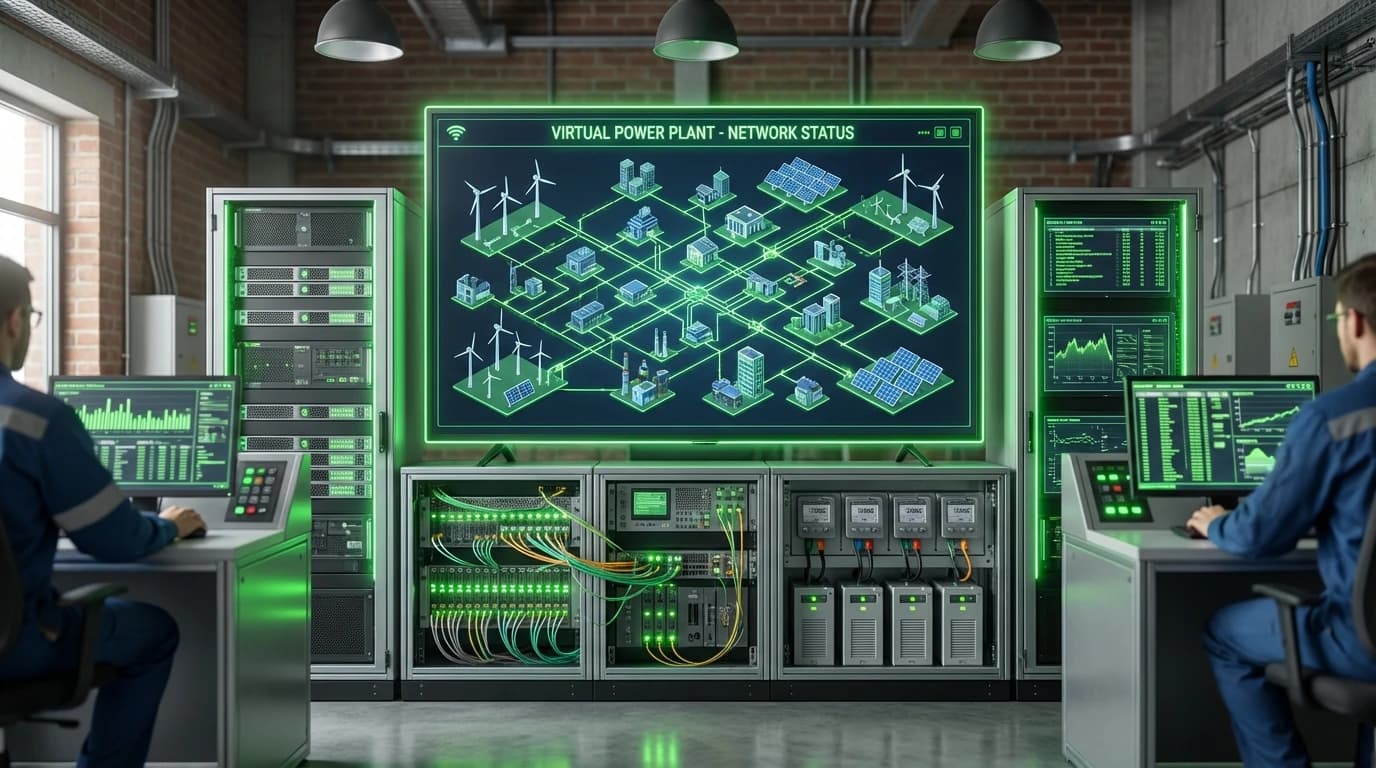
Virtual Power Plants represent a paradigm shift in how electrical grids manage supply and demand, moving away from centralized generation toward coordinated networks of distributed energy resources. Rather than relying solely on large power stations, VPPs aggregate thousands or even millions of smaller assets—residential solar panels with battery storage, electric vehicle chargers, smart thermostats, commercial building HVAC systems, and industrial equipment—into a unified, controllable resource. Through sophisticated software platforms and real-time communication protocols, these dispersed assets can be orchestrated to respond collectively to grid signals, effectively functioning as a single, flexible power plant. The system continuously monitors each connected device, analyzing energy consumption patterns, storage levels, and generation capacity to optimize performance across the entire network. When grid operators need additional power or demand reduction, the VPP platform can dispatch stored energy from batteries, modulate charging rates for electric vehicles, or adjust temperature settings across thousands of thermostats, all within seconds.
The fundamental challenge VPPs address is the growing mismatch between inflexible baseload generation and increasingly variable renewable energy sources, compounded by peak demand periods that traditionally required expensive and polluting peaker plants. These natural gas or diesel generators, which sit idle most of the year only to activate during high-demand hours, represent both an economic burden and a significant source of carbon emissions. By aggregating distributed resources, VPPs can provide the same grid stabilization services—frequency regulation, voltage support, and peak capacity—without burning fossil fuels. This capability becomes particularly valuable as solar and wind generation expands, since VPPs can absorb excess renewable energy during periods of high production and release it when generation drops. The technology also enables new revenue streams for asset owners, who can earn compensation for allowing their devices to participate in grid services while maintaining control over their comfort and energy needs. Utilities benefit from avoided infrastructure costs, as VPPs can defer or eliminate the need for expensive transmission upgrades and new generation facilities.
Early deployments across various markets have demonstrated the viability of this approach, with programs managing portfolios ranging from several megawatts to hundreds of megawatts of flexible capacity. Some utilities have successfully used VPPs to reduce peak demand by coordinating residential air conditioning systems during heat waves, while others have created virtual power stations from aggregated battery storage systems that respond faster than traditional generators. The technology has proven particularly effective in regions with high renewable penetration, where grid operators face increasing challenges balancing supply and demand. As battery costs continue declining and electric vehicle adoption accelerates, the potential scale of VPP resources grows exponentially—industry analysts suggest that the millions of EVs expected on roads in coming years could collectively provide more storage capacity than all utility-scale batteries combined. This convergence of distributed energy resources, advanced software, and market mechanisms positions VPPs as a cornerstone technology for decarbonizing power systems while maintaining reliability and affordability.
TRL
8/9Deployed
Impact
3/5
Investment
2/5
Category
Applications
Related Organizations
Develops enterprise software that unlocks the value of distributed energy resources (DERs) through Virtual Power Plants (VPPs).
Developer
The advanced energy services arm of Enel Group, focusing on demand response and flexibility.
Developer
Operates one of Europe's largest Virtual Power Plants, networking thousands of medium-and small-scale power-producing and consuming units.
Developer
Automotive and energy company developing custom AI silicon for autonomous driving.
Developer
Energy technology company and supplier, developer of the Kraken platform.
Developer
A residential demand response platform that gamifies energy saving during peak hours, rewarding users for reducing consumption.
Developer
German energy storage company (owned by Shell) known for the 'sonnenCommunity' virtual power plant.
Developer
A global leader in AI-driven clean energy solutions and services.
Developer
The largest residential solar installer in the US, actively networking home batteries into VPPs to support grid reliability.
Deployer
Provides a universal API for energy markets, allowing DER partners to automate bids and dispatch assets into wholesale markets.
Developer
Develops residential VPPs by financing and installing solar+storage systems and networking them for grid services.
Developer
A digital electricity supplier that uses smart algorithms to charge EVs and heat homes when prices (and grid load) are low.
Developer
Develops an independent marketplace for energy flexibility services.
Developer
What was expected
Published forecasts about this technology, graded against what happened in Hindsight.
Supporting Evidence
Evidence data is not available for this technology yet.
Research this in Signals
Scan Virtual Power Plants (VPP) for yourself.
Signals turns a topic into a sourced research record you can inspect and rerun. Your first scan is free, and this one starts with Virtual Power Plants (VPP) already loaded, so edit it or scan as is.