









Bidirectional Charging
Vehicle-to-Grid (V2G)
Bi-directional charging that lets electric vehicles supply stored power back to the grid
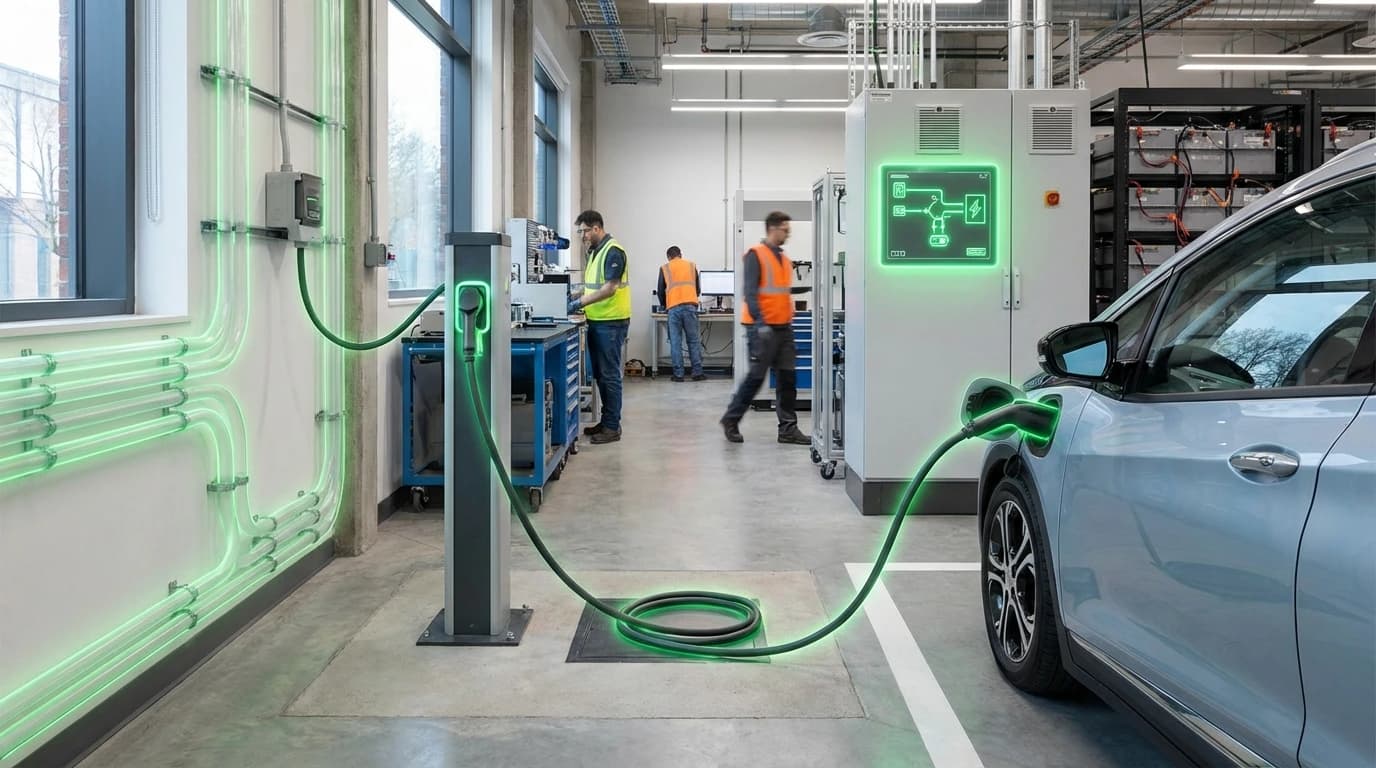
Vehicle-to-Grid technology represents a fundamental shift in how electric vehicles interact with power infrastructure, transforming them from passive energy consumers into active grid assets. At its core, V2G enables bi-directional power flow between electric vehicles and the electrical grid through specialized charging equipment and communication protocols. When connected to V2G-enabled charging stations, EVs can not only draw power to charge their batteries but also discharge stored electricity back to the grid when needed. This capability relies on advanced power electronics, including bi-directional inverters that convert DC battery power to AC grid power, along with sophisticated software systems that manage charging schedules, monitor battery health, and respond to grid signals. The technology requires coordination between vehicle manufacturers, charging infrastructure providers, and grid operators to ensure seamless integration and maintain battery longevity while participating in grid services.
The energy sector faces mounting challenges as renewable energy sources like solar and wind introduce greater variability into power generation patterns. Traditional grid infrastructure struggles to balance supply and demand when renewable output fluctuates or when consumption spikes during peak hours. V2G addresses these challenges by creating a distributed network of mobile energy storage that can respond dynamically to grid conditions. During periods of excess renewable generation, EVs can absorb surplus power, preventing waste and grid instability. Conversely, when demand exceeds supply or renewable output drops, aggregated fleets of electric vehicles can discharge power back to the grid, providing valuable capacity without requiring dedicated stationary battery installations. This capability is particularly valuable for utilities seeking to defer expensive infrastructure upgrades and reduce reliance on fossil fuel peaker plants that traditionally handle demand spikes. Furthermore, V2G creates new revenue opportunities for EV owners, who can monetize their vehicle's battery capacity by participating in demand response programs and ancillary services markets.
Pilot programs and early commercial deployments across Europe, Asia, and North America have demonstrated V2G's technical viability, though widespread adoption remains in early stages. School bus fleets have emerged as particularly promising applications, as their predictable schedules and large battery capacities make them ideal candidates for grid services during daytime hours when they sit idle. Similarly, corporate vehicle fleets and ride-sharing services are exploring V2G integration to optimize operational costs while supporting grid stability. However, several barriers currently limit broader implementation, including concerns about battery degradation from additional charge-discharge cycles, the need for standardized communication protocols across manufacturers, and regulatory frameworks that don't yet fully accommodate vehicle-based grid services. As battery technology improves and costs decline, and as grids incorporate higher percentages of intermittent renewable energy, V2G is positioned to become an increasingly critical component of the energy transition. The technology aligns with broader trends toward distributed energy resources and grid modernization, potentially enabling a future where millions of electric vehicles collectively function as a massive, flexible energy storage system that enhances grid resilience while accelerating decarbonization efforts.
TRL
7/9Operational
Impact
3/5
Investment
2/5
Category
Applications
Related Organizations
A pure-play Vehicle-to-Grid (V2G) technology company managing power between EVs and the grid.
Developer
Provides V2X bidirectional charging systems and software for commercial fleets.
Developer
Develops technology to integrate vehicle batteries into the power grid for stabilization.
Developer
Software platform optimizing smart energy devices, including V2G integration for utilities.
Developer
Develops the r16 home energy station, combining solar inverter and bidirectional EV charger.
Developer
EV charging platform provider offering V2G solutions for energy management.
Developer
Automotive OEM that pioneered V2G capabilities with the LEAF and CHAdeMO standard.
Deployer
Energy technology company and supplier, developer of the Kraken platform.
Deployer
Global smart charging company known for compact home chargers (Pulsar) and load balancing technology.
Developer
Software company connecting EVs to the grid to optimize charging and enable V2G.
Developer
What was expected
Published forecasts about this technology, graded against what happened in Hindsight.
Supporting Evidence
Evidence data is not available for this technology yet.
Research this in Signals
Scan Vehicle-to-Grid (V2G) for yourself.
Signals turns a topic into a sourced research record you can inspect and rerun. Your first scan is free, and this one starts with Vehicle-to-Grid (V2G) already loaded, so edit it or scan as is.