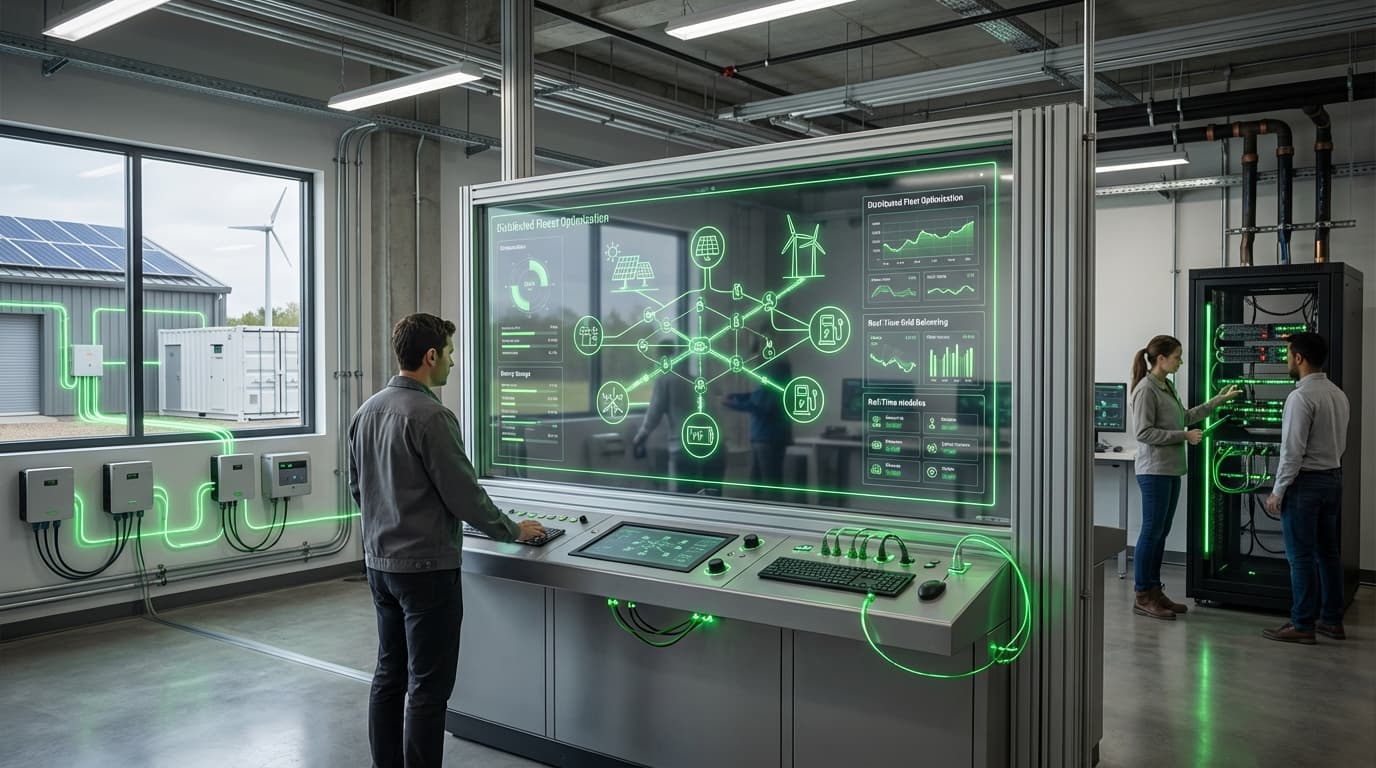
Distributed Energy Resource Management Systems (DERMS)
Distributed Energy Resource Management Systems represent a critical evolution in grid management, addressing the fundamental challenge of coordinating thousands or even millions of small-scale energy assets that are increasingly connected to power networks. Unlike traditional grid infrastructure where large, centralized power plants could be controlled through direct communication channels, modern grids face the complexity of managing rooftop solar panels, home battery systems, electric vehicle chargers, smart thermostats, and other distributed resources that operate at the grid's edge. DERMS platforms function as sophisticated orchestration layers, using advanced algorithms and real-time data analytics to aggregate these diverse assets into virtual power plants. The systems continuously monitor grid conditions, weather forecasts, energy prices, and the operational status of individual resources, then issue coordinated dispatch signals that optimize performance across the entire fleet while respecting both technical constraints and participant preferences.
The proliferation of distributed energy resources has created both opportunities and challenges for utilities and grid operators. Without proper coordination, high penetrations of rooftop solar can cause voltage fluctuations and reverse power flows that stress distribution infrastructure designed for one-way electricity delivery. Similarly, unmanaged electric vehicle charging during peak demand periods can overload local transformers and substations. DERMS platforms solve these problems by providing visibility and control over distributed assets, enabling utilities to leverage them as grid resources rather than viewing them as uncontrollable variables. These systems can curtail solar generation during periods of oversupply, shift battery charging and discharging to support grid stability, coordinate EV charging to avoid demand spikes, and modulate flexible loads like water heaters and HVAC systems to provide demand response services. This orchestration capability transforms distributed resources from potential grid liabilities into valuable assets that can defer costly infrastructure upgrades, provide ancillary services, and facilitate higher renewable energy integration.
Major utilities and grid operators worldwide are deploying DERMS platforms as distributed energy adoption accelerates, with implementations ranging from pilot programs managing hundreds of devices to commercial systems coordinating tens of thousands of assets. California utilities, facing both high solar penetration and strict clean energy mandates, have been early adopters, using DERMS to manage virtual power plants that provide grid services during critical peak periods. Australian networks are similarly deploying these systems to address challenges from widespread rooftop solar adoption. The technology continues to evolve rapidly, with emerging capabilities including machine learning for improved forecasting, blockchain integration for peer-to-peer energy trading, and enhanced interoperability standards that allow different vendors' systems to work together. As power grids transition toward decentralized architectures with bidirectional energy flows, DERMS platforms will become essential infrastructure, enabling the coordination necessary to maintain reliability while maximizing the economic and environmental benefits of distributed clean energy resources.
Related Organizations
Develops enterprise software that unlocks the value of distributed energy resources (DERs) through Virtual Power Plants (VPPs).
Platform for utilities to manage distributed energy resources (thermostats, EV chargers) at the grid edge.

The technology arm of Octopus Energy, providing a deep-tech platform for smart energy management and grid flexibility.

Provides a grid orchestration platform that gives utilities real-time visibility and control over local energy resources.
The grid services division of Generac, formed largely through the acquisition of Enbala, providing VPP software.
Software platform optimizing smart energy devices, including V2G integration for utilities.

Develops advanced grid control software enabling utilities to manage distributed energy resources (DERs) and microgrids autonomously.
Provides distributed energy resource management system (DERMS) software.
A cloud-based energy management platform that helps utilities manage residential DERs like thermostats, water heaters, and batteries.
Software company adapting Iron Dome missile defense algorithms for grid orchestration and self-healing.
Supporting Evidence
Research this in Signals
Signals turns a topic into a sourced research record you can inspect and rerun. Your first scan is free, and this one starts with Distributed Energy Resource Management Systems (DERMS) already loaded, so edit it or scan as is.