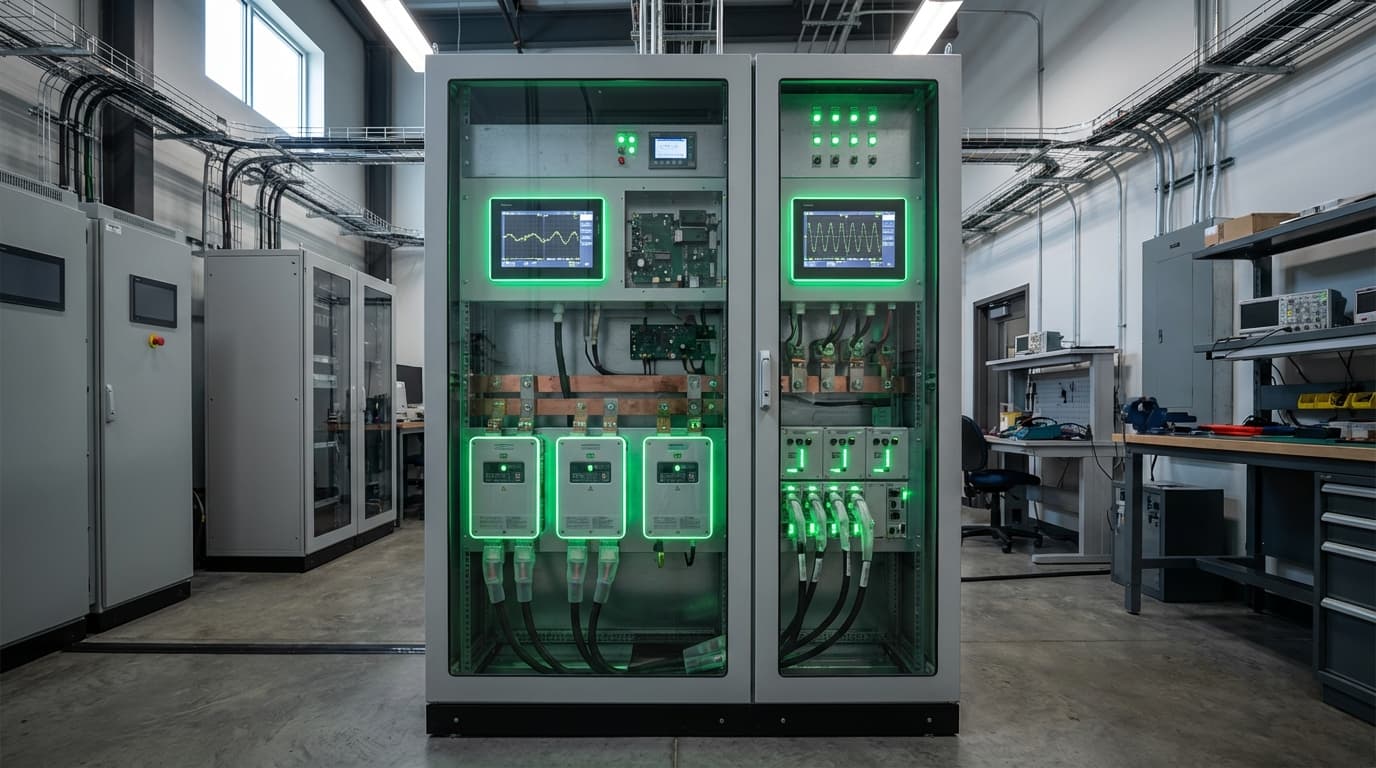
Grid-Forming Inverters
Grid-forming inverters represent a fundamental shift in how power electronics interface with electrical grids, addressing one of the most critical challenges in the transition to renewable energy: maintaining grid stability without traditional rotating generators. Unlike conventional grid-following inverters that simply synchronize with existing grid voltage and frequency, grid-forming inverters actively establish and maintain these parameters themselves. They achieve this through sophisticated control algorithms that emulate the physical properties of synchronous generators, particularly inertia—the resistance to frequency changes that naturally occurs in spinning turbines. By synthesizing this inertial response through rapid power adjustments, these devices can respond to grid disturbances within milliseconds, providing the voltage and frequency regulation that has historically depended on large thermal or hydroelectric plants. The technology incorporates advanced control strategies such as droop control, virtual synchronous machine algorithms, and fast current limiting to manage power flow while maintaining stability even under fault conditions.
The proliferation of solar and wind generation has created a paradox for grid operators: as renewable penetration increases, the displacement of conventional generators erodes the grid's inherent stability mechanisms. Traditional inverters, which constitute the interface for solar panels, wind turbines, and battery storage systems, have been passive followers of grid conditions rather than active contributors to grid strength. This limitation has forced grid operators to curtail renewable generation or maintain costly conventional plants online purely for stability services, undermining both economic and environmental objectives. Grid-forming inverters solve this problem by enabling renewable and storage assets to provide essential grid services—frequency regulation, voltage support, fault current contribution, and crucially, black-start capability to restore power after complete grid collapse. This transformation allows grids to operate reliably with minimal or even zero synchronous generation, unlocking higher renewable penetration levels while reducing operational costs and emissions.
Early deployments of grid-forming inverters are already demonstrating their transformative potential in renewable-heavy grids. Australia's grid operators have been pioneering requirements for grid-forming capabilities in new renewable projects, driven by the country's rapid solar and wind expansion and several high-profile stability incidents. Battery energy storage systems equipped with grid-forming controls are increasingly being deployed to provide synthetic inertia services, with some installations already proving capable of maintaining stable island grids during transmission outages. Research initiatives and demonstration projects across Europe and North America are refining control strategies and establishing technical standards for grid-forming performance, while manufacturers are integrating these capabilities into next-generation inverter platforms. As grids worldwide pursue ambitious decarbonization targets, the technology is evolving from a niche solution to a fundamental requirement for new renewable installations. Industry analysts note that grid-forming inverters will become essential infrastructure for achieving 100% renewable energy systems, fundamentally redefining the architecture of power grids and enabling the retirement of fossil fuel generation while maintaining the reliability that modern society demands.
Related Organizations

Maintains the efficiency charts for solar cells and conducts foundational research on perovskite stability.

A leading inverter manufacturer offering grid-forming solutions (e.g., Sunny Central Storage) for island grids and large-scale storage.

Australian Energy Market Operator (AEMO)
Australia · Nonprofit
The independent system operator and planner for Australia's electricity and gas markets.

Manufactures utility-scale smart inverters designed for energy storage, featuring grid-forming modes.

Leading European research institute for solar energy, pioneering agrivoltaics standards and pilot projects.
National Grid ESO
United Kingdom · Company
The Electricity System Operator for Great Britain.

Manufacturer of solar and storage inverters, supplying equipment for major grid-forming projects (e.g., in Australia and UK).

A global leader in inverter solutions for renewables.

Automotive and energy company developing custom AI silicon for autonomous driving.

A Danish multinational company producing heating, cooling, and power electronics.
Supporting Evidence
Research this in Signals
Signals turns a topic into a sourced research record you can inspect and rerun. Your first scan is free, and this one starts with Grid-Forming Inverters already loaded, so edit it or scan as is.