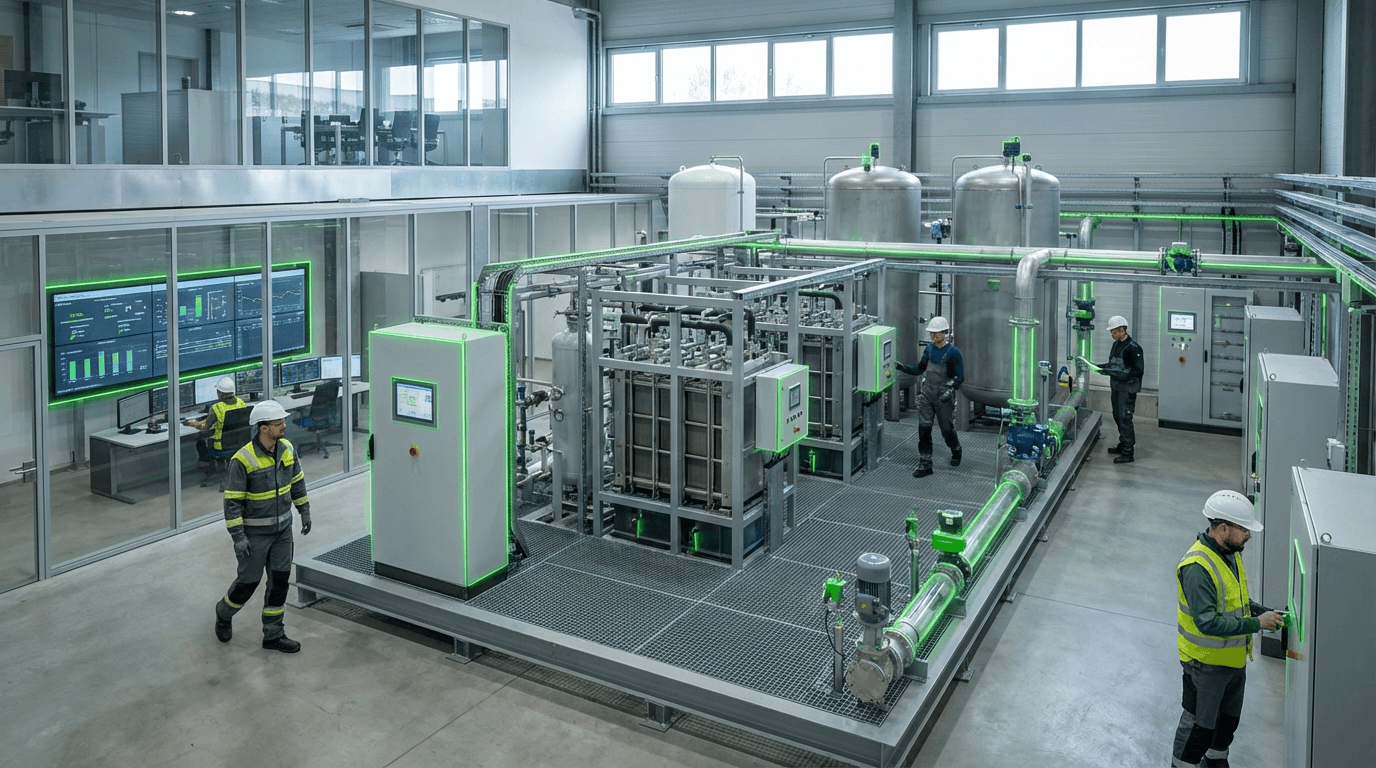
Green Hydrogen Hubs
Green hydrogen hubs represent a strategic infrastructure model designed to address one of the most pressing challenges in the global energy transition: decarbonizing sectors that cannot easily shift to direct electrification. These integrated facilities combine renewable energy generation—typically solar or wind farms—with large-scale electrolyzers that split water molecules into hydrogen and oxygen using electricity. The hydrogen produced contains no carbon emissions when derived entirely from renewable sources, distinguishing it from "grey" hydrogen made from natural gas or "blue" hydrogen that requires carbon capture. The hub model concentrates production capacity, storage infrastructure, and distribution networks in a single geographic cluster, creating economies of scale that help address hydrogen's historically high production costs. Advanced electrolysis technologies, including proton exchange membrane (PEM) and alkaline electrolyzers, enable these facilities to ramp production up or down in response to variable renewable energy availability, effectively serving as a form of energy storage.
The industrial landscape faces a fundamental challenge: sectors like steel manufacturing, cement production, chemical processing, and heavy-duty transportation account for nearly 30% of global carbon emissions, yet these industries require energy densities and process heat levels that batteries and direct electrification struggle to provide economically. Green hydrogen hubs solve this problem by creating reliable, localized supplies of clean fuel that can replace fossil fuels in high-temperature industrial processes, serve as a feedstock for ammonia and methanol production, and power fuel cells in ships, trains, and long-haul trucks. The hub model also addresses hydrogen's distribution challenge—the gas is difficult and expensive to transport over long distances—by co-locating production with major industrial consumers or establishing pipeline networks to nearby demand centers. This infrastructure approach enables industries to commit to hydrogen adoption without bearing the full risk and capital burden of building their own production facilities.
Several countries have launched ambitious green hydrogen hub initiatives as part of their decarbonization strategies. The United States Department of Energy has funded regional hydrogen hub projects across different geographic areas, each tailored to local renewable resources and industrial needs. In Europe and the Middle East, governments and energy companies are developing large-scale facilities that leverage abundant solar and wind resources. Early projects typically focus on industrial clusters where multiple heavy emitters can share hydrogen infrastructure, such as port areas serving shipping and petrochemical industries or steel-producing regions. Research suggests that as electrolyzer costs decline and carbon pricing mechanisms strengthen, green hydrogen could achieve cost parity with fossil fuel alternatives in heavy industry applications by the early 2030s. The hub model is emerging as a cornerstone of hydrogen economy development, providing the concentrated infrastructure necessary to bridge the gap between renewable energy abundance and hard-to-decarbonize industrial demand, while creating the foundation for broader hydrogen distribution networks that could eventually serve transportation and even residential heating markets.
Related Organizations
ACWA Power
Saudi Arabia · Company
A leading developer, investor, and operator of power generation plants, responsible for the world's largest CSP projects (e.g., Noor Ouarzazate, Noor Energy 1).

Air Products
United States · Company
Industrial gas supplier investing billions in green hydrogen production and global supply chains.

Global metals and green energy company developing massive green hydrogen and ammonia projects worldwide through its energy division.

Operator of Europe's largest port, pioneering the 'Digital Twin' of the port and fully automated container terminals (Maasvlakte 2).

Renewable energy developer focusing on ultra-large-scale green hydrogen hubs.

Industrial platform delivering 100% green hydrogen across Europe at competitive prices via new infrastructure.

Developer of massive green hydrogen projects, including the Asian Renewable Energy Hub and Western Green Energy Hub.
Power generation solutions provider developing hydrogen parks.

Supporting Evidence
Research this in Signals
Signals turns a topic into a sourced research record you can inspect and rerun. Your first scan is free, and this one starts with Green Hydrogen Hubs already loaded, so edit it or scan as is.