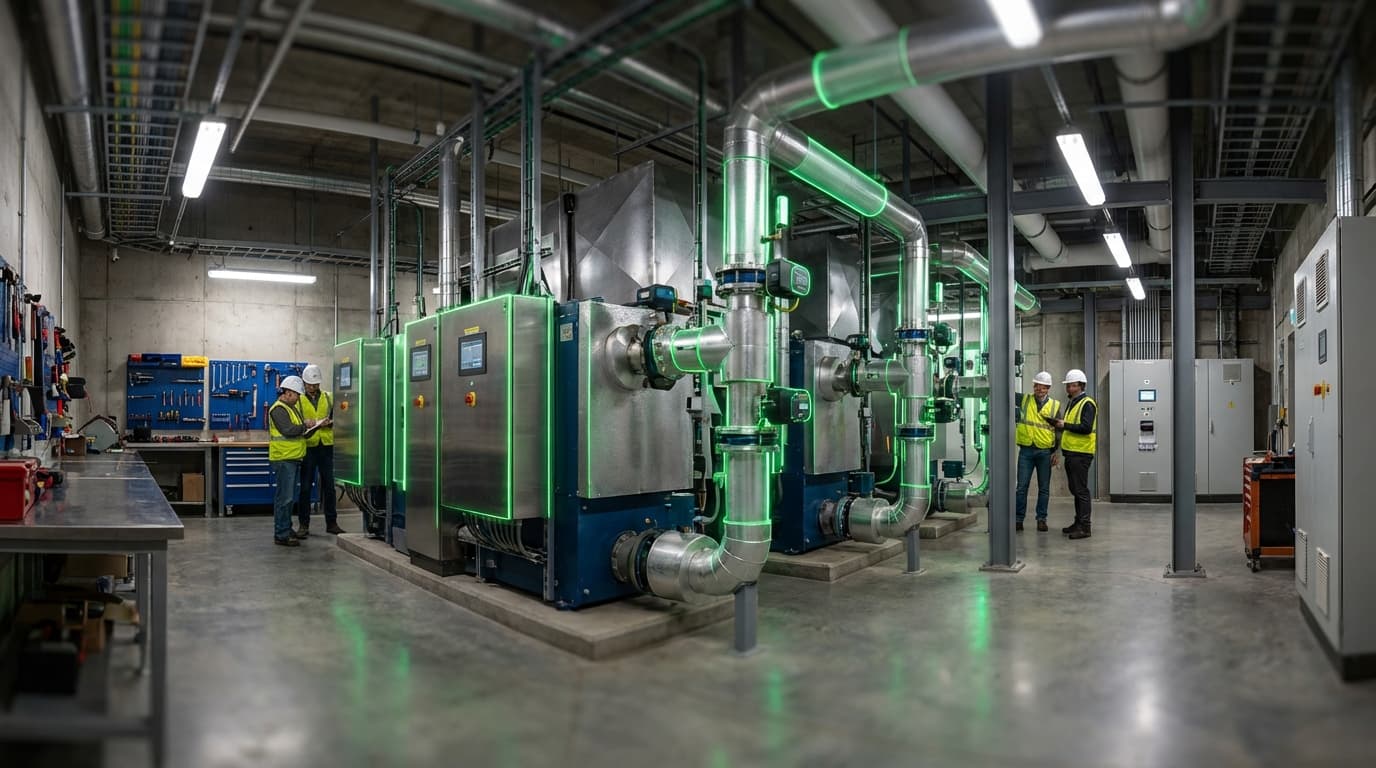
District Electrified Heat Systems
District electrified heat systems represent a fundamental shift in how communities deliver thermal energy to buildings and industrial facilities. Unlike traditional district heating networks that rely on centralized fossil fuel boilers or combined heat and power plants, these systems leverage large-scale electric heat pumps capable of operating at temperatures suitable for existing building infrastructure—often exceeding 90°C for supply water. The technical architecture typically combines multiple heat sources: ambient heat extracted from rivers, lakes, or groundwater; waste heat recovered from industrial processes, data centers, or wastewater treatment facilities; and thermal energy storage systems that can shift heating loads to periods of high renewable electricity generation. Advanced control systems coordinate these components with the electrical grid, allowing the district heating network to function as a flexible load that can absorb surplus wind and solar power while maintaining reliable heat delivery to connected buildings.
The primary challenge these systems address is the decarbonization of heating, which accounts for a substantial portion of urban energy consumption and greenhouse gas emissions in temperate and cold climates. Traditional district heating infrastructure, while efficient at distributing heat, has remained dependent on natural gas or other fossil fuels at the point of generation. District electrified heat systems break this dependency by converting renewable electricity into thermal energy at scale, achieving coefficients of performance that typically range from 3 to 5—meaning each unit of electrical energy produces three to five units of heat. This efficiency advantage, combined with the ability to integrate multiple low-grade heat sources that would otherwise be wasted, creates a compelling economic case as electricity grids transition toward renewable generation. Furthermore, these systems enable bidirectional energy flows, where thermal storage can be charged during periods of electricity abundance and the system can reduce demand during grid stress, providing valuable flexibility services that enhance overall grid stability.
Several European cities have pioneered commercial-scale deployments, with networks serving thousands of buildings through retrofitted infrastructure that maintains compatibility with existing radiator systems. Industrial applications are emerging in sectors requiring process heat, where electrified systems can replace steam generation from fossil fuels. The technology aligns with broader trends toward sector coupling—the strategic integration of electricity, heating, and transportation systems to maximize renewable energy utilization. As heat pump technology advances to achieve higher temperature outputs and thermal storage costs decline, industry analysts note that district electrified heat systems are positioned to become a cornerstone of urban decarbonization strategies. The scalability of these networks, combined with their ability to aggregate diverse heat sources and provide grid services, suggests they will play an increasingly central role in the transition toward zero-emission heating infrastructure, particularly in dense urban areas where individual building solutions face space and cost constraints.
Related Organizations


Helsinki's energy utility, famous for large-scale heat pumps and underground thermal storage.

Stockholm Exergi
Sweden · Company
Utility operating one of the world's most advanced district heating networks.

A major European energy company and one of the largest suppliers of district heating in the Netherlands, directly subject to Warmtewet regulations.

Produces large-scale industrial heat pumps using CO2 and other refrigerants for district heating and process steam.

UK's largest independent industrial refrigeration engineering company, pioneering large heat pumps.

Energy provider for Vienna, building one of Europe's largest heat pumps.

Creates Digital Twins of district heating networks to optimize efficiency.

UK manufacturer and installer of ground source heat pumps for networked heat.

Heat pump manufacturer focusing on decarbonizing cities with low-temperature grids.
Supporting Evidence
Research this in Signals
Signals turns a topic into a sourced research record you can inspect and rerun. Your first scan is free, and this one starts with District Electrified Heat Systems already loaded, so edit it or scan as is.