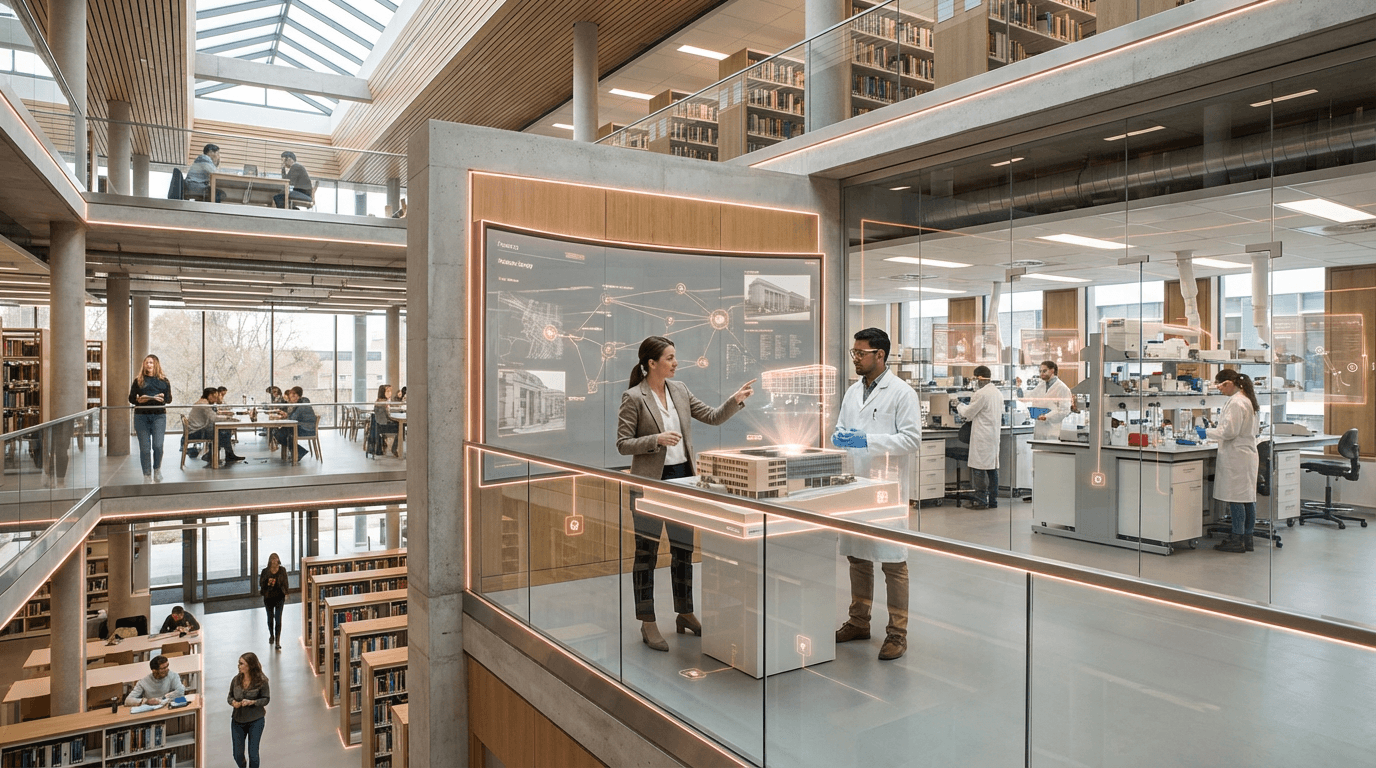
Place-Based AR Knowledge Layers
Place-Based AR Knowledge Layers represent a convergence of augmented reality technology, geospatial positioning systems, and digital archival infrastructure to create location-specific information overlays in physical environments. The technology operates by anchoring digital content—including historical photographs, audio recordings, video testimonials, and contextual data visualizations—to precise geographic coordinates using GPS, visual markers, or spatial mapping techniques. When users view these locations through AR-enabled devices such as smartphones, tablets, or headsets, the system recognizes their position and orientation, then renders relevant archival materials directly within their field of view. This creates a layered experience where the present environment becomes a portal to historical moments, community memories, and scholarly interpretations that would otherwise remain confined to institutional repositories.
For libraries, archives, and cultural heritage institutions, this technology addresses a fundamental challenge: the physical and conceptual barriers that separate collections from the communities and places they document. Traditional archival access requires visitors to navigate institutional spaces, catalog systems, and often specialized knowledge to discover relevant materials. Place-Based AR inverts this model, delivering curated content precisely where it holds the most contextual meaning. A university library can extend its oral history collection to the campus locations where events occurred, allowing students to encounter firsthand accounts while standing in the actual spaces being described. Museums can guide visitors through neighborhoods with AR layers revealing how streetscapes appeared in different eras, supported by photographs, maps, and demographic data from their holdings. This approach transforms passive archival consumption into active spatial discovery, making historical research more intuitive and engaging while demonstrating institutional relevance beyond traditional walls.
Early implementations have emerged across cultural institutions, tourism boards, and educational organizations seeking to enhance public engagement with local history. Heritage sites employ these systems to reconstruct vanished buildings or overlay historical scenes onto contemporary landscapes, while academic libraries partner with community organizations to create AR walking tours that surface marginalized histories and alternative narratives about familiar places. The technology aligns with broader trends toward experiential learning, community-centered archives, and the democratization of cultural knowledge. As AR hardware becomes more accessible and spatial computing capabilities improve, these knowledge layers promise to evolve from novelty applications into essential infrastructure for place-based learning, enabling cities themselves to function as distributed, interactive archives where every street corner might reveal layers of memory, data, and interpretation waiting to be discovered.
Related Organizations

Develops immersive AR and VR experiences for parks, museums, and historic sites to visualize history in situ.

AR platform company that develops the Lightship ARDK and owns Scaniverse, a 3D scanning app leveraging LiDAR.

A platform enabling creators and institutions to build location-based AR tours, often used for historical 'time travel' experiences.

A global platform for museums and heritage sites that uses image recognition to deliver audio stories and AR overlays about exhibits.

Provides mobile engagement solutions for museums, including AR modules that bring artifacts and spaces to life.

Platform providing virtual tours of museums, heritage sites, and landmarks using Street View technology.

An AR browser platform that allows users to place and view digital content (videos, holograms, audio) at specific GPS coordinates, widely used for historical tours and digital statues.

Provides a platform for building location-based AR games and tours without coding, specifically targeting heritage and tourism sectors.

Social media and camera company developing AR spectacles.
Supporting Evidence
Research this in Signals
Signals turns a topic into a sourced research record you can inspect and rerun. Your first scan is free, and this one starts with Place-Based AR Knowledge Layers already loaded, so edit it or scan as is.