Augmented Paper Interfaces
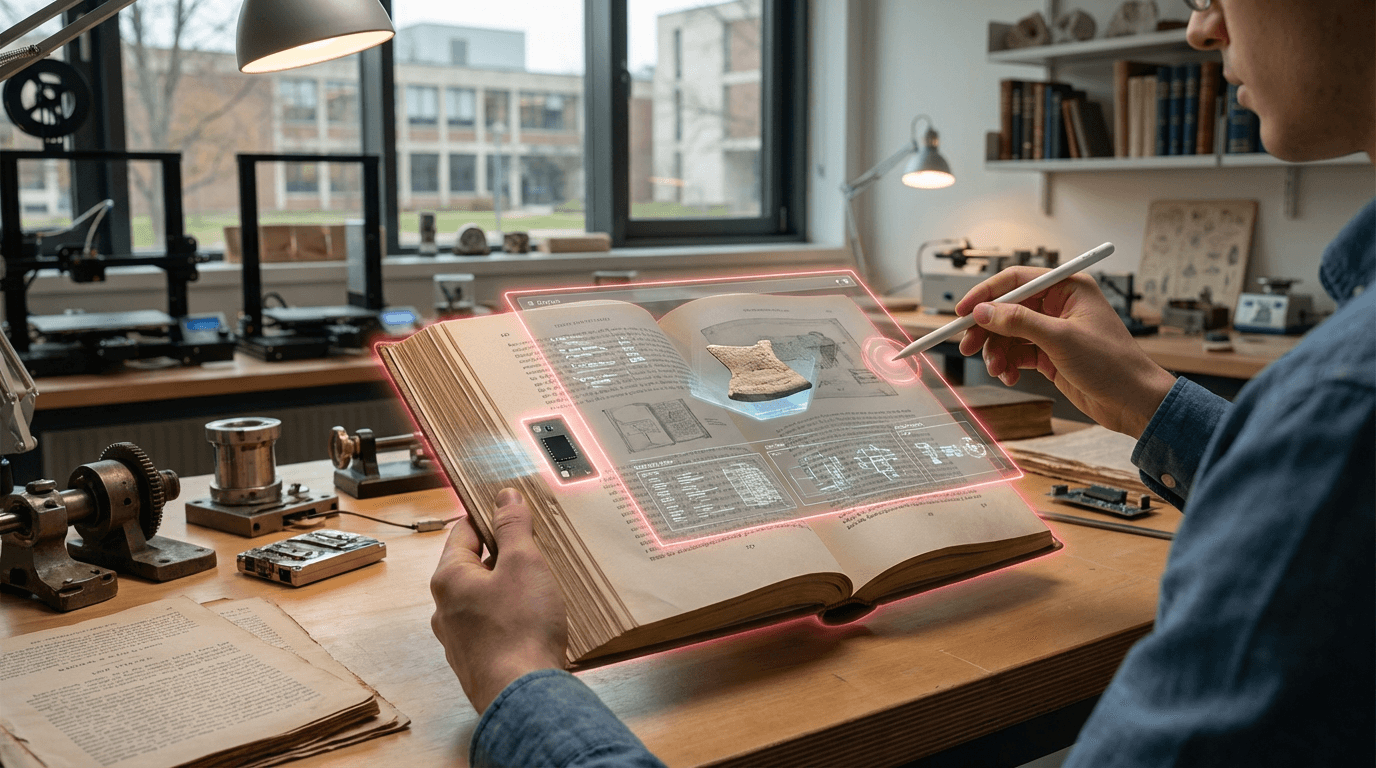
Augmented Paper Interfaces represent a convergence of traditional print media and digital technology, creating hybrid reading experiences that maintain the physical presence of books while unlocking interactive capabilities. The technology operates through several complementary mechanisms: conductive inks printed directly onto pages can detect touch inputs through capacitive sensing, while embedded micro-sensors track page turns, reading position, and user interactions. Some implementations incorporate near-field communication (NFC) tags or QR codes that connect to companion applications, while more advanced systems use computer vision and projection mapping to overlay dynamic content directly onto physical pages. The paper itself may be treated with special coatings that enhance its responsiveness to touch or enable it to display simple animations through thermochromic or electrochromic properties. These technical elements work in concert to create seamless transitions between analog and digital content, allowing readers to access supplementary information, multimedia elements, or interactive features without abandoning the physical book.
The publishing and education industries face a persistent tension between the proven benefits of physical reading materials and the growing demand for interactive, multimedia-rich content. Research suggests that physical books support better comprehension and retention for many readers, yet they cannot easily incorporate video demonstrations, audio pronunciations, or real-time updates that digital platforms provide. Augmented Paper Interfaces address this challenge by preserving the cognitive and sensory advantages of print—the spatial memory cues, the lack of screen fatigue, the tactile engagement—while selectively introducing digital enhancements where they add genuine value. For educational publishers, this technology enables textbooks that can demonstrate complex scientific processes through animated diagrams, provide pronunciation guides for language learners, or update statistical data without requiring new print runs. Museums and cultural institutions have begun exploring these interfaces for exhibition catalogues that can display high-resolution images, play curator commentary, or link artifacts to broader historical contexts. The technology also opens new possibilities for accessibility, allowing printed materials to trigger audio descriptions, translations, or simplified explanations on demand.
Early commercial implementations have appeared in children's books, where touching illustrations triggers sound effects or narration, and in technical manuals that overlay assembly instructions or safety warnings. Several library systems have piloted programs integrating augmented paper books into their collections, reporting increased engagement particularly among younger readers who appreciate the novelty while maintaining reading habits associated with physical books. The technology aligns with broader trends toward ambient computing and calm technology—interfaces that enhance rather than dominate human activities. As production costs for conductive inks and embedded sensors continue to decline, industry analysts note growing interest from mainstream publishers seeking to differentiate premium editions or create new revenue streams through enhanced content subscriptions. The future trajectory suggests not a replacement of traditional books but rather an expansion of what printed materials can offer, creating a spectrum of reading experiences that readers can choose based on context and preference. This evolution may prove particularly significant for preserving print culture among digital-native generations while ensuring that physical books remain relevant in an increasingly connected information landscape.
Related Organizations

Specializes in adding touch, connectivity, and data to paper using conductive inks.

Home of the Affective Computing research group led by Rosalind Picard.

Developer of Ncode technology and the Neo Smartpen.

Produces electrically conductive paint and hardware kits to make surfaces interactive.

Manufactures smartpens that synchronize handwritten notes with audio recordings.


Educational entertainment company known for the LeapStart interactive learning systems.

Creates reusable notebooks that connect to cloud services via scanning.
Global leader in pen display and tablet market, also producing 'Bamboo Slate' smartpads.

Royole
China · Company
Manufacturer of fully flexible displays and sensors, known for releasing the world's first foldable smartphone.
Supporting Evidence
Research this in Signals
Signals turns a topic into a sourced research record you can inspect and rerun. Your first scan is free, and this one starts with Augmented Paper Interfaces already loaded, so edit it or scan as is.