Community Memory Platforms
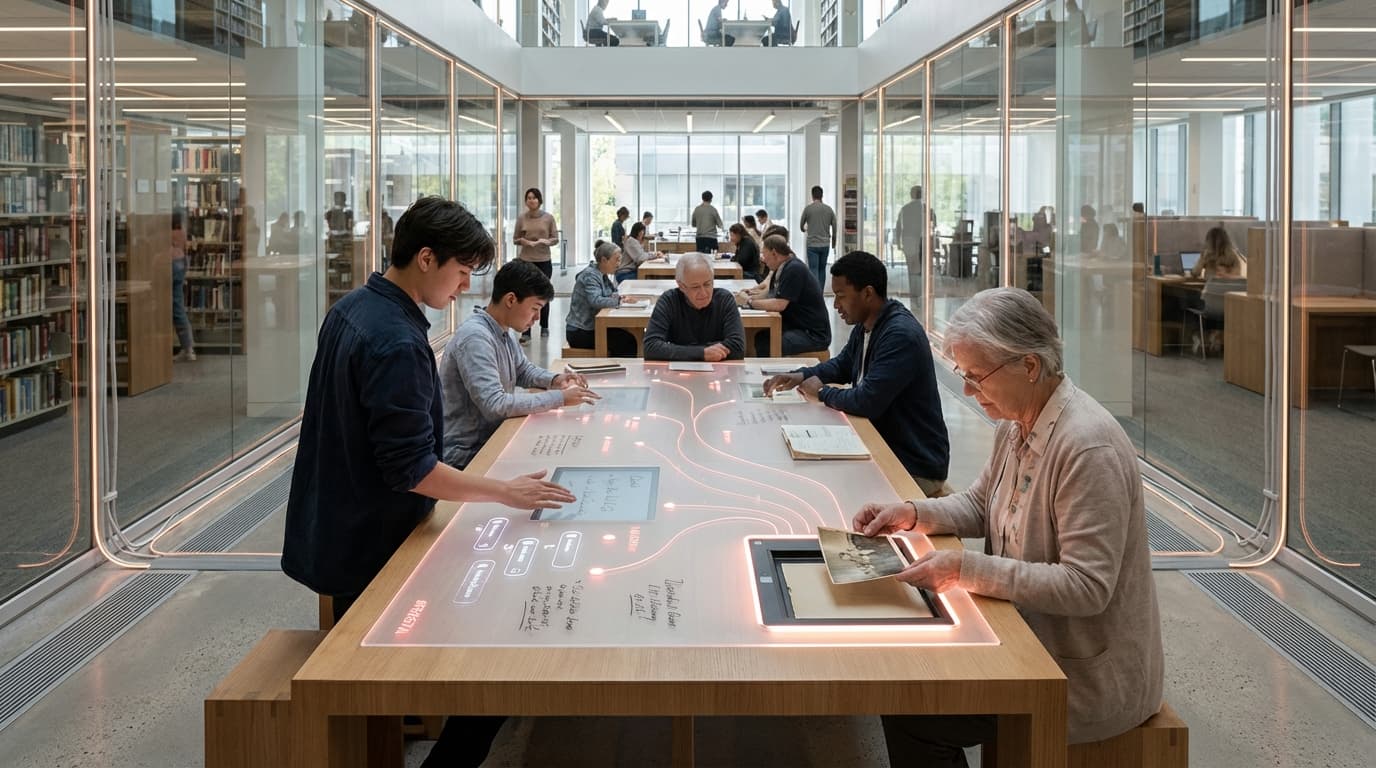
Community Memory Platforms represent a fundamental shift in how cultural heritage institutions approach archival practice, moving from top-down curation to collaborative knowledge creation. These digital systems enable multiple stakeholders—residents, community organizations, activists, and cultural workers—to contribute, contextualize, and preserve materials that reflect their lived experiences. Unlike traditional archives that rely primarily on institutional acquisition and professional cataloging, these platforms employ participatory design principles and distributed authorship models. The technical infrastructure typically combines content management systems with social annotation tools, metadata schemas that accommodate multiple perspectives, and rights management frameworks that respect community ownership. Many implementations incorporate multimedia capabilities, allowing users to upload photographs, oral histories, documents, and ephemera while adding contextual information through tags, stories, and geographic markers that connect materials to specific places and events.
The emergence of Community Memory Platforms addresses a persistent challenge in cultural heritage institutions: the systematic underrepresentation of marginalized communities, grassroots movements, and everyday life in official historical records. Traditional archival practices have often privileged institutional documents, elite perspectives, and officially sanctioned narratives while overlooking the knowledge held within communities themselves. This gap becomes particularly acute in rapidly changing urban neighborhoods, where gentrification, displacement, and demographic shifts can erase physical traces of community history before institutions recognize their significance. By enabling direct community participation in the archival process, these platforms help libraries and cultural organizations build collections that more accurately reflect the diversity of human experience. They also transform the relationship between institutions and communities from one of extraction—where institutions collect materials from communities—to genuine partnership, where communities maintain agency over their own stories and determine how they are preserved and shared.
Early implementations have emerged in public libraries, community archives, and cultural centers seeking to document neighborhood histories, social movements, and underrepresented cultural traditions. Research suggests that successful platforms require sustained institutional commitment, including dedicated staff to facilitate community engagement, technical infrastructure that accommodates varying levels of digital literacy, and governance models that give communities meaningful control over their contributions. Some initiatives focus on specific themes, such as documenting immigrant experiences, preserving indigenous knowledge, or recording the history of LGBTQ+ communities, while others take a more open-ended approach to capturing the full complexity of place-based memory. As these platforms mature, they are increasingly integrated with broader digital humanities initiatives, linked open data projects, and efforts to decolonize institutional collections. The trajectory points toward a future where cultural memory is understood not as a fixed artifact to be preserved but as a living, contested, and continuously evolving resource that belongs to the communities who create it.
Related Organizations
An open-source content management system built with indigenous communities to manage and share digital cultural heritage.

A digital platform that allows communities to pin historical photos, videos, and audio recordings to a global map, creating a user-generated archive of place.

A community and toolset developed to support the ethical collection, use, and preservation of social media content during significant events.
A web publishing platform for sharing digital collections and creating media-rich online exhibits, widely used by libraries, museums, and independent community archives.
Memria
United States · Company
A platform helping organizations collect, curate, and share stories.
An organization dedicated to recording, preserving, and sharing the stories of Americans from all backgrounds.

A grassroots organization dedicated to preserving, educating, and sharing the story of World War II-era incarceration of Japanese Americans.

A nonprofit providing secure, permanent cloud storage for individuals and organizations to preserve their digital legacy.

An open-source platform for collaborative semantic annotation of texts and images, often used in digital humanities projects.
Supporting Evidence
Research this in Signals
Signals turns a topic into a sourced research record you can inspect and rerun. Your first scan is free, and this one starts with Community Memory Platforms already loaded, so edit it or scan as is.