Civic Metaverse Commons
The Civic Metaverse Commons represents a fundamental reimagining of public digital infrastructure, establishing virtual spaces that function as extensions of traditional civic institutions rather than commercial platforms. At its technical core, this approach leverages decentralized protocols and open standards to create interoperable virtual environments that resist the centralized control typical of proprietary metaverse platforms. The architecture typically employs federated server networks, blockchain-based governance mechanisms, and open-source rendering engines that allow communities to host their own virtual spaces while maintaining the ability to connect with others. Unlike commercial virtual worlds built on extractive data models, these commons prioritize user sovereignty through privacy-preserving technologies, including end-to-end encryption for private discussions and zero-knowledge proofs for identity verification. The technical framework draws heavily from library and archival principles, implementing persistent digital preservation standards to ensure that community deliberations, collaborative designs, and collective decisions remain accessible across technological generations.
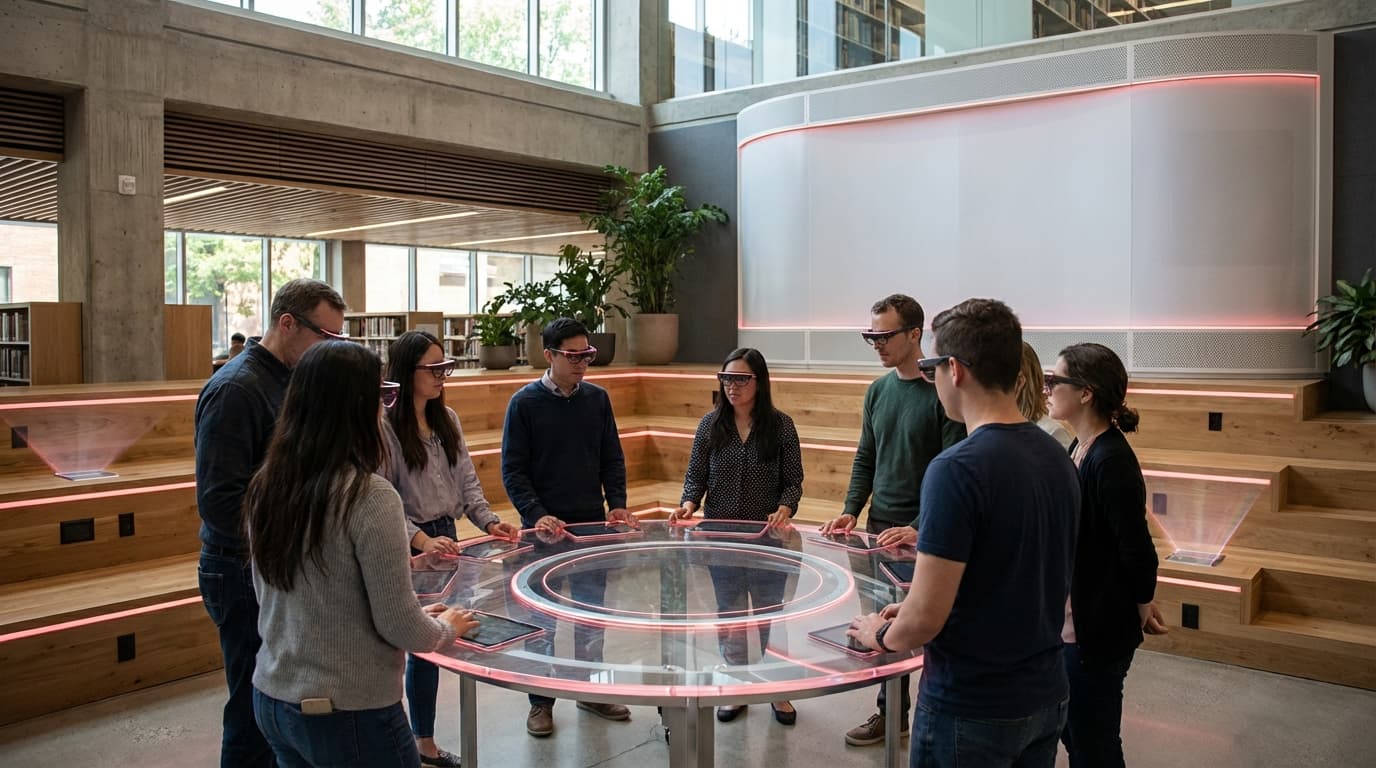
Urban communities face mounting challenges in maintaining inclusive civic participation as physical meeting spaces become scarce and traditional town halls fail to accommodate diverse schedules and mobility needs. The Civic Metaverse Commons addresses these limitations by providing always-accessible venues for community assembly that transcend geographic and temporal barriers. This solution enables municipalities to host participatory budgeting sessions, urban planning charrettes, and policy deliberations in immersive environments where residents can visualize proposed developments at scale, manipulate 3D city models collaboratively, and engage in structured debate regardless of physical location. The governance model typically mirrors democratic library boards rather than corporate structures, with community stakeholders determining content moderation policies, accessibility standards, and feature development priorities. By establishing these spaces as public utilities rather than commercial services, cities can ensure that digital civic engagement remains free from advertising, algorithmic manipulation, and the platform abandonment risks that plague proprietary social technologies.
Early implementations have emerged through partnerships between public libraries, municipal governments, and open-source technology cooperatives, with pilot programs demonstrating particular value for engaging populations traditionally underserved by conventional civic processes. Research suggests that these virtual commons prove especially effective for youth participation, immigrant communities navigating language barriers through real-time translation features, and residents with disabilities who benefit from customizable accessibility options unavailable in physical spaces. The technology supports hybrid engagement models where virtual participants join physical town halls through spatial audio and shared visualization tools, creating seamless bridges between digital and physical civic life. As cities increasingly recognize digital infrastructure as essential public goods, the Civic Metaverse Commons aligns with broader movements toward municipal broadband, open data initiatives, and technology sovereignty. Industry analysts note growing interest from library systems seeking to extend their community convening role into virtual dimensions, while urban planners recognize the potential for these platforms to democratize complex spatial decision-making processes that have historically excluded non-expert voices. The trajectory points toward these commons becoming standard components of civic infrastructure, functioning alongside physical libraries, parks, and community centers as protected spaces for democratic deliberation and collective imagination.
Related Organizations

A nonprofit incubator and design lab building frameworks for digital public spaces that promote cohesion rather than division.

The city government of Seoul, which launched 'Metaverse Seoul' to provide public services in a virtual environment.

A community group focused on bridging virtual worlds by designing and promoting protocols for identity, social graphs, and inventory.

A global non-profit dedicated to providing privacy and safety standards for the immersive ecosystem (VR/AR).

The organization behind the Decentraland virtual world.

The executive branch of the EU, responsible for the AI Act.

A non-profit organization that advocates for a healthy internet and conducts 'Trustworthy AI' research.

German research institute developing advanced algorithms for 3D Human Body Reconstruction and volumetric video coding.

Layer 1 blockchain optimized for the Open Metaverse, co-founded by Neal Stephenson, focusing on identity and payments.

Maintains the open-source Blender toolset, whose Cycles engine integrates Intel Open Image Denoise and OptiX for AI-accelerated rendering.
Supporting Evidence
Research this in Signals
Signals turns a topic into a sourced research record you can inspect and rerun. Your first scan is free, and this one starts with Civic Metaverse Commons already loaded, so edit it or scan as is.