Decentralized Preservation Networks
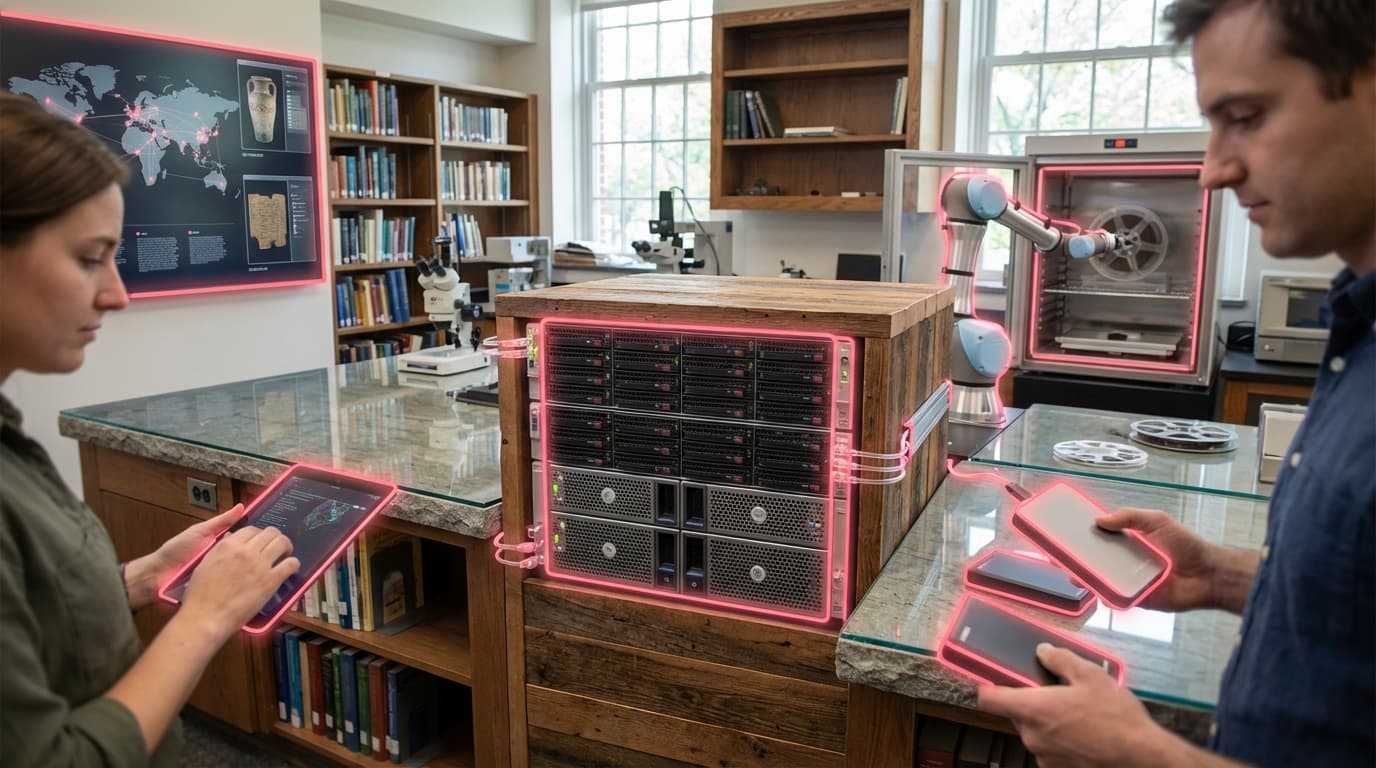
Decentralized preservation networks represent a fundamental shift in how cultural heritage institutions approach long-term digital archiving. Unlike traditional centralized storage systems that rely on single institutions or cloud providers, these networks employ distributed ledger technologies and peer-to-peer protocols to fragment and replicate data across thousands of independent nodes worldwide. When a digital artifact—whether a manuscript, photograph, or audiovisual recording—is added to such a network, it is broken into encrypted chunks, each assigned a unique cryptographic hash that serves as both identifier and verification mechanism. These fragments are then distributed across geographically dispersed nodes operated by independent participants, with redundancy built in to ensure no single point of failure. The cryptographic hashing creates an immutable record of the original file, allowing anyone to verify authenticity without relying on a central authority. This architecture fundamentally addresses the problem of institutional dependency, where the survival of collections hinges on the continued existence and funding of specific organizations.
The cultural heritage sector faces mounting challenges around preservation permanence and access equity. Traditional digital archives are vulnerable to institutional collapse, whether through funding cuts, political upheaval, or natural disasters. Centralized storage also creates censorship vectors, as governments or corporations controlling infrastructure can restrict or eliminate access to sensitive materials. Decentralized preservation networks solve these problems by removing single points of control and failure. Because data exists across numerous independent nodes, no single entity can unilaterally delete or restrict access to preserved materials. The economic model also shifts from institutional budget dependency to incentivized participation, where node operators receive compensation for providing storage and bandwidth. This creates a self-sustaining preservation ecosystem less vulnerable to the funding cycles that plague traditional archives. Furthermore, the cryptographic verification layer addresses authenticity concerns that have intensified in an era of sophisticated digital manipulation, providing mathematical proof that retrieved files match their original state.
Early implementations of decentralized preservation have emerged primarily in contexts where censorship resistance is paramount. Research libraries and human rights organizations have begun experimenting with these protocols to preserve documentation of political movements, endangered languages, and contested historical narratives. The Internet Archive has explored integration with decentralized storage systems as a hedge against legal challenges and infrastructure vulnerabilities. Academic institutions are piloting hybrid approaches that combine traditional institutional repositories with decentralized backup layers, ensuring collections remain accessible even if primary systems fail. However, widespread adoption faces practical hurdles including the technical complexity of implementation, concerns about long-term economic sustainability of incentive models, and questions about governance structures for content moderation. As climate change intensifies risks to physical infrastructure and political polarization threatens institutional stability, the value proposition of censorship-resistant, geographically distributed preservation becomes increasingly compelling. The trajectory suggests not a wholesale replacement of traditional archives but rather an emerging complementary layer—a preservation safety net that ensures humanity's cultural record can survive the institutional fragilities of any particular era.
Related Organizations

A decentralized storage network designed for permanent data storage, often used to archive historical records and internet content immutably.

Open-source R&D lab building Filecoin and IPFS, the storage layer for decentralized science data.

Academic research lab at Stanford and USC dedicated to using cryptography for information integrity.


Hosts the 'Internet Arcade' and massive collections of abandonware, utilizing browser-based emulation (Emularity) to keep software accessible.

Taiwan · Startup
A blockchain-based network for tracing digital media provenance and copyright.



A decentralized data network for managing mutable information.
Supporting Evidence
Research this in Signals
Signals turns a topic into a sourced research record you can inspect and rerun. Your first scan is free, and this one starts with Decentralized Preservation Networks already loaded, so edit it or scan as is.