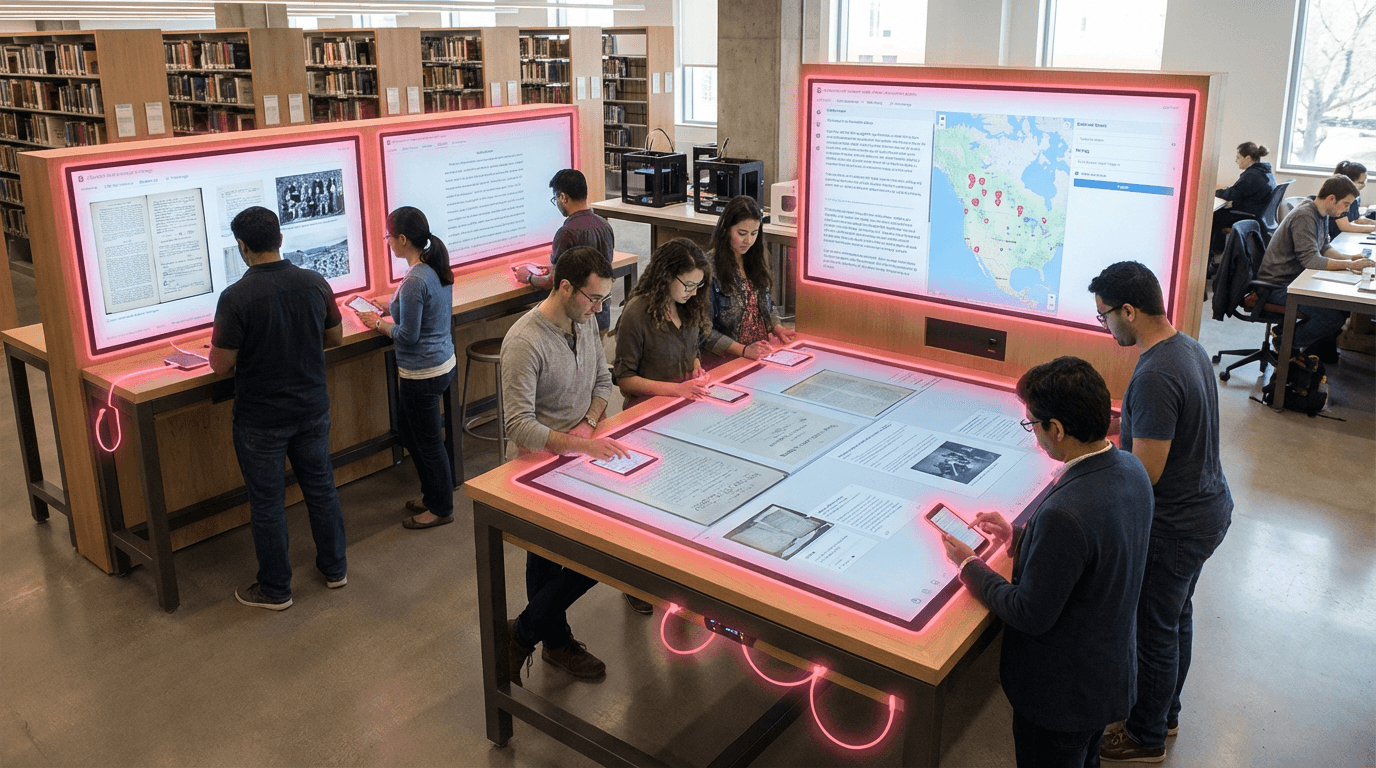
Crowdsourced Annotation Networks
Crowdsourced annotation networks represent a paradigm shift in how cultural heritage institutions, research libraries, and archives manage the overwhelming challenge of processing vast collections of undigitized or inadequately described materials. Traditional approaches to cataloging, transcription, and metadata creation have long been constrained by limited staff resources, specialized expertise requirements, and the sheer volume of materials requiring attention. These platforms leverage distributed human intelligence to tackle tasks that remain difficult for automated systems—interpreting historical handwriting, identifying obscure subjects in photographs, contextualizing artifacts, and enriching sparse catalog records with meaningful descriptive information. By creating structured workflows that break complex scholarly tasks into manageable microtasks, these networks enable non-specialist volunteers to contribute meaningfully to projects that would otherwise take decades to complete using conventional institutional resources alone.
The fundamental innovation lies in transforming what was once an exclusively professional activity into a collaborative public endeavor. Research suggests that crowdsourced annotation can process materials at scales and speeds impossible through traditional methods, while simultaneously maintaining quality through consensus mechanisms, expert validation layers, and iterative review processes. These platforms address critical bottlenecks in digital humanities scholarship and institutional access programs by accelerating the transformation of inaccessible primary sources into searchable, discoverable resources. Beyond efficiency gains, they solve a deeper problem of institutional isolation—many archives and special collections hold materials relevant to communities who have historically been excluded from participating in their interpretation and description. By opening annotation workflows to public participation, institutions can incorporate diverse perspectives, correct historical biases in existing metadata, and capture knowledge that professional catalogers may lack, particularly regarding vernacular languages, local histories, and marginalized communities.
Early deployments indicate that successful crowdsourced annotation networks require careful attention to volunteer motivation, task design, and community management. Projects range from transcribing historical weather observations for climate research to identifying species in museum specimen photographs, from mapping historical landscapes to translating multilingual correspondence. The technology typically combines web-based interfaces with backend systems that aggregate contributions, track provenance, and integrate verified annotations back into institutional catalogs and digital repositories. As cultural institutions face mounting pressure to digitize collections while confronting static or declining budgets, these networks represent an increasingly vital infrastructure for knowledge production. They point toward a future where the boundaries between professional scholarship and public engagement blur productively, where institutional collections become sites of active collaboration rather than passive consumption, and where the work of making knowledge accessible becomes itself a form of civic participation and community building.
Related Organizations

A software platform that allows libraries, archives, and museums to host collaborative transcription projects.

The research library that officially serves the United States Congress.

The world's largest platform for people-powered research, hosting dozens of transcription and tagging projects.

The independent agency of the US government charged with the preservation and documentation of government and historical records.

The largest reference library in Australia.
A European Cooperative Society that develops Transkribus, a platform for AI-assisted transcription.

World's largest museum complex, actively digitizing collections for virtual tours.

The oldest museum in Australia, with an international reputation in the fields of natural history and anthropology.

An open-source platform for collaborative semantic annotation of texts and images, often used in digital humanities projects.
Supporting Evidence
Research this in Signals
Signals turns a topic into a sourced research record you can inspect and rerun. Your first scan is free, and this one starts with Crowdsourced Annotation Networks already loaded, so edit it or scan as is.