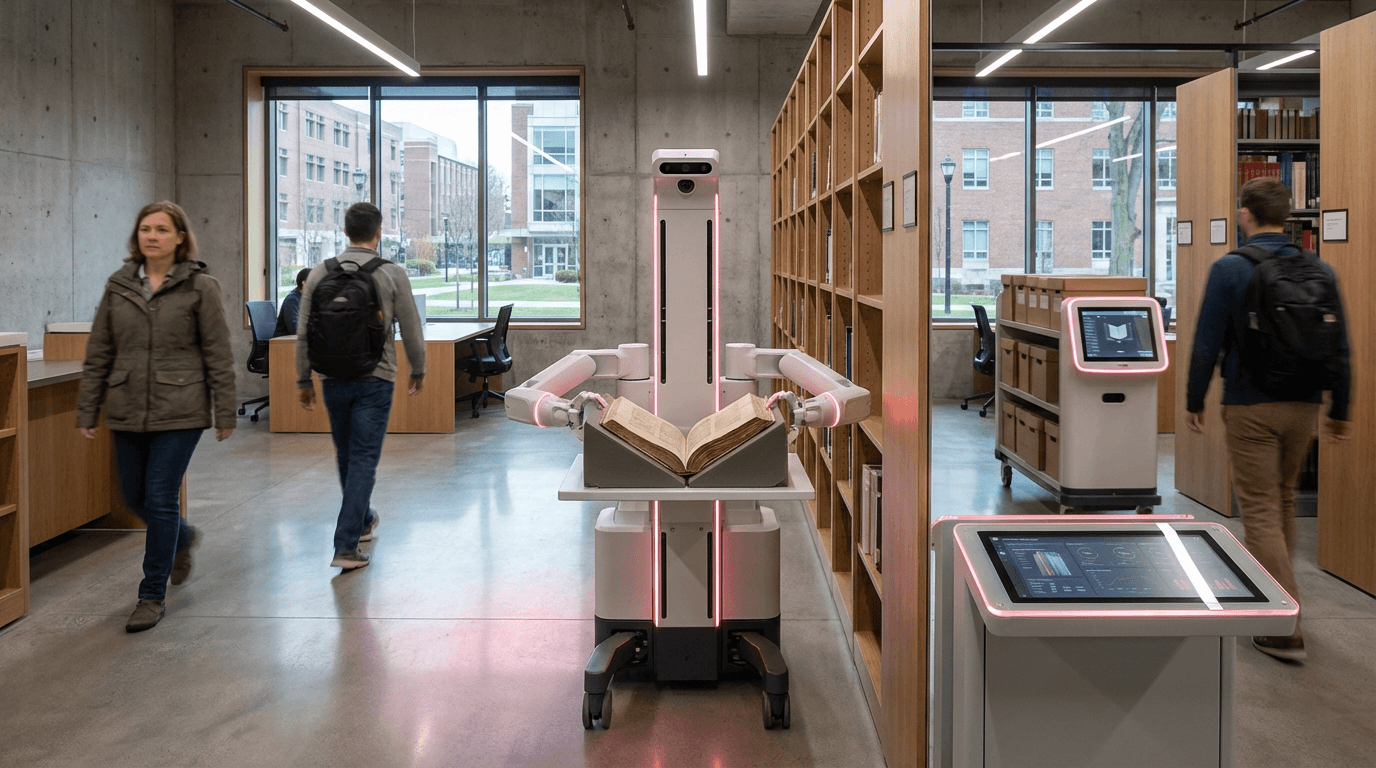
Autonomous Archive Robots
Autonomous archive robots represent a convergence of robotics, computer vision, and materials science designed to address one of the most persistent challenges in cultural heritage preservation: the safe, efficient digitization of fragile historical materials. These systems employ sophisticated sensor arrays—including high-resolution cameras, depth sensors, and haptic feedback mechanisms—to perceive and interact with delicate documents, manuscripts, and bound volumes without causing physical damage. The robots operate through carefully calibrated mechanical systems, whether mobile platforms that navigate archive spaces or precision gantry configurations that provide millimeter-level positioning accuracy. Advanced vision algorithms enable real-time assessment of material condition, page thickness, and binding tension, allowing the system to adjust handling pressure and movement speed dynamically. Some implementations incorporate environmental sensors to monitor temperature and humidity, ensuring optimal conditions during the digitization process. The integration of machine learning allows these systems to improve their handling techniques over time, recognizing different paper types, binding styles, and preservation states.
Archives and libraries face an overwhelming backlog of undigitized materials, with estimates suggesting that less than ten percent of global archival holdings have been converted to digital formats. Manual digitization is labor-intensive, expensive, and carries inherent risks of human error or fatigue-related damage to irreplaceable materials. Autonomous archive robots address these limitations by enabling continuous operation across extended periods, maintaining consistent quality standards that human operators struggle to sustain during repetitive tasks. The technology solves critical workflow bottlenecks in mass digitization projects, where the sheer volume of materials—ranging from census records to newspaper collections—exceeds available human resources. These systems also mitigate occupational health concerns associated with repetitive scanning work, reducing strain injuries among archive staff. By automating the mechanical aspects of digitization, institutions can redirect skilled archivists toward higher-value activities such as metadata creation, collection curation, and researcher support. The robots' ability to operate in controlled environments, including low-light conditions that protect photosensitive materials, expands the range of items that can be safely digitized.
Research institutions and national libraries have begun deploying pilot systems for specific collection types, with early implementations focusing on standardized materials like bound newspapers and government documents where consistent formatting simplifies robotic handling. The technology shows particular promise for projects requiring rapid response, such as digitizing materials threatened by environmental degradation or political instability. As sensor technology advances and costs decline, these systems are expected to become more accessible to mid-sized institutions, democratizing capabilities once limited to well-funded national archives. The trajectory points toward increasingly sophisticated systems capable of handling diverse materials—from parchment scrolls to photographic negatives—while maintaining the precision necessary for scholarly-grade reproductions. This evolution aligns with broader trends in digital humanities and open access initiatives, where comprehensive digitization serves as infrastructure for computational analysis, remote research, and long-term preservation strategies that protect cultural heritage against physical deterioration and catastrophic loss.
Related Organizations

Specialists in mass digitization solutions and robotic book scanners.

Qidenus Technologies
Austria · Company
Manufacturer of robotic book scanners, now part of the iGuana group.

Swiss manufacturer of high-speed automatic book scanners.

Institute for Production Systems and Design Technology.

A supplier of integrated automated technology, software, and services to optimize the supply chain.

SMA Electronic Document GmbH
Germany · Company
Manufacturer of large format scanners and robotic scanning tables.

German manufacturer of overhead scanners and microfilm plotters.

Global provider of data-driven & robotic solutions for logistics automation.

Hosts the 'Internet Arcade' and massive collections of abandonware, utilizing browser-based emulation (Emularity) to keep software accessible.
Supporting Evidence
Research this in Signals
Signals turns a topic into a sourced research record you can inspect and rerun. Your first scan is free, and this one starts with Autonomous Archive Robots already loaded, so edit it or scan as is.