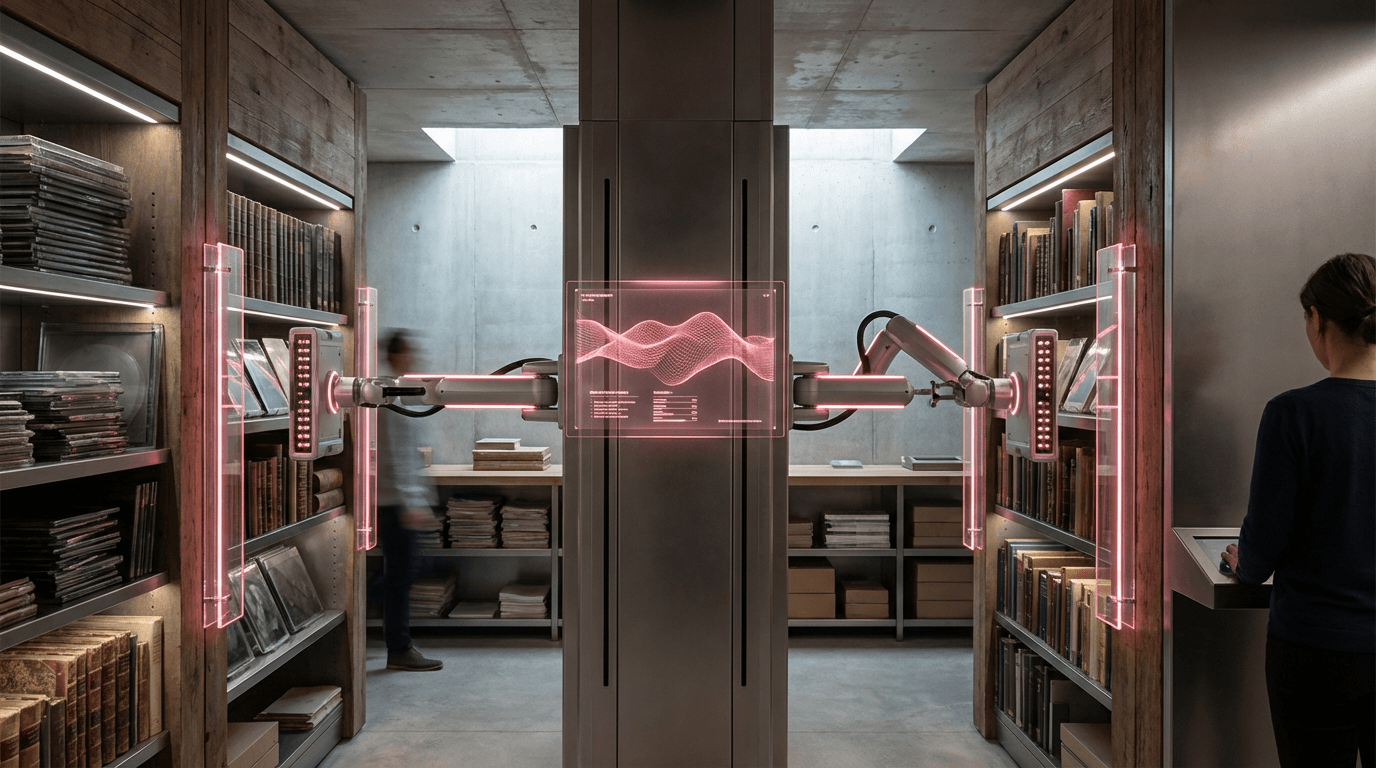
Active Preservation Watchdogs
Digital preservation faces a fundamental challenge: the gradual degradation of stored information over time. Unlike physical artifacts that show visible signs of decay, digital files can suffer from silent corruption—bit rot, media degradation, and format obsolescence—that renders them unreadable without any obvious warning. Traditional preservation strategies rely on periodic manual audits and reactive interventions, creating gaps where corruption can go undetected for months or years. Active Preservation Watchdogs address this vulnerability through continuous, automated monitoring of digital repositories, functioning as tireless sentinels that detect and respond to integrity threats before they compromise irreplaceable cultural, scientific, or institutional records.
These software agents operate as persistent background processes that systematically traverse digital collections, performing cryptographic hash verification to detect even single-bit alterations in stored files. When discrepancies are identified, the system cross-references multiple storage copies to determine which version remains intact, automatically initiating repair protocols that restore corrupted data from redundant sources. Beyond bit-level integrity, these watchdogs maintain awareness of evolving file format ecosystems, tracking when proprietary formats approach obsolescence or when rendering software becomes unavailable. This intelligence triggers proactive migration workflows that convert at-risk files into more sustainable formats while preserving all essential metadata and structural relationships. The system's architecture typically incorporates machine learning components that optimize scanning schedules based on media type, storage conditions, and historical corruption patterns, ensuring that high-risk materials receive more frequent attention while minimizing computational overhead across vast collections.
Research institutions, national archives, and large-scale data repositories are increasingly deploying these automated preservation frameworks as digital holdings expand beyond the capacity of manual stewardship. Early implementations have demonstrated significant reductions in data loss incidents, with some institutions reporting detection of corruption events within hours rather than the months typical of scheduled audit cycles. The technology proves particularly valuable for preserving scientific datasets, audiovisual collections, and born-digital archives where format diversity and sheer volume make manual monitoring impractical. As storage costs decline and digital collections grow exponentially, active preservation systems represent a necessary evolution from reactive conservation to predictive maintenance, ensuring that today's digital heritage remains accessible to future generations despite the relentless march of technological change.
Related Organizations



A global membership organization for open source digital preservation.

The official archive of the UK government.

A charitable foundation supporting digital preservation.

A ProQuest/Clarivate company providing library automation solutions.




Supporting Evidence
Research this in Signals
Signals turns a topic into a sourced research record you can inspect and rerun. Your first scan is free, and this one starts with Active Preservation Watchdogs already loaded, so edit it or scan as is.