Content Authenticity Protocols
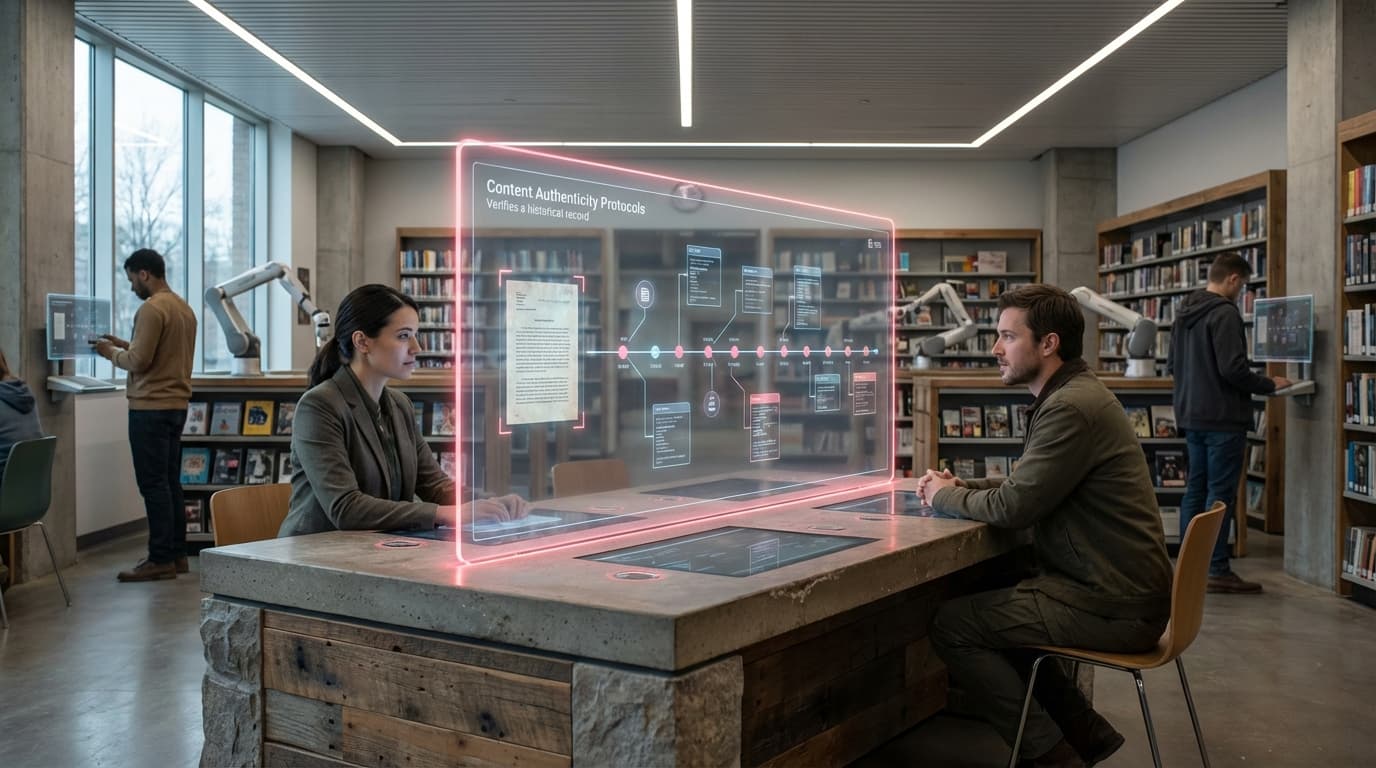
In an era where digital manipulation has become increasingly sophisticated and widespread, distinguishing authentic content from fabricated or altered media presents a critical challenge for libraries, archives, news organisations, and the broader public. Content Authenticity Protocols address this fundamental problem by establishing cryptographic frameworks that create permanent, tamper-evident records of a digital asset's entire lifecycle—from initial capture through every subsequent modification. These systems typically employ a combination of cryptographic hashing, digital signatures, and distributed ledger technologies to generate immutable metadata that travels with the content itself. When a photograph is captured or a document is created, the protocol embeds a cryptographic fingerprint that records the device, timestamp, location, and creator information. Each subsequent edit—whether a crop, colour adjustment, or text revision—generates a new entry in this chain of custody, creating a transparent audit trail that cannot be retroactively altered without detection. Unlike traditional watermarking or metadata systems that can be easily stripped or modified, these protocols bind provenance information to the content at a fundamental level, often using blockchain or similar distributed verification systems to ensure no single entity can manipulate the historical record.
For institutions managing knowledge resources, these protocols solve the escalating crisis of trust in digital information. Research libraries face mounting pressure to verify the authenticity of digital primary sources, while news archives must defend against both deliberate disinformation campaigns and inadvertent circulation of manipulated materials. Content Authenticity Protocols enable these organisations to provide verifiable assurance about the materials they preserve and disseminate, transforming authentication from a labour-intensive expert analysis into an automated, user-accessible verification process. This capability proves particularly valuable in legal contexts, where establishing the chain of custody for digital evidence has become increasingly complex, and in academic settings, where researchers require confidence in the integrity of source materials. The technology also addresses the challenge of synthetic media—AI-generated images, videos, and text—by allowing creators to voluntarily certify authentic human-created work, establishing a new standard for transparency in digital publishing and archival practices.
Several major technology companies and standards organisations have begun implementing these protocols, with early adoption visible in professional photography, journalism, and digital asset management platforms. The Coalition for Content Provenance and Authenticity (C2PA), a collaborative effort among industry leaders, has developed open technical specifications that are being integrated into cameras, editing software, and content management systems. News organisations are piloting these systems to certify original reporting, while archival institutions are exploring their application to born-digital collections and digitised historical materials. The technology faces practical challenges around user adoption, computational overhead, and the need for widespread ecosystem support—a photograph's provenance chain only provides value if viewing platforms can display and verify it. Looking forward, these protocols are likely to become foundational infrastructure for digital knowledge systems, potentially evolving into mandatory standards for certain categories of public information. As generative AI makes content manipulation trivially easy, the ability to verify authenticity will become as essential to information literacy as citation practices are to academic research, fundamentally reshaping how communities establish and maintain trust in their digital knowledge commons.
Related Organizations

An open technical standard body addressing the prevalence of misleading information online through content provenance.

Software giant and founder of the Content Authenticity Initiative (CAI).

Academic research lab at Stanford and USC dedicated to using cryptography for information integrity.

Focuses on image provenance and authentication, helping verify that media has not been altered (the inverse of detection).

The UK's public service broadcaster and co-founder of Project Origin.

Multinational corporation specializing in optical, imaging, and industrial products.



Taiwan · Startup
A blockchain-based network for tracing digital media provenance and copyright.

Developer of 360 Reality Audio (360RA), an object-based spatial audio format used in live music broadcasting and streaming.

Human rights organization focusing on video evidence, actively researching provenance tools for activists.

Provider of digital watermarking and identification technologies.

Developer of the Loihi neuromorphic research chip and Foveros 3D packaging technology.
Supporting Evidence
Research this in Signals
Signals turns a topic into a sourced research record you can inspect and rerun. Your first scan is free, and this one starts with Content Authenticity Protocols already loaded, so edit it or scan as is.