Waterless Dyeing Technologies
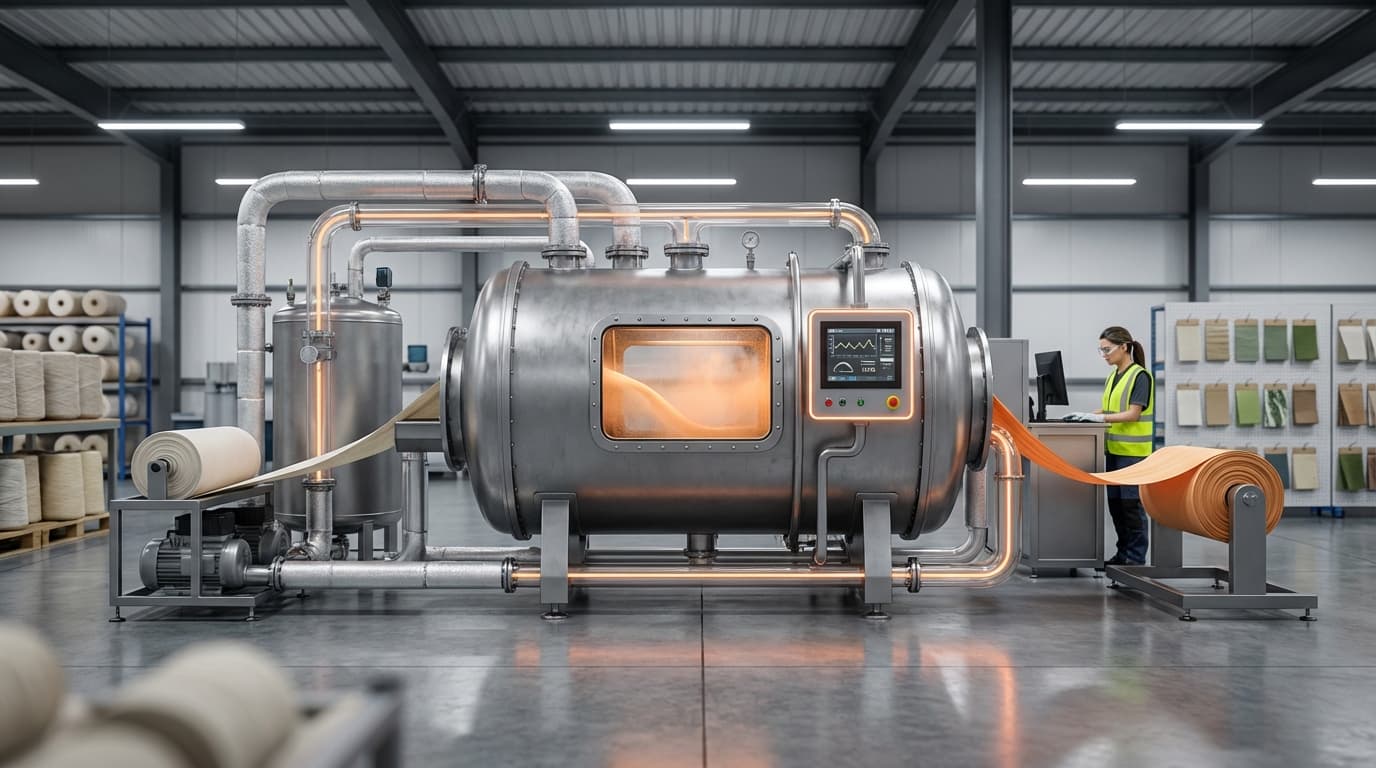
Waterless dyeing technologies utilize supercritical carbon dioxide or other non-aqueous media to infuse color into fabrics without using water. In supercritical CO2 dyeing, carbon dioxide is pressurized and heated to a state where it acts as both a liquid and gas, carrying dye molecules deep into fiber structures and then evaporating cleanly, leaving no wastewater behind.
This innovation addresses one of the textile industry's most severe environmental impacts: traditional dyeing consumes vast quantities of water (up to 200 liters per kilogram of fabric) and generates toxic wastewater containing heavy metals, salts, and chemical residues that pollute rivers and groundwater. Waterless dyeing eliminates 100% of water usage and wastewater discharge while reducing energy consumption and dye waste. Companies like DyeCoo (acquired by Huntsman) and Colorep have commercialized supercritical CO2 systems, with major brands including Nike and Adidas adopting the technology.
The technology is becoming increasingly critical as water scarcity intensifies globally and regulations on industrial wastewater discharge tighten. With textile dyeing responsible for 20% of global industrial water pollution, waterless dyeing represents one of the most impactful sustainability innovations in fashion manufacturing, enabling brands to dramatically reduce their environmental footprint while maintaining color quality and consistency.
Related Organizations
The world leader in industrial supercritical CO2 dyeing technology, eliminating water and process chemicals.

A major textile supplier that pioneered the 'DryDye' brand using DyeCoo's technology.

Develops 'Endeavour' digital dyeing technology which uses piezoelectric nozzles to dye fabric with minimal water/energy.

Develops NTX Cooltrans, a waterless transfer printing technology that colorizes fabric without dye baths.


Created a digital thread dyeing system that dyes thread on-demand using zero water.
Global furniture retailer developing solutions for small spaces, including room dividers and sound-absorbing textiles.

Global fashion company utilizing ECOFAST™ Pure in their 'Color on Demand' platform.
Supporting Evidence
Research this in Signals
Signals turns a topic into a sourced research record you can inspect and rerun. Your first scan is free, and this one starts with Waterless Dyeing Technologies already loaded, so edit it or scan as is.