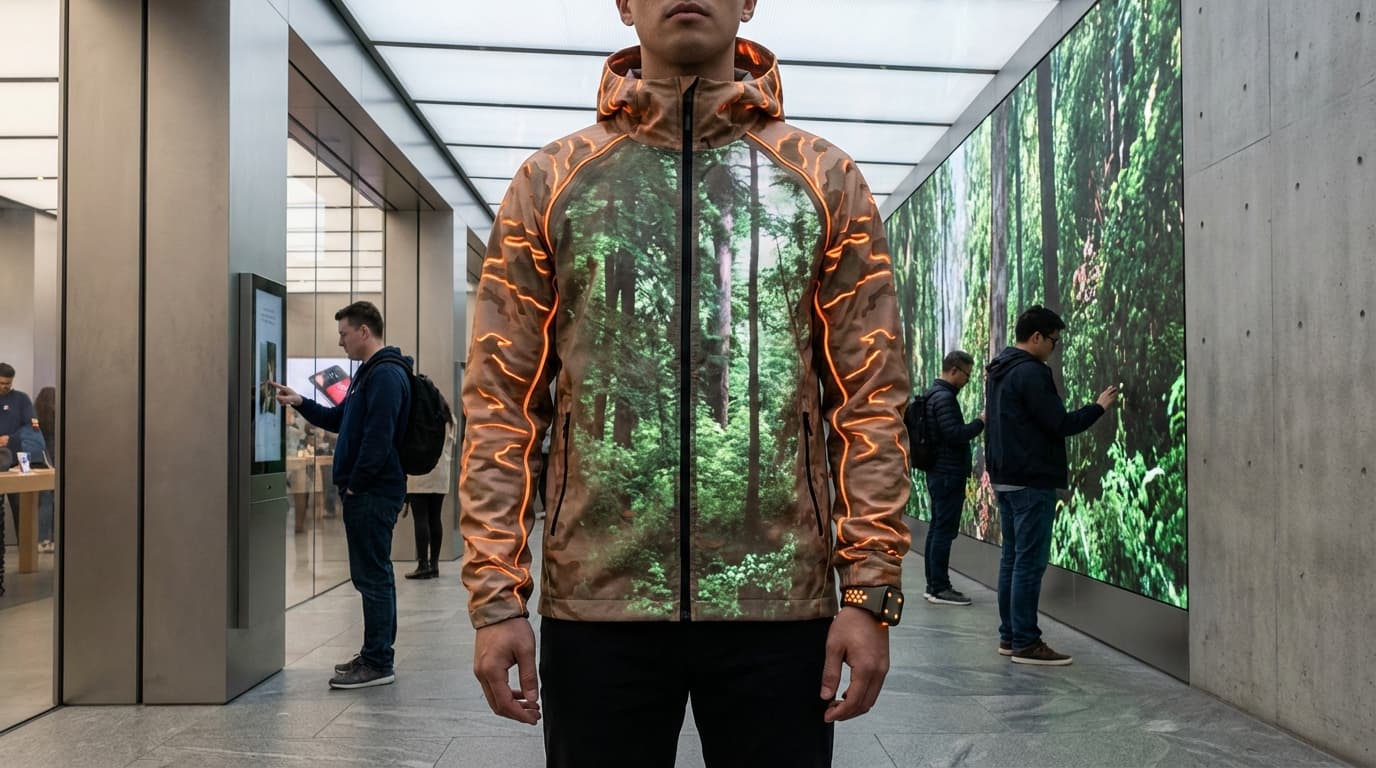
Adaptive Camouflage Textiles
Adaptive camouflage textiles use advanced materials including photonic crystals, electrochromic inks, and thermochromic pigments that can change color, pattern, or infrared signature in response to electrical signals, temperature changes, or environmental conditions. These systems often integrate sensors that detect background colors or patterns and automatically adjust the textile's appearance to blend with the surroundings.
This innovation, initially developed for military and hunting applications, enables textiles that can actively adapt their visual appearance to match changing environments, providing effective camouflage across different settings. The technology combines material science with sensor systems and control electronics to create dynamic visual effects. While military applications remain primary, the technology is finding applications in experiential fashion, stagewear, and interactive design where dynamic visual effects are desired.
The technology represents a convergence of materials science, electronics, and textile engineering, creating garments that can actively respond to their environment. As the technology matures and costs decrease, adaptive camouflage textiles could find broader applications in fashion, safety gear, and interactive design, though current implementations remain largely experimental or specialized due to complexity and cost constraints.
Related Organizations

Defense and aerospace company known for the ADAPTIV thermal camouflage system.

Developers of Quantum Stealth, a light-bending material technology.

Defense company producing the Barracuda advanced camouflage systems.

Experimental clothing brand that launched the 'Graphene Jacket', acting as a radiator and conductor.

The inventor of ePTFE membranes (Gore-Tex), setting the industry standard for waterproof-breathable laminates.


Public research university hosting the California Center for Algae Biotechnology.

Leads the DISCOVERER project focusing on VLEO aerodynamics and materials.

Produces 'Nanofront', a high-strength polyester nanofiber used in sportswear, gloves, and skin care applications.
Supporting Evidence
Research this in Signals
Signals turns a topic into a sourced research record you can inspect and rerun. Your first scan is free, and this one starts with Adaptive Camouflage Textiles already loaded, so edit it or scan as is.