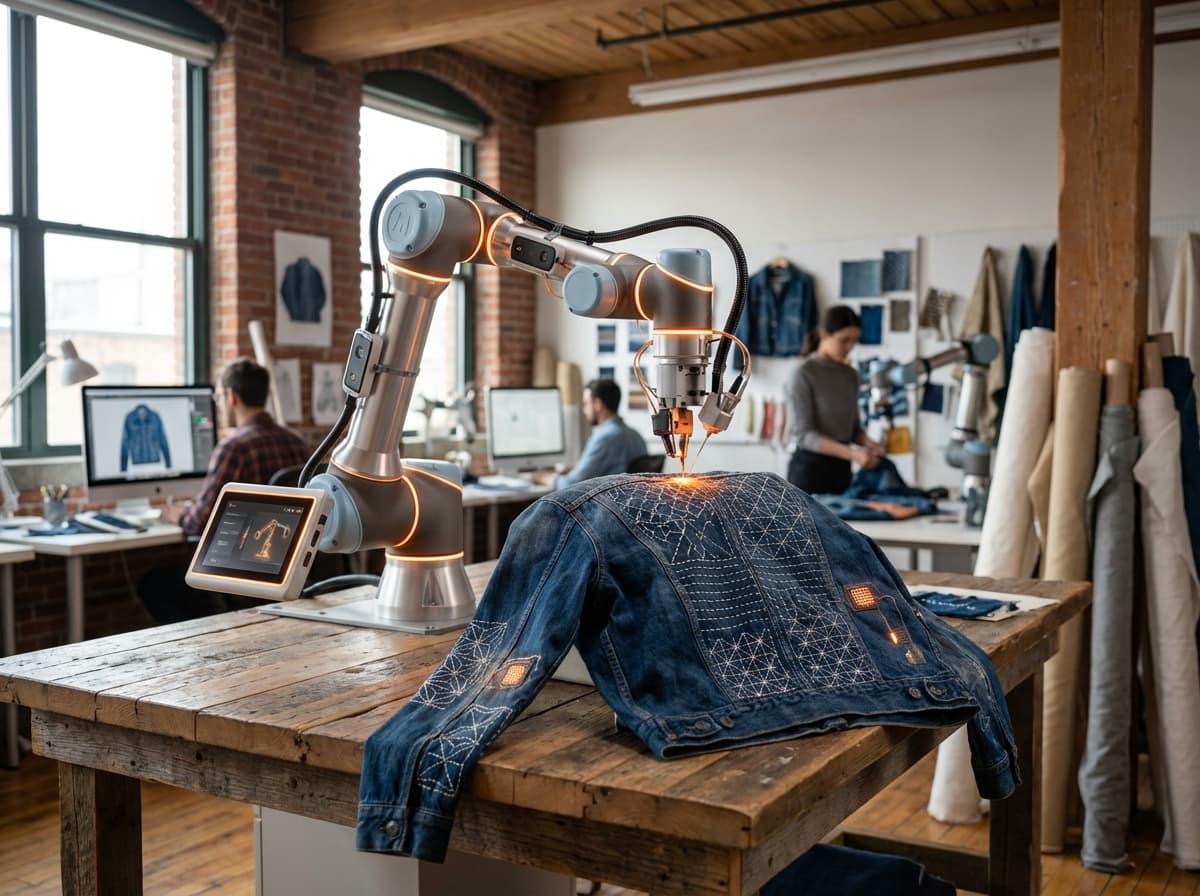
Japanese Sashiko-Inspired Repair Robotics
Sashiko-inspired repair robotics combines computer vision, pattern recognition, and automated sewing systems to replicate the traditional Japanese sashiko mending technique—decorative reinforcement stitching that strengthens and repairs damaged fabric while creating beautiful visible patterns. These robotic systems scan garments to identify damage, generate appropriate reinforcement patterns based on sashiko principles, and execute precise stitching that both repairs and enhances the garment aesthetically.
This innovation addresses the challenge of scaling repair services in a circular fashion economy, where extending garment life is crucial for sustainability but manual repair is labor-intensive and expensive. By automating the repair process while preserving the cultural and aesthetic value of visible mending, the technology makes repair accessible and economically viable for brands and consumers. Japanese research institutions and companies are leading development, recognizing both the cultural significance of sashiko and its potential for sustainable fashion.
The technology is particularly significant as brands and consumers increasingly value repair and longevity over replacement. By combining automation with traditional craftsmanship aesthetics, sashiko-inspired repair robotics offers a pathway to scaling circular business models while maintaining the emotional and cultural connections that make repaired garments meaningful. As the technology matures, it could transform how we think about garment maintenance and create new business opportunities around repair services.
Related Organizations

A leading industrial sewing machine manufacturer that co-developed the specialized sewing machine required to install AiryString zippers.

German robotics startup focusing on the automation of textile handling using AI and robotics.

Developer of 'Sewbots' that use high-speed computer vision to automate the movement of fabric through sewing machines without human intervention.

A public-private partnership funding robotic innovations in manufacturing, including textile handling and sewing.

Inventors of a process that temporarily stiffens fabric with a water-soluble polymer, allowing standard industrial robotic arms to fold and sew garments.

A digital platform connecting consumers with clothing repair and alteration services.

Provides closed-loop textile recycling and cleaning services using liquid CO2.
Supporting Evidence
Research this in Signals
Signals turns a topic into a sourced research record you can inspect and rerun. Your first scan is free, and this one starts with Japanese Sashiko-Inspired Repair Robotics already loaded, so edit it or scan as is.