Right-to-Repair Digital Manuals
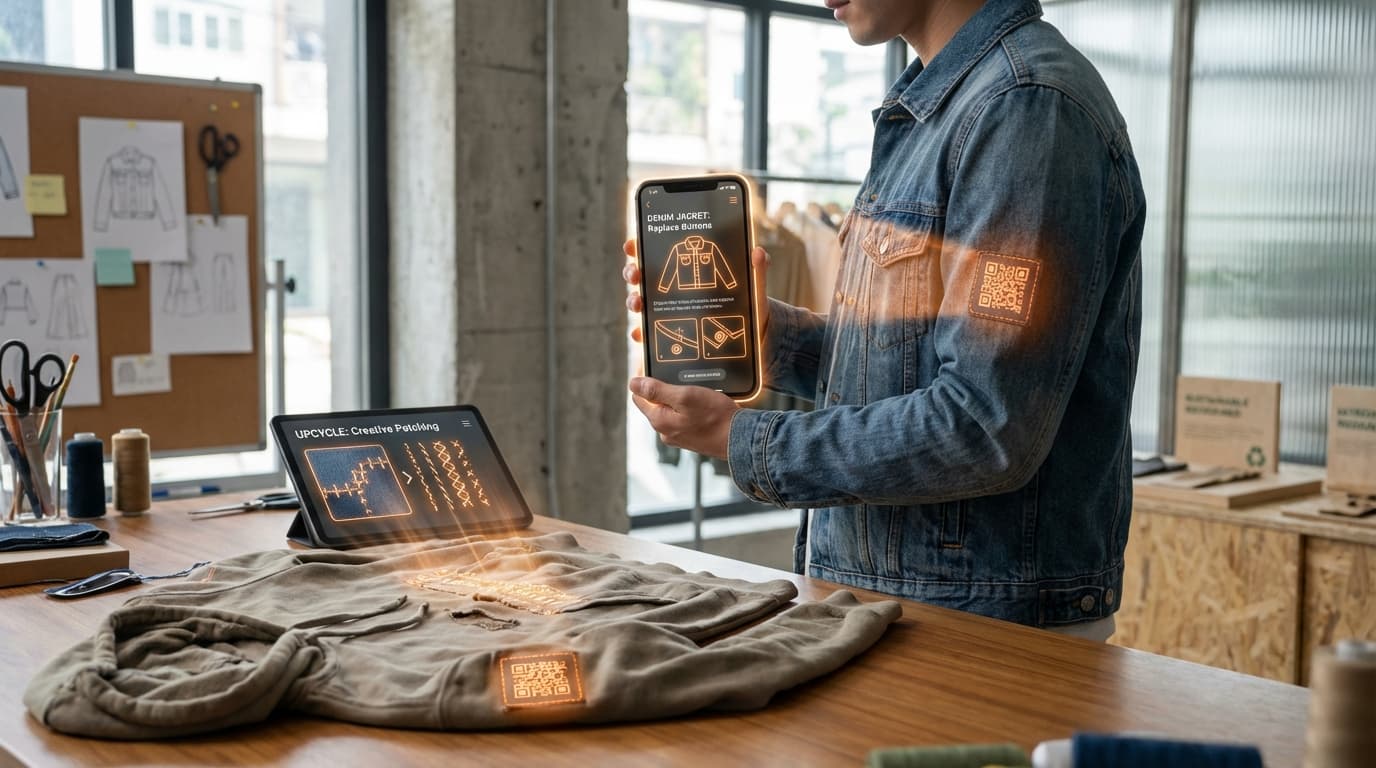
Right-to-repair digital manuals embed QR codes, NFC tags, or other digital markers in garments that link to comprehensive repair information including construction diagrams, material specifications, care instructions, and step-by-step repair guides. These digital resources provide consumers and professional repairers with the information needed to maintain, repair, and extend the life of garments, countering the trend toward disposable fashion and planned obsolescence.
This innovation addresses the challenge of garment longevity in an industry that has often prioritized low cost and rapid turnover over durability and repairability. By providing accessible repair information, these systems empower consumers to maintain their clothing and support a culture of repair rather than replacement. The approach aligns with circular economy principles and right-to-repair movements that seek to extend product lifecycles and reduce waste. Some brands are beginning to provide these resources, though adoption remains limited.
The technology is particularly significant as consumers and regulators increasingly demand more sustainable consumption patterns and products designed for longevity. By making repair information easily accessible, digital manuals can help shift fashion culture toward valuing and maintaining clothing rather than discarding it. However, the effectiveness depends on garments being designed for repairability in the first place, requiring changes in both information provision and product design. As right-to-repair regulations emerge and consumer expectations shift, digital repair manuals could become standard features of fashion products.
Related Organizations

Software company creating the Digital ID for physical products.
A global leader in sustainable apparel, extensively using hemp and recycled polyester blends in their workwear and sportswear lines.
Developed 'atma.io', a connected product cloud that assigns unique digital IDs to billions of items, bridging physical tags (RFID/QR) with digital data.

Global community and platform for repair manuals, partnering with brands like Patagonia to host digital repair guides linked from garments.

Denim brand offering free repairs forever and detailed digital repair guides and transparency data.

Tech platform focusing on post-purchase care, repairs, and inventory management to extend garment life.

Authentication platform allowing consumers to verify product authenticity via QR codes, recently acquired by eBay.

A digital platform connecting consumers with clothing repair and alteration services.

Develops heat-dissolvable stitching threads and disassembly technologies, often paired with digital IDs for recycling instructions.
B2B repair service provider for brands like Patagonia and Decathlon, utilizing data to streamline repairs.
Supporting Evidence
Research this in Signals
Signals turns a topic into a sourced research record you can inspect and rerun. Your first scan is free, and this one starts with Right-to-Repair Digital Manuals already loaded, so edit it or scan as is.