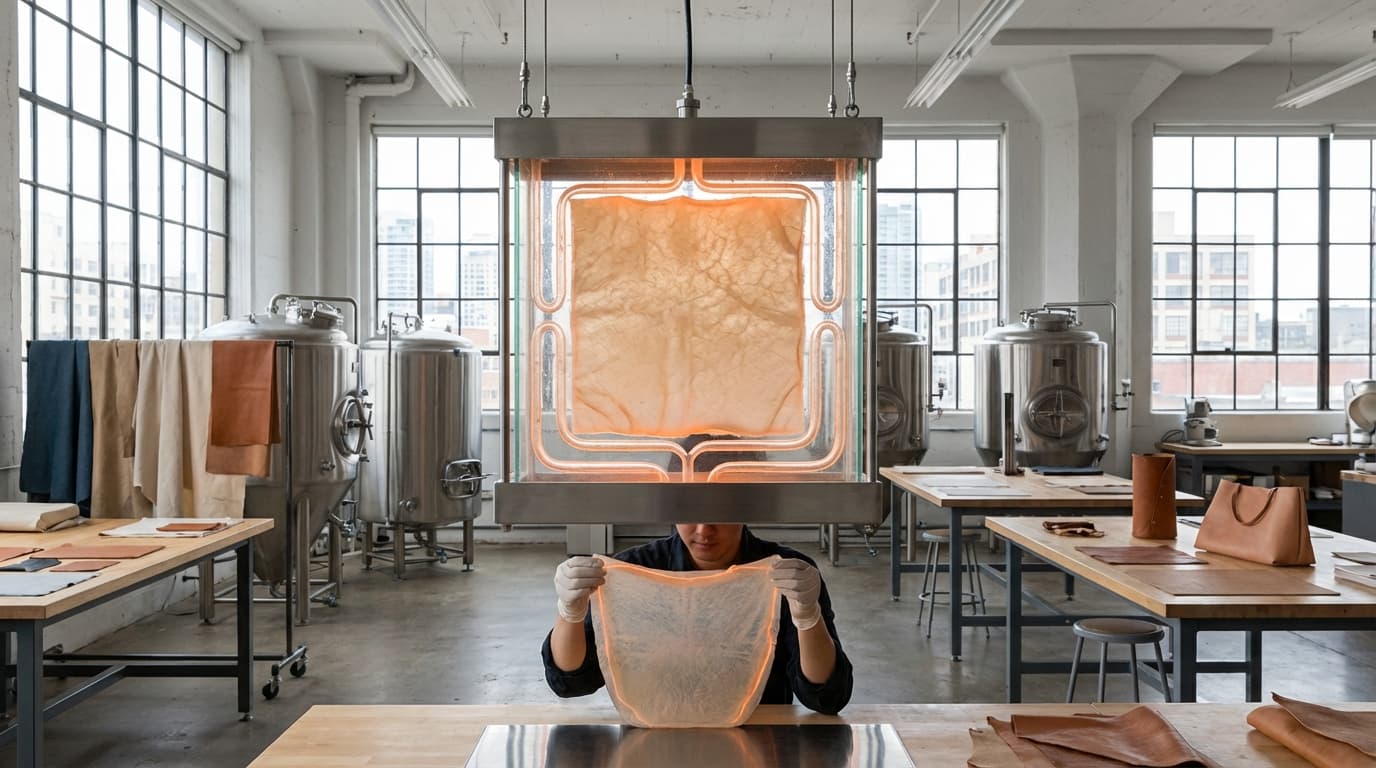
Bacterial Cellulose Production
Bacterial cellulose production uses microorganisms, typically Acetobacter species (the same bacteria used in kombucha fermentation), to synthesize pure cellulose nanofibrils in controlled fermentation environments. The bacteria consume sugar-rich feedstocks and excrete cellulose that forms dense, leather-like sheets that can be harvested, processed, dyed, and finished into textile materials.
This innovation offers a sustainable alternative to both animal leather and synthetic materials, creating a biodegradable material that requires minimal processing and no harmful chemicals. The fermentation process is relatively simple and can be scaled from artisanal production to industrial manufacturing, with the resulting material offering unique properties including high water retention, moldability, and a distinctive texture. The technology has been popularized by makers and researchers, particularly in Southeast Asia, and is gaining commercial interest as brands seek sustainable leather alternatives.
The technology is particularly significant for the growing market of vegan and sustainable fashion, where consumers seek alternatives to animal leather without the environmental impact of synthetic materials. As fermentation technology advances and production scales, bacterial cellulose could become a mainstream material for accessories, footwear, and fashion applications, offering a truly circular material that can be composted at end-of-life while providing the aesthetic and functional qualities associated with leather.
Related Organizations

Produces Celium™, a premium biotextile grown by bacteria using fruit waste as feedstock.
Uses 'microbial weaving' to guide bacteria to grow cellulose around a yarn scaffold.
Creates 'Nullarbor' fiber, a tree-free rayon made from fermented bacterial cellulose.
Grows SCOBY-based materials for packaging and textiles using local food waste.

Finnish university with strong research groups in superconducting circuits and microwave quantum optics relevant to radar.
Supporting Evidence
Research this in Signals
Signals turns a topic into a sourced research record you can inspect and rerun. Your first scan is free, and this one starts with Bacterial Cellulose Production already loaded, so edit it or scan as is.