Cross-Species Bonding Technologies
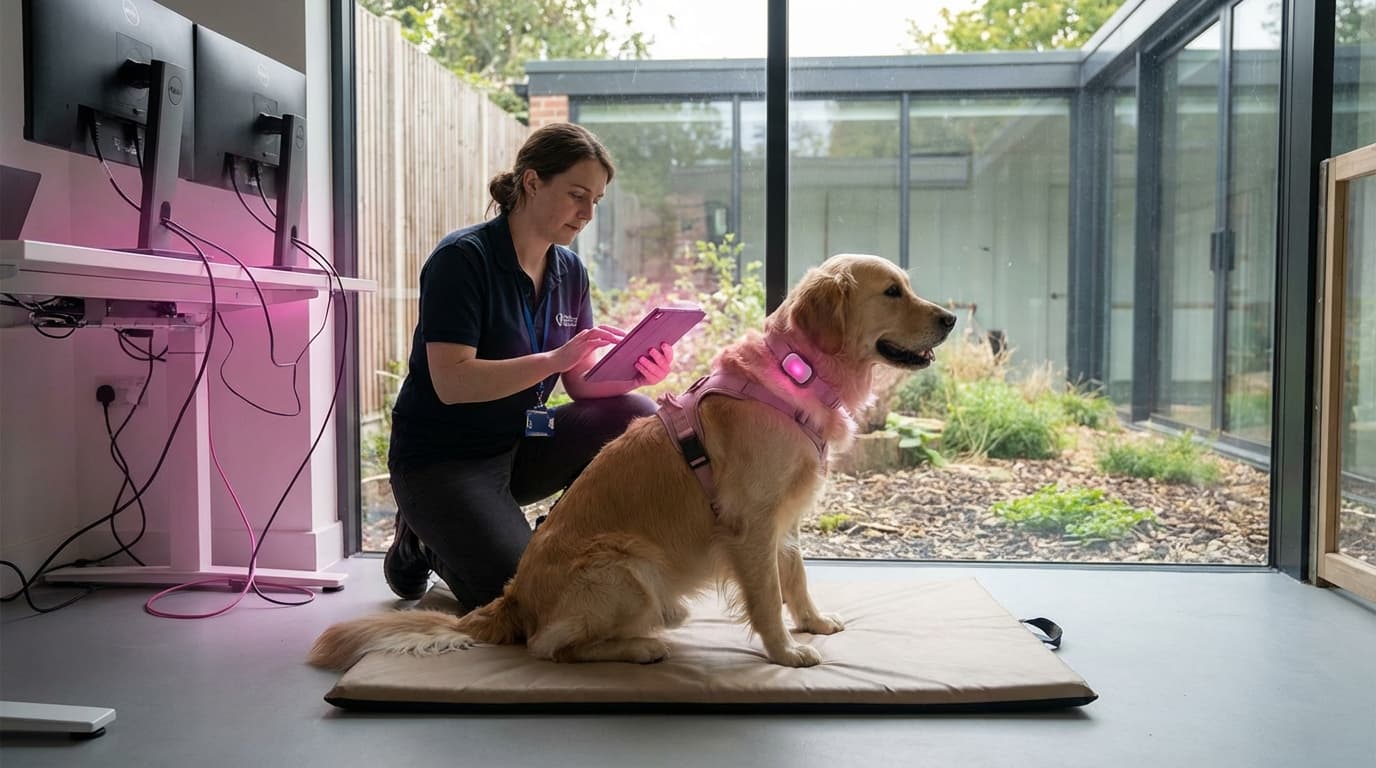
Cross-species bonding technologies represent an emerging field that leverages biosensors, behavioral analytics, and machine learning to facilitate more meaningful communication between humans and animals. These systems typically combine wearable devices equipped with accelerometers, heart rate monitors, and temperature sensors with sophisticated pattern recognition algorithms trained on extensive datasets of animal behavior. The technology works by continuously monitoring physiological signals and movement patterns in companion animals, then correlating these data points with established behavioral markers to infer emotional states, needs, and intentions. Some implementations incorporate haptic feedback devices worn by humans that translate detected animal signals into tactile sensations, while others use visual or auditory cues delivered through smartphone applications. Advanced versions employ computer vision to analyze facial expressions, posture, and micro-movements in real-time, creating a more comprehensive picture of an animal's internal state than traditional observation alone could provide.
The fundamental challenge these technologies address is the communication barrier that has historically limited the depth of human-animal relationships, despite the profound emotional bonds many people form with their pets. Conventional approaches to understanding animal behavior rely heavily on human interpretation of visible cues, which can be inconsistent, culturally influenced, and prone to anthropomorphic projection. This limitation becomes particularly significant in contexts where misunderstanding an animal's stress signals or health indicators can lead to welfare issues or missed opportunities for intervention. Cross-species bonding technologies offer a more objective, data-driven approach to decoding animal communication, potentially reducing behavioral problems stemming from miscommunication and enabling earlier detection of health issues through subtle changes in baseline patterns. For professional contexts such as veterinary care, animal-assisted therapy, and conservation work, these tools provide quantifiable metrics that can inform treatment decisions and improve outcomes.
Early implementations of these technologies have appeared primarily in the companion animal market, with several startups developing collar-mounted devices that claim to interpret barking patterns, activity levels, and stress indicators in dogs and cats. Research institutions have explored similar approaches for understanding emotional states in livestock and wildlife, though commercial applications remain limited. The technology aligns with broader trends toward quantified self-monitoring and the Internet of Things, as pet owners increasingly seek data-driven insights into their animals' wellbeing. Looking forward, advances in affective computing and neuroscience may enable even more nuanced interpretation of animal consciousness and emotional experience, though ethical questions about privacy, consent, and the appropriate boundaries of technological mediation in interspecies relationships will likely intensify as these systems become more sophisticated. The ultimate trajectory points toward a future where technology serves not to replace intuitive connection with animals but to augment and deepen it, creating new possibilities for empathy and understanding across species boundaries.
Related Organizations

Develops a system of recordable buttons (hex-tiles) that allow dogs and cats to communicate needs and complex thoughts to humans.
Animal-Computer Interaction Lab (Open University)
United Kingdom · Research Lab
A pioneering academic lab dedicated to designing user-centered interactive systems for animals.

Produces smart collars that track pet health, location, and behavior patterns (scratching, licking) to interpret pet needs.

A smart bird feeder that uses AI to identify visiting bird species and notifies the user via app.

Creates interactive pet cameras with two-way audio and treat tossing capabilities for remote bonding.

Creators of the Smart Dog Collar which monitors respiratory and heart signatures to detect health issues early.

Develops connected pet cameras and laser toys that allow owners to play with pets remotely.

A massive conglomerate (owner of Whistle and Wisdom Panel) actively investing in pet-tech and connected ecosystems.
Supporting Evidence
Research this in Signals
Signals turns a topic into a sourced research record you can inspect and rerun. Your first scan is free, and this one starts with Cross-Species Bonding Technologies already loaded, so edit it or scan as is.