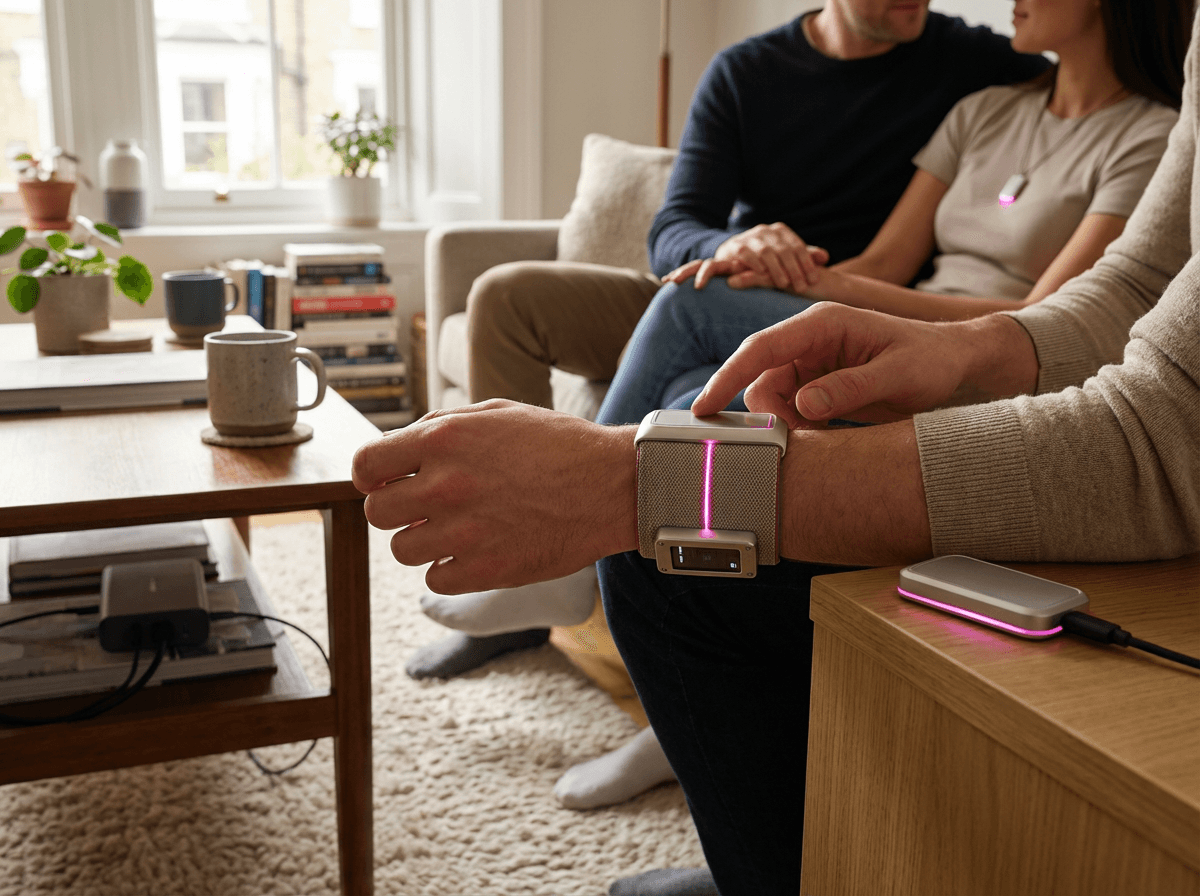
Bio-signal Shared Jewelry
Bio-signal shared jewelry represents a convergence of wearable technology, haptic feedback systems, and biometric sensing, designed to maintain intimate connections across physical distances. These devices typically incorporate miniaturised sensors capable of detecting physiological signals such as heart rate variability, skin temperature, and pressure patterns from touch or squeeze gestures. The captured bio-signals are transmitted through secure wireless protocols to paired devices worn by partners, family members, or close friends, where they are translated into subtle haptic feedback—gentle vibrations, warmth pulses, or rhythmic patterns that mirror the wearer's biological rhythms. Unlike conventional communication devices that demand attention and active engagement, these accessories operate continuously in the background, creating what researchers describe as an "ambient intimacy channel" that requires no conscious effort to maintain.
The technology addresses a fundamental challenge in modern relationships: the difficulty of maintaining emotional closeness when physical proximity is impossible. Traditional digital communication tools—video calls, messaging apps, social media—require deliberate action and sustained attention, creating what some relationship researchers call "communication fatigue." Bio-signal jewelry solves this by enabling passive connection that doesn't interrupt daily activities or demand cognitive resources. For long-distance relationships, deployed military personnel, or families separated by work obligations, these devices provide reassurance and presence without the pressure of constant active communication. The technology also serves individuals with anxiety disorders or those caring for elderly relatives, offering real-time wellness indicators and the comfort of knowing a loved one's basic physiological state. By translating abstract digital connectivity into tangible, embodied sensations, these accessories tap into the human need for physical touch and proximity, which conventional digital tools cannot replicate.
Early commercial implementations have emerged from both established jewelry brands partnering with technology companies and dedicated startups focused on relationship technology. Pilot programs with military families and healthcare applications for remote patient monitoring have demonstrated measurable improvements in reported emotional well-being and reduced anxiety levels. The devices align with broader trends in affective computing and the quantified relationship movement, where couples increasingly use technology to track and enhance their emotional connections. As sensor miniaturisation continues and battery technology improves, industry observers anticipate these accessories will become more sophisticated, potentially incorporating additional biometric markers like breathing patterns or even emotional states inferred through machine learning algorithms. The trajectory suggests a future where maintaining intimate connections across distance becomes as natural and effortless as wearing a wedding ring, fundamentally reshaping how we experience and sustain close relationships in an increasingly mobile and distributed world.
Related Organizations

Creators of the HB Ring, a premium smart ring that allows wearers to feel and see their partner's real-time heartbeat.

Developer of the Bond Touch bracelets that allow users to send haptic touches to partners over long distances.

A smart jewelry company creating necklaces and bracelets that vibrate and light up to signal a partner's touch.

Developers of Pillow Talk, a wristband and speaker system that transmits a partner's heartbeat to a pillow for sleep intimacy.

Produces a wearable bracelet that mimics a gentle squeeze on the wrist when a partner activates it.

A Kickstarter-originated project creating wristbands that allow two people to share touch remotely.

Fashion technology brand known for the 'Sound Shirt', which translates music into tactile sensations for the deaf.

Creates a haptic gaming suit that uses electrostimulation to simulate physical sensations synchronized with gameplay.
Supporting Evidence
Research this in Signals
Signals turns a topic into a sourced research record you can inspect and rerun. Your first scan is free, and this one starts with Bio-signal Shared Jewelry already loaded, so edit it or scan as is.