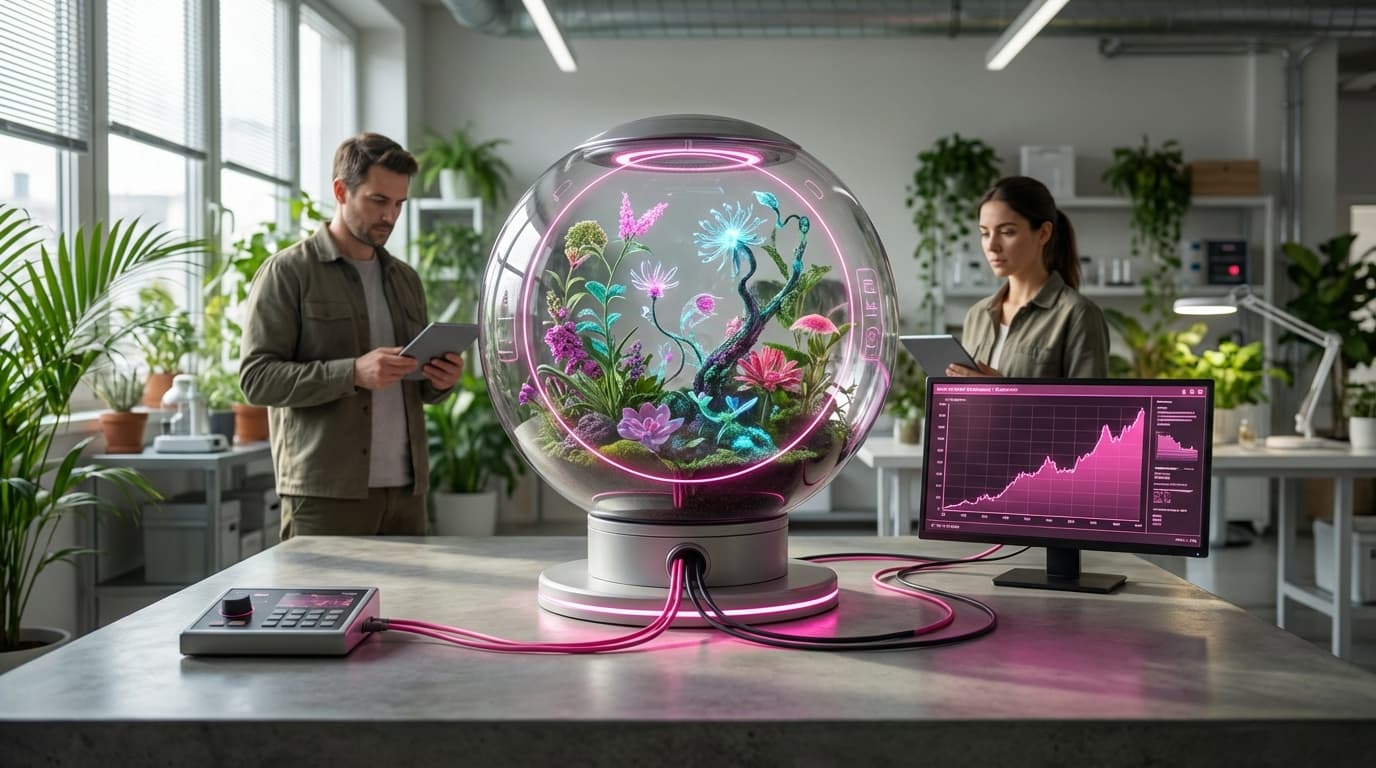
Synthetic Offspring Ecosystems
Synthetic Offspring Ecosystems represent a convergence of advanced artificial intelligence, emotional computing, and persistent virtual environments that enable individuals and couples to adopt and nurture digital life forms with developmental trajectories mirroring biological children. These systems employ sophisticated machine learning architectures that allow virtual beings to exhibit genuine growth patterns, personality development, and adaptive responses to their caregivers' interactions. Unlike static digital pets or simple chatbots, these entities possess memory systems that accumulate experiences, emotional models that respond authentically to care or neglect, and developmental milestones that unfold over years rather than hours. The technical infrastructure typically combines cloud-based processing for complex behavioral modeling with local interfaces—ranging from augmented reality displays to haptic devices—that make interactions feel tangible and consequential. The virtual beings require consistent attention, respond to different parenting styles, and develop unique characteristics based on the care they receive, creating genuine emotional investment from their human guardians.
The emergence of Synthetic Offspring Ecosystems addresses several profound social challenges facing contemporary relationships and societies. For couples navigating infertility, these systems offer a meaningful alternative to biological parenthood that preserves the developmental journey and emotional bonds of raising a child without the physical and financial barriers of adoption or assisted reproduction. In regions experiencing demographic decline, these digital dependents provide an outlet for nurturing instincts while avoiding the resource constraints and life disruptions of traditional parenthood. Perhaps most significantly, they serve as relationship milestones for partners seeking shared long-term projects that test compatibility and commitment without irreversible biological consequences. Early implementations suggest these systems can strengthen partnerships by creating shared responsibilities and decision-making opportunities, while also offering a testing ground for parenting philosophies before couples commit to biological children. For individuals choosing solitary life paths, synthetic offspring provide companionship and purpose without requiring a co-parent, addressing loneliness and the human need for generative legacy.
Current deployments remain primarily in research settings and premium consumer markets, with several technology companies piloting subscription-based platforms that allow users to adopt and raise virtual beings over multi-year timescales. These early ecosystems typically feature developmental stages from infancy through adolescence, with users reporting genuine emotional attachment and behavioral changes in their daily routines to accommodate their digital dependents' needs. The technology intersects with broader trends in parasocial relationships, virtual presence, and the digitization of intimate experiences, raising important questions about the nature of parenthood, emotional authenticity, and social bonds in increasingly mediated environments. As computational power continues to advance and virtual reality interfaces become more sophisticated, these systems are likely to evolve toward greater realism and emotional complexity, potentially reshaping cultural understandings of family, legacy, and the boundaries between digital and biological life.
Related Organizations

Creates autonomously animated 'Digital People' with simulated nervous systems.

Created the 'Vital Bracelet' line, which uses physical activity and NFC chips (Dim Cards) to train digital characters (Digimon) that battle in apps.

Developers of LOVOT, a companion robot designed to be loved and to nurture users' capacity for love.

AR platform company that develops the Lightship ARDK and owns Scaniverse, a 3D scanning app leveraging LiDAR.

Creators of Moxie, a companion robot that uses machine learning to perceive, process, and respond to natural conversation and eye contact to help children with social development.

Developer of 360 Reality Audio (360RA), an object-based spatial audio format used in live music broadcasting and streaming.

An AI companion app that has faced scrutiny regarding the emotional dependence of its users.

EdTech company that acquired the assets of Anki (Vector and Cozmo robots) and continues to develop them.

Creators of Eilik, a desktop companion robot with a focus on emotional expression and tactile interaction.

Self-care app where users take care of a virtual bird by taking care of themselves.
Supporting Evidence
Research this in Signals
Signals turns a topic into a sourced research record you can inspect and rerun. Your first scan is free, and this one starts with Synthetic Offspring Ecosystems already loaded, so edit it or scan as is.