Nanorobotic Bloodstream Sentinels
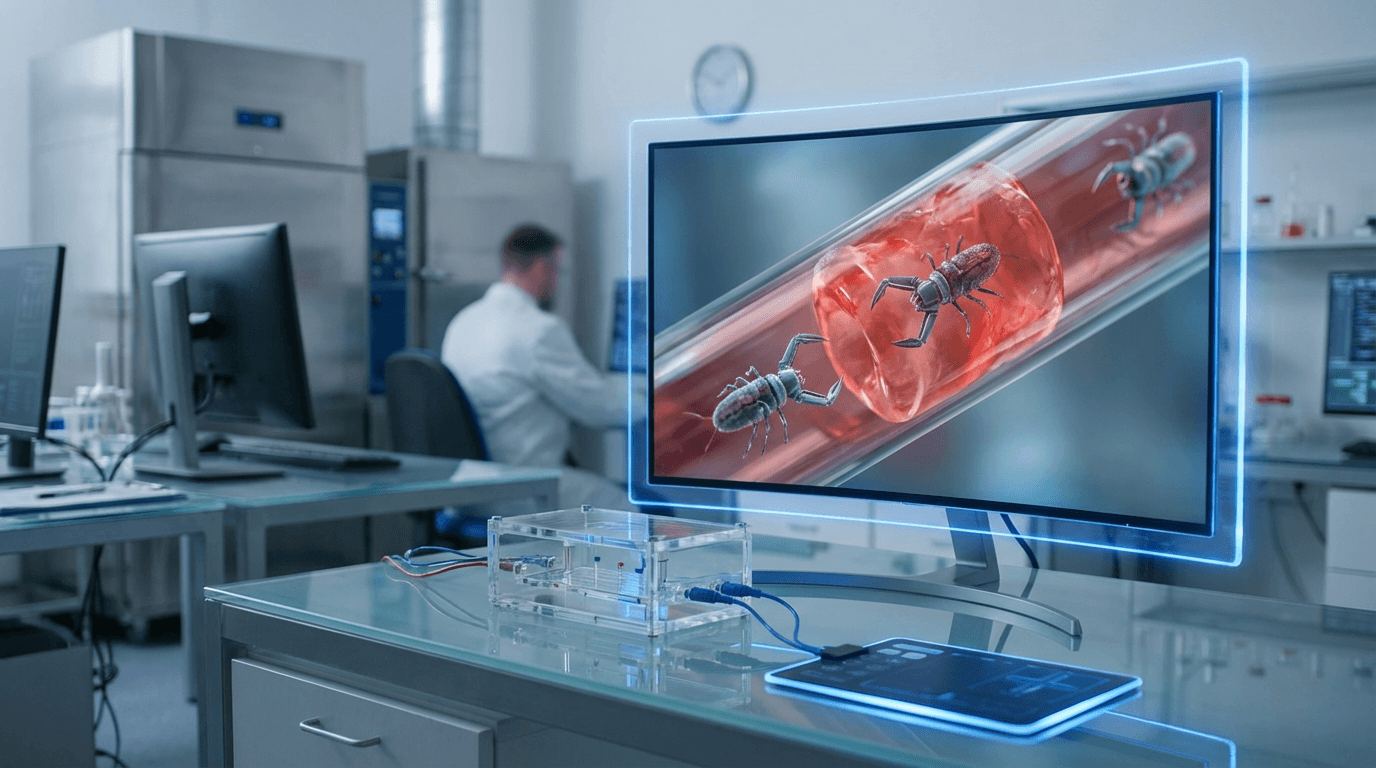
Nanorobotic bloodstream sentinels represent a convergence of nanotechnology, robotics, and biomedicine, creating autonomous devices typically measuring between 50 and 500 nanometers that can navigate the human circulatory system. These microscopic machines are engineered with biocompatible materials such as gold nanoparticles, magnetic iron oxide cores, or biodegradable polymers that allow them to operate safely within the body without triggering immune responses. The propulsion mechanisms vary by design: some utilize chemical fuel sources like glucose or hydrogen peroxide naturally present in blood, while others respond to external magnetic fields or ultrasound waves that can be controlled from outside the body. Each nanorobot is equipped with molecular sensors capable of detecting specific biomarkers associated with pathogens, cancer cells, or arterial plaque buildup, along with functional components that can perform targeted interventions such as releasing therapeutic payloads, mechanically disrupting cellular structures, or marking targets for immune system clearance.
The development of these sentinels addresses fundamental limitations in current medical treatment paradigms, particularly the challenge of early disease detection and continuous therapeutic intervention. Traditional diagnostic methods often identify conditions only after symptoms emerge, when diseases have already progressed significantly. Cardiovascular disease, which remains a leading cause of mortality globally, exemplifies this problem—atherosclerotic plaque accumulates silently over decades before manifesting as heart attacks or strokes. Similarly, circulating tumor cells and bloodborne pathogens can evade detection until they establish themselves in tissues or organs. Nanorobotic sentinels offer a paradigm shift toward preventive medicine by providing real-time surveillance and immediate response capabilities. Research suggests these systems could dramatically reduce the progression of chronic conditions by intervening at the earliest stages, potentially transforming diseases that currently require invasive surgeries or long-term pharmaceutical regimens into manageable conditions addressed through continuous nanoscale maintenance.
Current implementations remain primarily in preclinical research phases, with laboratory demonstrations showing successful targeting and elimination of specific cell types in controlled environments and animal models. Early prototypes have demonstrated the ability to navigate complex vascular networks, distinguish between healthy and diseased cells with high specificity, and perform basic therapeutic functions such as drug delivery or mechanical plaque disruption. Industry analysts note that significant technical challenges remain before clinical deployment, including ensuring long-term biocompatibility, developing reliable communication and control systems, establishing protocols for nanorobot retrieval or biodegradation, and addressing regulatory frameworks for autonomous medical devices. However, the trajectory of this technology aligns with broader trends in precision medicine and continuous health monitoring, suggesting that as manufacturing techniques advance and safety protocols mature, nanorobotic sentinels could become integral components of longevity-focused healthcare systems, potentially extending healthy lifespan by preventing age-related cardiovascular decline and enabling earlier intervention in life-threatening conditions.
Related Organizations

Developing remote-controlled micro-robots to deliver drugs to the central nervous system.

A leading research institute investigating the principles of perception, action, and learning in autonomous systems.

Research group focused on magnetic navigation systems and microrobots for biomedical applications, including ophthalmic and vascular navigation.

Developed the SWIFT (Sacrificial Writing into Functional Tissue) method for 3D printing vascular channels in living matrices.

A world-renowned science and engineering institute.

The Smart Nano-Bio-Devices group focuses on enzyme-powered nanomotors for medical applications.

A synthetic biology company engineering 'nanosyringes' derived from bacteria to deliver therapeutic payloads directly into cells.

Designing a microrobot for neurosurgery to navigate the brain's parenchyma.

Develops FluidFM technology for single-cell manipulation and nano-injection.

Researches sperm-hybrid micromotors for targeted drug delivery.
Supporting Evidence
Research this in Signals
Signals turns a topic into a sourced research record you can inspect and rerun. Your first scan is free, and this one starts with Nanorobotic Bloodstream Sentinels already loaded, so edit it or scan as is.