








AR/VR Therapeutics
This page is a narrower case of it.
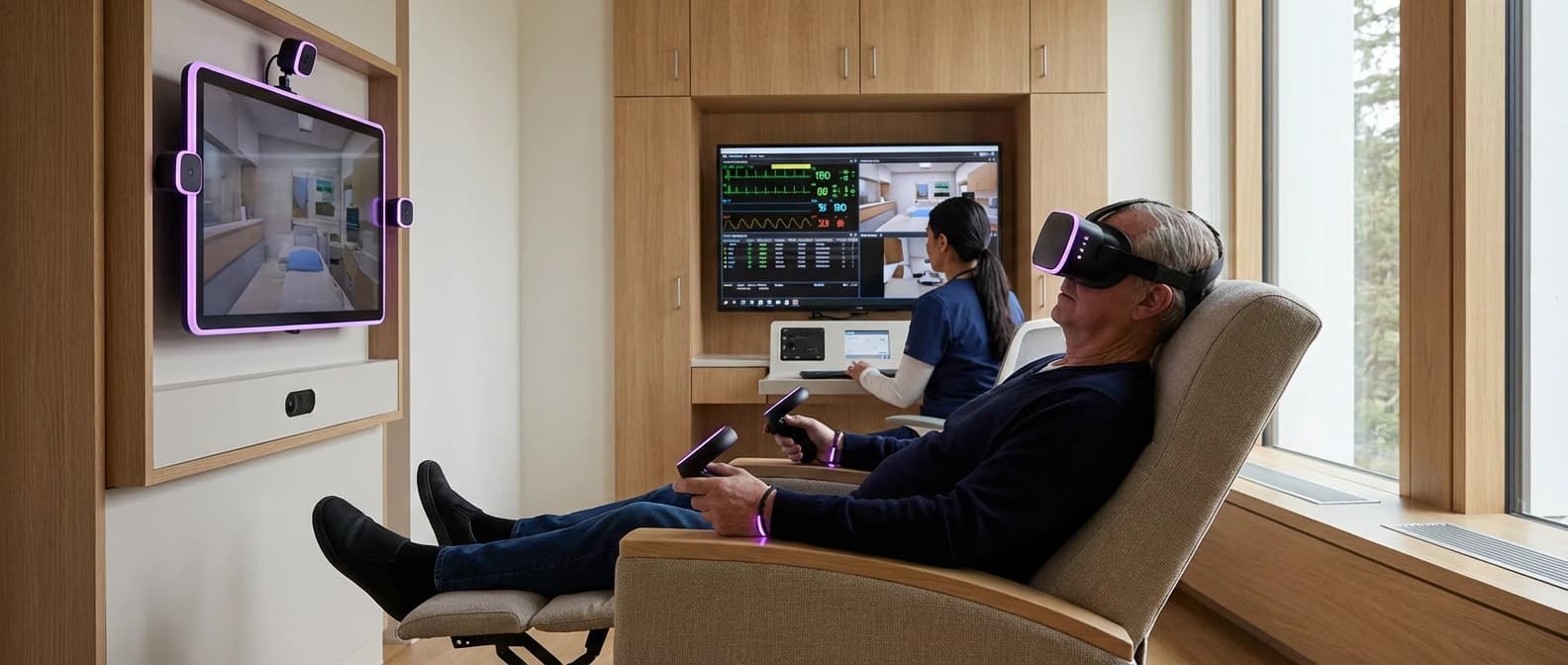
Virtual Reality Palliative Therapy represents a significant advancement in end-of-life care, utilizing immersive digital environments to address the complex physical and psychological needs of patients in hospice and palliative settings. The technology employs head-mounted displays and spatial audio systems to create fully immersive experiences that can transport patients beyond the confines of their medical environments. These systems work by engaging multiple sensory pathways simultaneously, effectively redirecting neural attention away from pain signals and anxiety-inducing thoughts. The immersive nature of VR creates what researchers describe as a "presence effect," where the brain processes the virtual environment as sufficiently real to trigger genuine emotional and physiological responses. This mechanism proves particularly valuable in palliative contexts, where patients may experience chronic pain, breathlessness, or profound psychological distress that traditional interventions struggle to fully address.
The primary challenge this technology addresses is the limitation of conventional pain management approaches, which often rely heavily on pharmaceutical interventions that can produce unwanted side effects, cognitive impairment, or diminishing returns over time. For patients nearing the end of life, maintaining quality of life, mental clarity, and emotional well-being becomes paramount, yet these goals can conflict with aggressive pain management protocols. VR palliative therapy offers a complementary pathway that can reduce reliance on opioids and sedatives while providing meaningful psychological relief. Beyond pain management, the technology addresses the profound sense of loss and confinement that many terminal patients experience, offering opportunities for virtual travel, nature immersion, or revisiting cherished memories. This capability proves especially significant for patients with limited mobility or those in isolation, enabling experiences that would otherwise be physically impossible and helping to alleviate the existential distress that often accompanies terminal diagnoses.
Early clinical deployments in hospice facilities and palliative care units indicate promising outcomes, with patients reporting measurable reductions in pain perception, decreased anxiety levels, and improved overall mood following VR sessions. Healthcare providers are integrating these systems into comprehensive care plans, using them during difficult procedures, as distraction therapy during moments of acute distress, or as regular interventions to enhance quality of life. The technology is finding particular application in pediatric palliative care, where traditional pain management presents additional challenges and where immersive play environments can provide crucial psychological support. As the technology becomes more affordable and user-friendly, its adoption is expanding beyond specialized facilities into home-based hospice care, supported by simplified interfaces designed for patients with limited technical experience or physical capacity. This evolution aligns with broader trends in patient-centered care and the growing recognition that end-of-life treatment must address not only physical symptoms but also the emotional, psychological, and spiritual dimensions of the dying process.
Digital therapeutic company (formerly MyndVR) focusing on aging adults.
VR platform designed specifically for seniors and hospice care to reduce isolation.
Creators of RelieVRx, an FDA-authorized VR therapeutic for chronic lower back pain.
European platform implementing VR in healthcare institutions.
Operates virtual clinics providing VR therapy for various conditions.
Creates VR experiences for caregivers to embody the perspectives of aging adults with conditions like Alzheimer's.
Immersive technology consulting and development company for healthcare.
A VR wellness platform that integrates with flow-state sensors and wearables to customize the visual journey based on user physiology.
A publisher and developer dedicated to identifying and fostering games with therapeutic value.
Published forecasts about this technology, graded against what happened in Hindsight.
AR/VR Therapeutics
This page is a narrower case of it.
Signals turns a topic into a sourced research record you can inspect and rerun. Your first scan is free, and this one starts with VR Palliative Therapy already loaded, so edit it or scan as is.