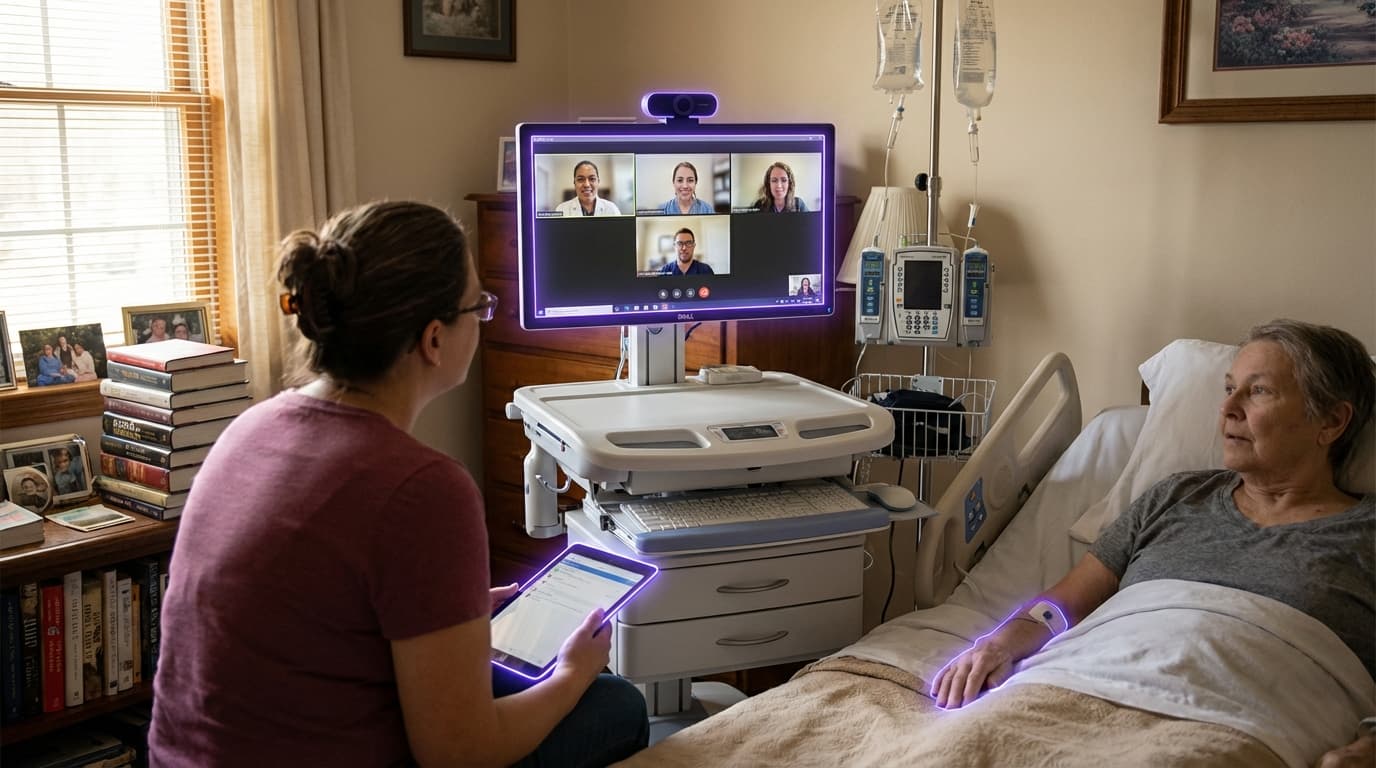
Telehospice Services
Telehospice services represent the adaptation of telehealth technologies specifically for end-of-life care, enabling patients to receive comprehensive palliative support in their homes rather than institutional settings. These systems integrate video consultation platforms, remote monitoring devices, and digital communication tools to connect patients, families, and multidisciplinary care teams. Core technical components typically include wearable sensors or bedside monitors that track vital signs, pain levels, and medication adherence, transmitting this data to healthcare providers in real-time. The infrastructure also encompasses secure messaging systems for asynchronous communication, virtual visit platforms for face-to-face consultations, and digital care planning tools that allow families and medical teams to coordinate treatment decisions. Unlike general telehealth applications, telehospice platforms are specifically designed to address the unique needs of terminal illness, incorporating features for symptom assessment, comfort care protocols, and bereavement support.
The fundamental challenge this technology addresses is the geographic and logistical barrier that prevents many patients from accessing quality hospice care in their final months. Traditional hospice services often require patients to travel to specialized facilities or depend on the availability of local palliative care specialists, which may be limited in rural or underserved areas. Research suggests that many patients prefer to spend their final days at home surrounded by family, yet concerns about inadequate medical support often necessitate hospital admissions during crisis moments. Telehospice services bridge this gap by extending the reach of palliative care specialists, enabling them to serve patients across wider geographic areas while maintaining frequent contact and responsive care. This model also reduces the physical burden on patients who are too frail for regular clinic visits, while providing families with continuous access to expert guidance during a profoundly challenging time. The technology enables more proactive symptom management, as continuous monitoring can detect deterioration earlier than scheduled in-person visits, potentially preventing unnecessary emergency room visits and hospitalizations.
Early deployments of telehospice programs have emerged across various healthcare systems, particularly accelerated by the expansion of telehealth infrastructure during recent public health challenges. These programs typically serve patients with advanced cancer, heart failure, chronic respiratory diseases, and neurodegenerative conditions who have chosen home-based end-of-life care. Clinical teams report that the technology facilitates more frequent touchpoints with patients and families, allowing for timely adjustments to pain management protocols and emotional support interventions. The model also enables interdisciplinary collaboration, connecting physicians, nurses, social workers, chaplains, and bereavement counselors through shared digital platforms. As healthcare systems increasingly recognize the importance of patient-centered care and the cost-effectiveness of home-based services, telehospice represents a growing segment of the broader digital health transformation, aligning with movements toward value-based care and the recognition that quality end-of-life experiences constitute a critical measure of healthcare system performance.
Related Organizations

The nation's leading provider of end-of-life care.

A leading provider of home health, hospice, and personal care.

Provides remote patient monitoring (RPM) and telehealth solutions.

A clinical collaboration and communications company focused on telehealth endpoints.

A midwestern hospice provider known for high technology adoption.

A remote care management platform (acquired by Optum).

The leading software for home health and hospice agencies.

A patient engagement platform that uses AI to track symptoms.

Palliative Care Quality Collaborative
United States · Nonprofit
A national organization focused on improving the quality of palliative care.

Supporting Evidence
Research this in Signals
Signals turns a topic into a sourced research record you can inspect and rerun. Your first scan is free, and this one starts with Telehospice Services already loaded, so edit it or scan as is.